
Custom Silicone Mold Manufacturer in China: A Buyer's Evaluation Guide
How to evaluate a custom RTV silicone mold manufacturer in China: factory evidence, DFM, masters, split lines, mother molds, prototype control, QC and ownership.
If you are comparing custom silicone mold manufacturers in China, the useful question is not "Who says they make silicone molds?" It is who can control the complete path from your geometry to a repeatable working mold.
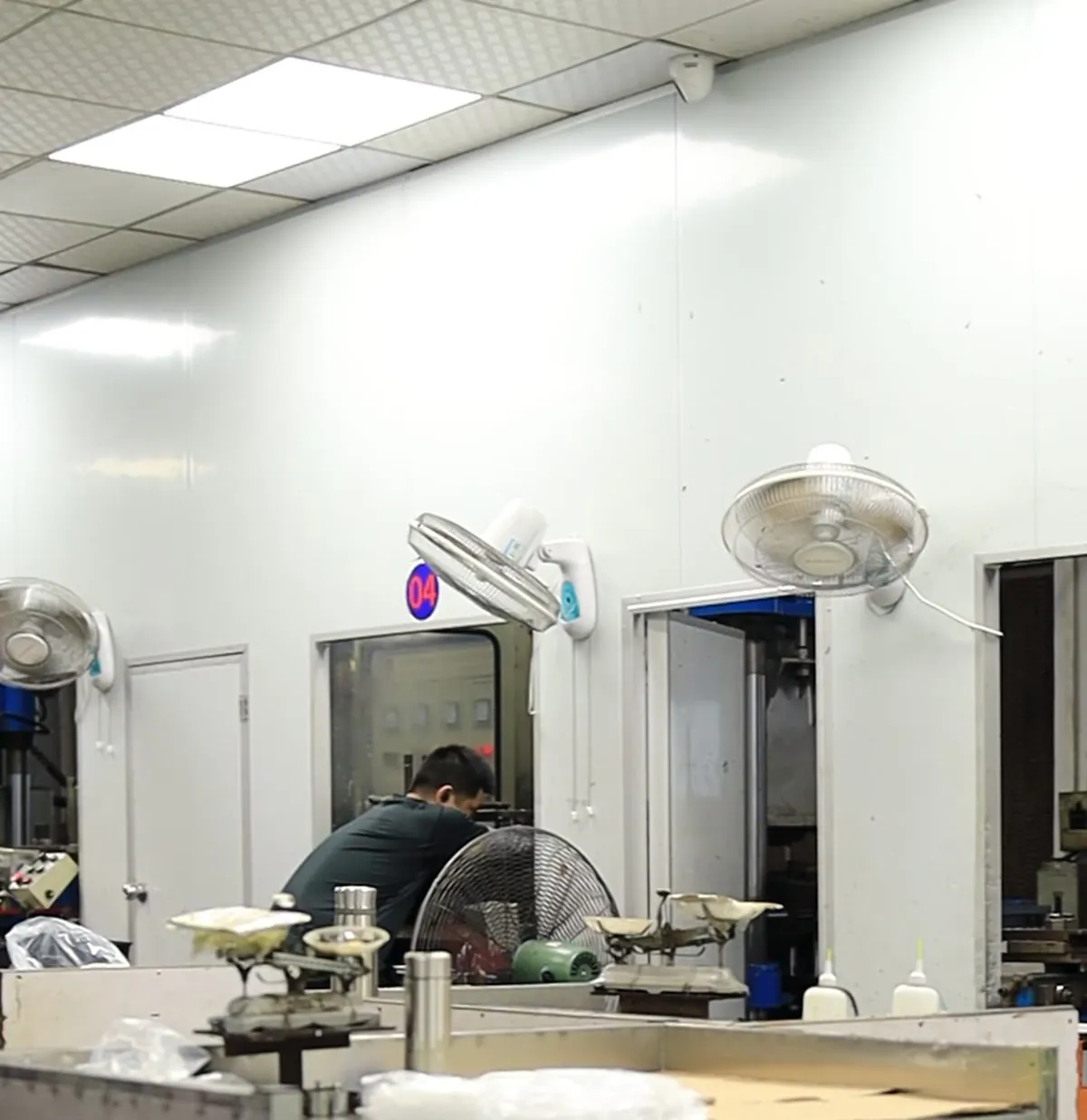
A capable RTV mold supplier should be able to explain the master, mold structure, parting line, undercuts, silicone grade, support method, prototype test and replacement strategy before asking you to approve production. If a supplier can only quote from overall dimensions and a photo, the quote may be fast, but the engineering risk is still sitting with you.
RUUIPON manufactures custom RTV silicone molds in Shenzhen for food, resin, candle, soap, plaster, concrete and other casting applications. Our normal production MOQ is 20 molds per design after prototype approval. The purpose of this guide is not to claim that one factory is "best." It is to show what a serious buyer should verify before placing a custom tooling order.
A real factory should be able to name the mold structure
Start with the geometry, not the silicone brand.
Ask the supplier to identify the proposed structure in plain language:
- one-piece open-face mold;
- one-piece slit or cut mold;
- two-part keyed mold;
- multi-part mold;
- silicone skin with a rigid mother mold;
- mold with a removable plug;
- mold with an internal core;
- multi-cavity production tray.
That answer matters because these structures are not priced, assembled or demolded in the same way.
A shallow logo coaster may release cleanly from a one-piece mold. A full 3D figurine with crossed arms may need a planned split line. A 900 mm sculpture may need a flexible RTV skin plus a fiberglass-reinforced support shell. A hollow planter may need a centered inner core and an external jacket that resists the hydrostatic load of the casting material.
If the supplier cannot explain why it selected one structure over another, the project has not really reached DFM yet.
Factory vs trading company: verify control, not labels
A trading company is not automatically a bad supplier, and a factory is not automatically a good one. The question is who controls the technical decisions and who owns the production record.
Useful evidence includes:
- workshop photos showing master preparation, RTV mixing/pouring, vacuum equipment or production molds;
- DFM screenshots with actual split-line, undercut or cavity-layout comments;
- examples of master → mold → test casting from the same project;
- inspection records for dimensions, cavity volume, weight or fit;
- a clear company name and manufacturing address on quotations and invoices;
- the ability to identify which work is done in-house and which work is subcontracted.
A buyer should be cautious when the salesperson cannot answer basic production questions without "checking with another factory" every time. That does not prove fraud, but it does tell you where the engineering control actually sits.
DFM is where a mold manufacturer earns its fee
A mold factory should not simply copy a CAD file if the geometry is unsuitable for repeat casting.
A practical DFM review may change:
- parting-line location;
- local wall thickness;
- draft on deep features;
- logo depth or stroke width;
- spacing between cavities;
- location of vents and pour ports;
- core retention;
- support-jacket split;
- tray border and loaded flatness.
For example, increasing Shore A is not a universal fix for a mold that tears at a deep undercut. A harder silicone may reduce local deformation, but it can also increase demolding force. Moving the split, thickening a thin web or changing the demolding path may solve the real problem more directly.
A useful supplier should be willing to say, "We would not build it exactly as drawn," and then show why.
The master is part of the tooling system
For RTV molds, the master determines the final cavity surface. A silicone mold faithfully reproduces scratches, print lines, sanding marks and unintended texture.
Buyers should ask:
- Is the master supplied by the customer or produced by the factory?
- Is it CNC machined, SLA/DLP printed, sculpted or reverse-engineered from a physical part?
- Who approves the final master surface?
- Is the master stored for repeat mold production?
- Who owns the master after payment?
For a branded or sculptural product, the master may be more important than the raw silicone. If you plan repeat orders, preserving the approved master and its revision number can reduce variation between batches.
Prototype approval should test the way the mold will actually be used
A prototype is not only a visual sample.
The acceptance test should reflect the casting process. For a resin mold, that may mean checking bubble traps, demolding strain and seam cleanup. For a candle mold, it may mean pouring the actual wax and checking shrinkage, seam visibility and wick access. For a food tray, it may include cavity volume, loaded flatness, release and documentation for the selected compound.
Before approving multiple production molds, confirm the critical-to-quality items that matter to your product:
| CTQ item | Typical way to verify |
|---|---|
| Finished part dimensions | measured casting or cavity inspection |
| Cavity volume | CAD volume plus physical fill check where needed |
| Parting-line quality | test casting and seam inspection |
| Demolding effort | actual peel/removal test |
| Tray flatness | relaxed and loaded condition, if relevant |
| Logo/detail | finished cast, not only the empty mold |
| Support shell fit | assembled mold under expected load |
A photograph of an empty mold does not prove that the part casts correctly.
Repeat production depends on archive control
If you may reorder in six months or two years, ask what the factory keeps.
A robust archive can include:
- approved CAD revision;
- master identification;
- mold structure drawing;
- silicone grade and batch information;
- pigment/color reference if applicable;
- target mold weight or key dimensions;
- prototype approval record;
- packaging method for large flexible molds.
This becomes especially important when you are buying 20 molds now and may need another 50 later. Recasting from the approved master is usually more controlled than copying a worn production mold.
What should you own?
Do not assume that paying a "tooling fee" automatically gives you every associated asset.
Your PO or development agreement should state what is included, for example:
- final physical silicone molds;
- customer-specific master;
- CAD/STL/STEP files created for the project;
- removable cores or plugs;
- FRP mother mold;
- customer-specific fixtures;
- right to request replacement molds from the archived master.
Standard shop equipment, generic mold boxes, clamps, vacuum equipment and reusable fixtures normally remain the supplier's property unless specifically sold.
How to compare two Chinese silicone mold suppliers
Do not compare only the bottom-line number. Put the technical scope side by side.
Check whether both quotations assume the same:
- master/modeling work;
- silicone grade and approximate mold mass;
- one-piece vs split/multi-part construction;
- removable cores or plugs;
- mother mold/support shell;
- prototype and test casting;
- revision allowance;
- QC records;
- packaging;
- shipping term;
- ownership and archive policy.
A quote that appears 30% cheaper may simply exclude the master, support jacket, test casting or freight. That is not necessarily a bad quote; it is a different scope.
Where RUUIPON fits
RUUIPON focuses on custom RTV silicone molds and soft tooling rather than finished LSR/HCR silicone components. Typical projects include:
- food and confectionery molds;
- gummy and chocolate trays;
- candle and wax molds;
- soap molds;
- epoxy and polyurethane resin molds;
- plaster and gypsum molds;
- concrete and planter molds;
- figurines and sculptures;
- multi-cavity production tools;
- RTV skins with rigid support shells.
Projects can start from STEP, STL, OBJ, a physical sample, sketches or reference photographs, depending on the geometry and accuracy required.
RFQ: send enough information to expose the engineering risk
For a first review, send:
- CAD or reference images;
- finished part dimensions;
- casting material;
- target quantity of molds;
- target output if it is a production tray;
- critical cosmetic surfaces;
- required logo/detail;
- target market and compliance needs for food contact;
- destination country/postcode;
- any existing failure you want the new mold to solve.
A supplier can quote more accurately when it knows not only what the part looks like, but what you are pouring into the mold and how you intend to remove it.
What a buyer should be able to verify
A reliable custom silicone mold manufacturer should reduce uncertainty before production. The strongest evidence is not a list of machines or a "best factory" claim. It is a clear mold structure, a defensible DFM decision, an approved master, a functional prototype and a repeatable archive.
Send your drawing or sample, casting material and required quantity to RUUIPON for a mold-structure and feasibility review.
Start your custom silicone mold project
Send your design, target material, and quantity. We confirm silicone grade, hardness, and certification needs - usually within 24 hours.