
Prototype-to-Production Silicone Molds With DDP Shipping: What International Buyers Need
How international buyers move from one prototype silicone mold to 20-100 production molds, including sign-off, cavity layout, packaging and DDP shipping from China.
International mold projects fail most often at the handoff points: prototype approved too loosely, production copied from the wrong revision, or freight planned only after 50 large flexible molds are finished.
A cleaner route treats development, production and delivery as one controlled chain-but prices and approves each stage separately.
RUUIPON supports custom RTV silicone mold projects from initial design review through prototype, production batches and international shipment. DDP can be quoted for suitable destinations when the buyer provides a complete address/postcode and the shipment details are known.
Prototype and production molds do different jobs
The first mold should prove the design.
A prototype may be used to validate:
- demolding path;
- parting line;
- logo/detail;
- cavity volume;
- mold support;
- fit with a depositor or tray;
- wick path;
- core alignment;
- finished casting dimensions.
Production molds must then repeat that approved result across a batch.
The mistake is ordering 50 molds before confirming the prototype under real operating conditions.
A production sign-off should be specific
"Sample looks good" is not a useful manufacturing record.
A sign-off should identify:
- project/revision number;
- approved master;
- mold dimensions;
- cavity count/layout;
- silicone grade/hardness range;
- critical dimensions;
- acceptable seam location;
- approved test casting/photo;
- packaging requirement;
- any documentation tied to the batch.
If a buyer later requests a logo or cavity change, the revised mold should receive a new revision identifier before production resumes.
Multi-cavity layout affects more than output
A buyer may ask for the maximum possible number of cavities in one tray. That is not always the lowest-cost production choice.
A larger tray changes:
- silicone weight;
- loaded flatness;
- operator handling;
- carton dimensions;
- shipping volumetric weight;
- risk of permanent deformation in storage;
- number of castings lost if one mold is damaged.
For example, one 50-cavity RTV soap mold can become heavy when filled. Two 25-cavity molds may cost more per cavity to manufacture but be easier to carry, support, demold and replace.
The correct layout should consider production labor and freight, not only cavity count.
What to approve before multiplying 20-100 molds
Run the prototype through the real process.
Food tray
Check actual cavity volume, release, loaded flatness and cleaning method.
Resin mold
Check bubbles, seam, demolding strain and resin compatibility.
Candle mold
Pour actual wax, inspect seam and wick path, and verify that the mold remains stable while full.
Large sculpture mold
Assemble all RTV/FRP sections, confirm registration and perform a casting or load test.
Only after the critical failure mode is tested should the factory multiply the mold.
DDP vs FOB vs EXW for silicone molds
EXW
The buyer or forwarder collects from the factory. Useful when the customer already consolidates freight in China.
FOB
The supplier handles delivery/export to the agreed port, while the buyer controls main freight/import.
DDP
The seller/forwarding arrangement quotes delivery to the buyer's destination with import-related handling included according to the agreed term and destination.
For small and medium custom mold orders, DDP can simplify purchasing because the customer sees a landed shipping figure rather than arranging a separate China forwarder.
However, the final DDP quote depends on:
- destination country and postcode;
- carton dimensions;
- gross weight;
- number of cartons;
- customs description/classification;
- delivery type (business/residential where relevant);
- courier/air/sea route;
- current freight conditions.
Do not rely on a freight estimate made before the mold dimensions are known.
Packaging large flexible molds is an engineering task
Silicone can be durable and still take a storage set if packed badly.
Avoid packaging that:
- folds critical cavities;
- compresses tall walls;
- stacks heavy objects on soft texture;
- forces large trays into cartons that are too small;
- leaves rigid mother-mold sections loose against the silicone surface.
Large flat trays may need:
- support boards;
- flat stacking;
- cavity protectors;
- individual sleeves/bags;
- rigid carton separators.
Complex RTV + FRP systems may require labeled sections and assembly photos so the buyer knows how the mold goes back together.
Shipping cost should be considered during DFM
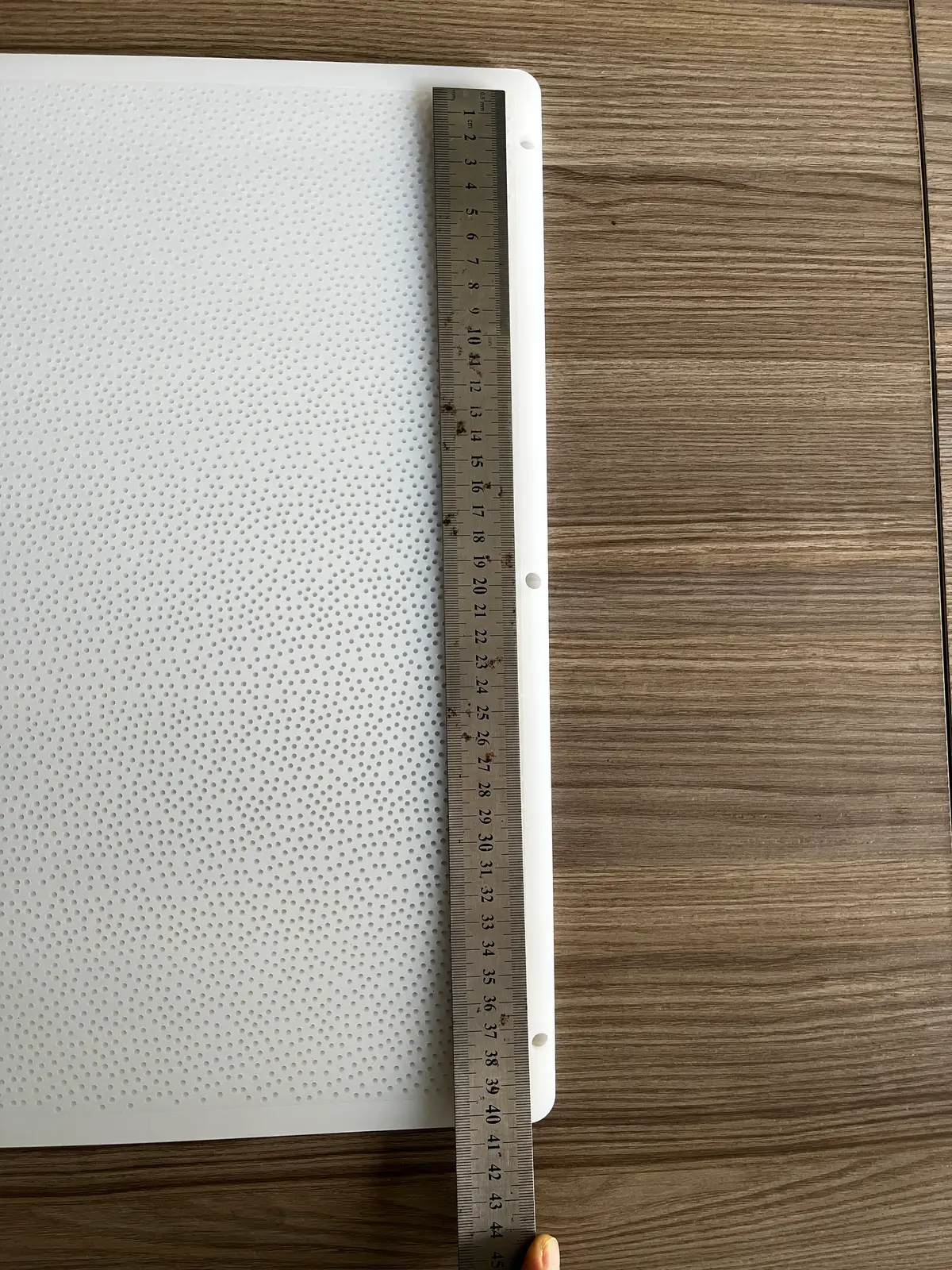
Suppose a tray is redesigned from 620 mm to 590 mm wide without reducing usable cavity count. That 30 mm change may improve carton efficiency or courier eligibility.
Likewise, splitting one very large mold into smaller modules may reduce damage risk and make international handling easier.
Freight should not overrule functional mold design, but it can be a legitimate DFM input when two layouts perform equally well.
Target date: work backward from delivery, not production completion
If a customer needs molds for an event or product launch, define the arrival date.
The project schedule includes:
- CAD/DFM review;
- customer approval;
- master creation;
- prototype mold;
- test/approval;
- production batch;
- final inspection;
- packing;
- export/shipping;
- customs/local delivery.
A "7-day mold lead time" does not mean a customer in the United States or Europe receives the shipment in seven days.
For deadline-driven work, do not wait until sample approval to discuss the logistics window.
What RUUIPON needs for a landed quotation
Send:
- mold design or reference;
- desired prototype quantity;
- production mold quantity;
- cavity count if known;
- required arrival date;
- full destination country and postcode;
- whether DDP is required;
- packaging requirements;
- any food-contact documents/testing that must ship with the order.
If the mold is still under design, the first shipping number should be treated as an estimate until final size and weight are confirmed.
A clean purchase structure
For many overseas buyers, the PO is easier to understand when separated into:
Development CAD/DFM + master + prototype + agreed testing.
Production Unit price × approved mold quantity.
Documentation/testing Only where project-specific third-party testing or documents create extra cost.
Freight DDP/FOB/EXW line with destination and validity.
This prevents an inexpensive "mold price" from hiding missing development or shipping scope.
Control the handoffs from sample to delivery
Prototype-to-production buying works when the approved sample becomes a controlled reference and packaging/logistics are treated as part of the production plan.
The goal is not simply to ship silicone from China. It is to make sure the same mold the buyer approved arrives without distortion and can be reordered from the same master later.
Send your ship-to postcode, required quantity, target arrival date and current design to RUUIPON. We can separate prototype, production and DDP shipping in the quotation.
Start your custom silicone mold project
Send your design, target material, and quantity. We confirm silicone grade, hardness, and certification needs - usually within 24 hours.