
Custom Silicone Molds for Concrete and Cement Casting
Don't pour wet concrete into an unsupported Shore 10A–20A skin. Hydrostatic load from a full cavity will balloon the walls, flatten stone texture, and throw the finished thickness off before the mix even sets. The mold you want is a platinum RTV cavity from a resin master (photo, sketch, or CAD) sitting inside a rigid support shell, with a peel path for undercuts and a Shore chosen for release—not for “holding shape.”
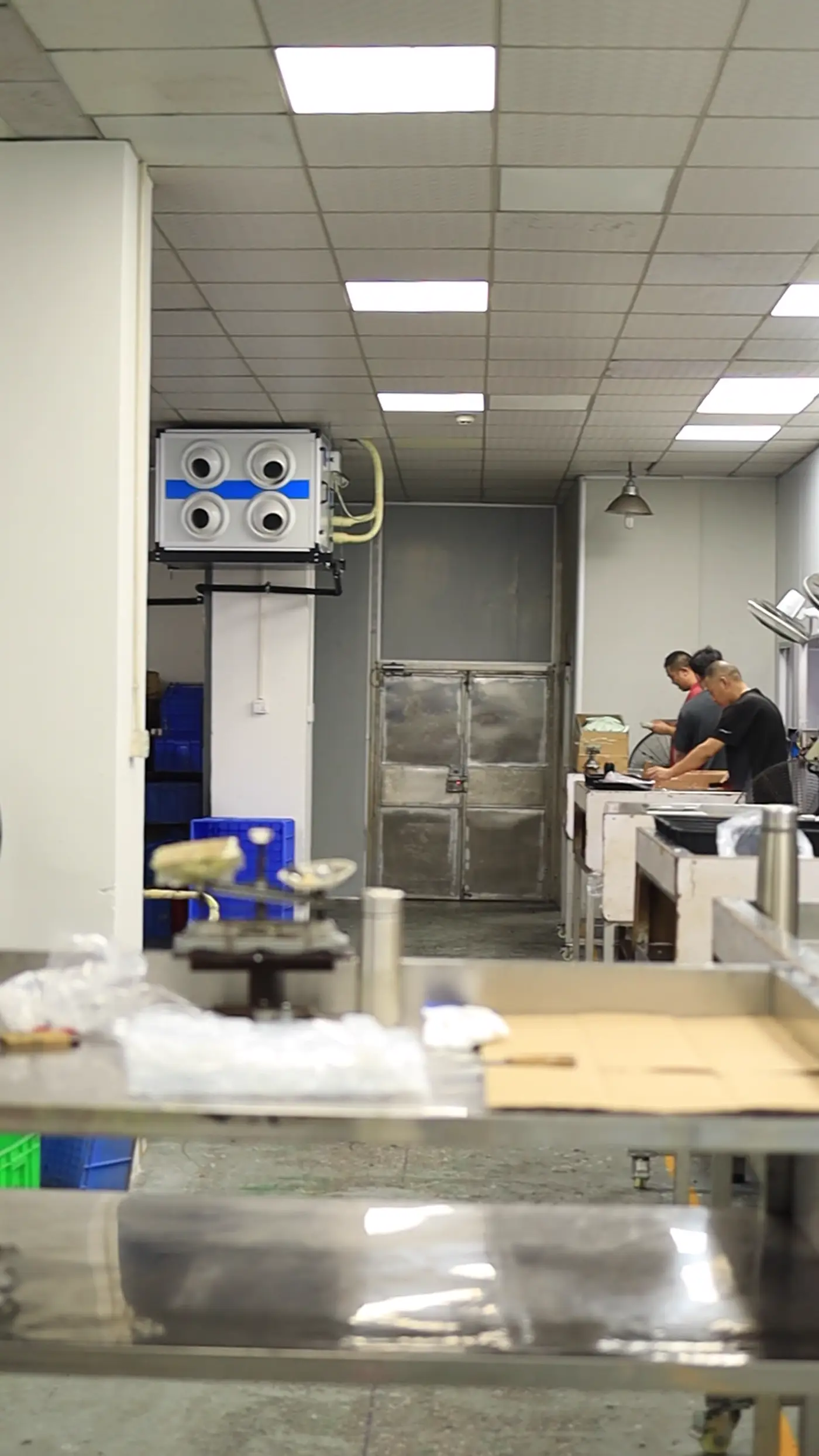
RUUIPON has poured this stack in Bao'an, Shenzhen since 2018. Prototype is commonly 3–7 days after CAD lock; production MOQ is 20 molds per design. If you actually need thousands of molded silicone *parts*, that's a different quote—HCR compression or LSR with a cold-runner: HTV product RFQ or ask us. This page is the casting *tool*.
House numbers and plaques
A cement house number is a small open-back plaque on this same tool. The digits are the face, the peel comes off that face, and the wet mass is usually light enough that a jacket is optional unless the plaque is wide. Send the digit height, the relief depth, and whether the number sits proud or recessed on the finished piece. A planter or a paver is the jacket problem above, not a separate mold family.
Wet mass, undercut, jacket, Shore — pick these four first
Wet mass. Write the filled kilograms, not the dry tile weight. A 400 × 400 × 40 mm paver in a wet cementitious mix is often in the 12–15 kg band; a 600 mm stepping stone is more. Soft RTV without a jacket sags about 0.5–1.5 mm at the unsupported edge under a loaded tray-scale span, and a deep vessel can bulge far more. Design the jacket for the heaviest pour you will actually make, including vibration.
Undercut. Stone texture, undercut letters, and a geometric lock are three different problems. A shallow open-back paver peels as a one-piece cavity. Deep negative draft, a wrap-around rim, or a closed vessel needs a keyed split, a removable plug, or an inner core—see split lines and keys and inner cores. Stretching a glove mold around a locked undercut is how the skin tears at the first demold.
Jacket (mother mold). The rubber copies texture; the jacket carries the wet load. Typical stack: thin high-tear platinum skin against the master, then plaster, fiberglass, or a printed shell with its own split so you can still peel the casting. A solid block of RTV “to make it stiff” just makes an operator-unliftable mold that still creeps. Details: mother mold / support shell.
Shore. Cavity Shore for concrete texture is typically 10A–20A platinum RTV so the skin can peel without ripping the aggregate print. A thick 25A wall can feel stiffer than a thin 40A lip—don't pick hardness from a catalog number alone. Raising Shore to stop sag is the wrong first move; add the jacket.
Platinum linear shrink is typically 0.1–0.3%. Tin-cure keeps moving in storage and is a poor match if you recast from the same master months later. If someone wrote “precision ±0.1 mm” on a floppy cavity, that's not ISO 3302-1 (that's a rubber-*part* tolerance class on a drawing). Measure the mold seated in its jacket, unloaded, and say so on the RFQ.
Common mix-up
Buyers send a photo of a finished paver and ask for “a silicone mold.” What they often receive is a thick one-piece glove with no jacket and a 40A Shore “for durability.” That mold demolds the first cast, then slowly grows a belly. The mix-up is treating Shore as structure. Structure is the mother mold.
A second mix-up: quoting this as if it were an LSR cavity tool. Cold-runners and heated plates don't dump 12 kg of wet cement.
Worked example: 400 mm textured paver
Geometry: 400 × 400 × 40 mm open-back paver, weathered-stone face, 2 mm max undercut in the texture, no wrap-around rim.
Cast: wet cementitious mix, ~13 kg filled, vibration table, 80–120 casts per mold before a recast is likely (abrasion and handling, not a guaranteed cycle count).
Tool family: CNC or textured master → open-back platinum RTV skin, Shore 10A–20A, vacuum-degas pour, brush/detail coat into the stone → two-piece GRP or plaster jacket with registration keys → 20 production molds after a full-weight prototype.
Acceptance: one full-weight pour; edge sag of the assembled mold under load stays in the 0.5–1.5 mm typical band; texture copies without trapped air at the deep pits; operator can open the jacket without prying on the silicone.
If you later add a 15 mm wrap-around rim, this stops being open-back. That's a split or a plug, and the jacket split has to follow.
Failures you will actually see
| Symptom | How to confirm | Fix |
|---|---|---|
| Finished paver is thicker in the middle, thinner at the rim | Compare empty-cavity depth to a full-weight pour; look for jacket gap | Seat the skin in a rigid jacket; don't raise Shore first |
| Stone pits print smooth or with pinholes | Raking light on the first cast vs the master | Brush a detail coat, add vents or vibration; degas the RTV itself |
| Skin tears at a deep undercut on demold | Mark the tear against the master undercut | Split, plug, or soften *locally*; stop stretching a one-piece glove |
| Aggregate scours letters after a few dozen pours | Check max stone size vs letter depth | Thicker detail coat, finer mix at the face, or recast schedule |
| Jacket won't come off around a rim | Dry-fit the empty assembly | Split the jacket on the same logic as the rubber; keys on both |
A photo that would prove the claim: assembled jacket with the RTV skin seated, a scale under a full wet pour, and a caliper on rim vs center thickness. We don't invent that photo here; ask for it on the prototype.
Typical shop values
Reference values only. Confirm material-specific limits against the supplier’s technical data and agree project acceptance criteria before production.
| Item | Typical shop value |
|---|---|
| Cavity Shore | 10A–20A platinum RTV, jacket behind it |
| Mix | Platinum 1:1 or 10:1 by grade; vacuum degas until the foam collapses |
| Linear shrink | ~0.1–0.3% (platinum); tin keeps moving in storage |
| Loaded-edge sag, unsupported | About 0.5–1.5 mm; worse on a deep vessel without a jacket |
| Prototype | 3–7 days after CAD lock |
| Production MOQ | 20 molds per design |
What to ask when you're buying
- What's the filled wet mass, and is the jacket designed for that load or for the empty mold on a desk?
- Open-back, keyed split, or core—and why? Show the peel path on the master.
- Which Shore, and will you still add a jacket at 10A–20A?
- How is the mold measured: seated in the jacket, or floppy on the bench?
- Who keeps the master and the jacket after you pay the tooling charge? Paying NRE is not unrestricted ownership unless the PO says so.
- Is a recast of the RTV skin in the price after abrasive wear?
We would not recommend skipping the mother mold on large wet concrete
We would not recommend a one-piece unsupported glove for a paver or vessel whose wet mass is measured in kilograms. We would not raise Shore A first to “make it stiffer.” We would not pour a solid RTV block as a substitute for a skin-plus-jacket. We would not copy a worn, already-bellied sample as the new master. We would not quote LSR steel with a cold-runner because you “might scale later” while you still need a cavity to dump cement into.
RUUIPON Mold Structure Decision:
- Flat open-back paver? - no wrap or vessel -> Deep undercuts?
- Deep undercuts? - texture peels safely -> Open-back RTV skin
- Deep undercuts? - locked rim or core -> Two-part / plug / inner core
- Wet mass in kilograms? - tiny shallow sample tile -> Open-back RTV skin
- Two-part / plug / inner core -> Mother mold / jacket required
- Open-back RTV skin -> Wet mass in kilograms?
When this page is the wrong quote
A tiny 100 mm sample tile you will cast twice can skip the jacket. A closed architectural panel better served by a rigid plastic or steel form, or a chemically aggressive mix that attacks platinum RTV, should not be forced into this stack. High-volume molded silicone *parts* belong on an HCR/LSR RFQ, not here. Geometry can override quantity: one large wet vessel still needs a jacket even if you only want two molds.
Planters that are hollow (wall + core) belong on planters and vessels, not this open-back paver path.
Concrete mold RFQ — copy this
- Master: CNC, textured print, or physical sample (who keeps it)
- Finished L × W × H and filled wet mass in kg
- Mix family and max aggregate size
- Open-back vs wrap-around rim vs hollow vessel
- Texture target (stone, wood, logo depth)
- Undercuts, drain holes, or inserts
- Jacket material if you already care (plaster / GRP / printed)
- Shore if already validated; otherwise “peel vs sag” in words
- Quantity: prototype + production (MOQ 20)
- Recast of the RTV skin: included or extra
- Current failure, if any: belly, tear, air in pits, too heavy to lift
Send the master photos or STL, the wet kilograms, and the one failure you most want to avoid. Email [email protected] or WhatsApp +86 135 3006 2969. Factory: Licheng Technology Industry Park, Xinhe Blvd, Shajing, Bao'an, Shenzhen.
Matched CTA: Send wet mass, mix, and undercut photos for a jacket-and-Shore review — not a generic free quote. Contact / RFQ · prototype validation · mother mold.
FAQ
Do I need a mother mold for a concrete paver? If the pour is measured in kilograms, yes. A 10A–20A skin copies texture; the jacket stops the 0.5–1.5 mm (and worse) sag. Tiny sample tiles can skip it.
Can I just order a harder Shore instead of a jacket? Don't. A thick 25A wall still creeps under wet cement. Raise Shore only after the jacket exists and you still can't peel a locked undercut.
Will abrasive aggregate kill the mold? It will wear a thin letter or a sharp arris. Name max stone size on the RFQ, use a detail coat, and budget a recast of the skin against the same master.
Is platinum shrink a problem for a 400 mm paver? Typical platinum linear shrink is 0.1–0.3%. That's millimeters on a large tile, so lock the master oversize if the finished OD is CTQ. Tin-cure is a worse recast partner.
Does paying for the mold mean I own the jacket and master? Only if the PO says so. Tooling charge is not unrestricted ownership. Write who keeps the master, who keeps the jacket, and whether a recast is included.