
How to Audit a Custom RTV Silicone Mold Factory
This page is not a claim that only direct factories are good. A trader can be competent. If you're auditing a custom RTV mold supplier, your job is to see who controls engineering, the pour, the documents, and the recast. Look for a mix bench, vacuum, masters, and a jacket table — not a stock photo of an LSR press. RUUIPON is a Bao'an workshop (since 2018, Licheng Technology Industry Park). You can visit by appointment, match the payment entity to the door, and watch A/B weighed.
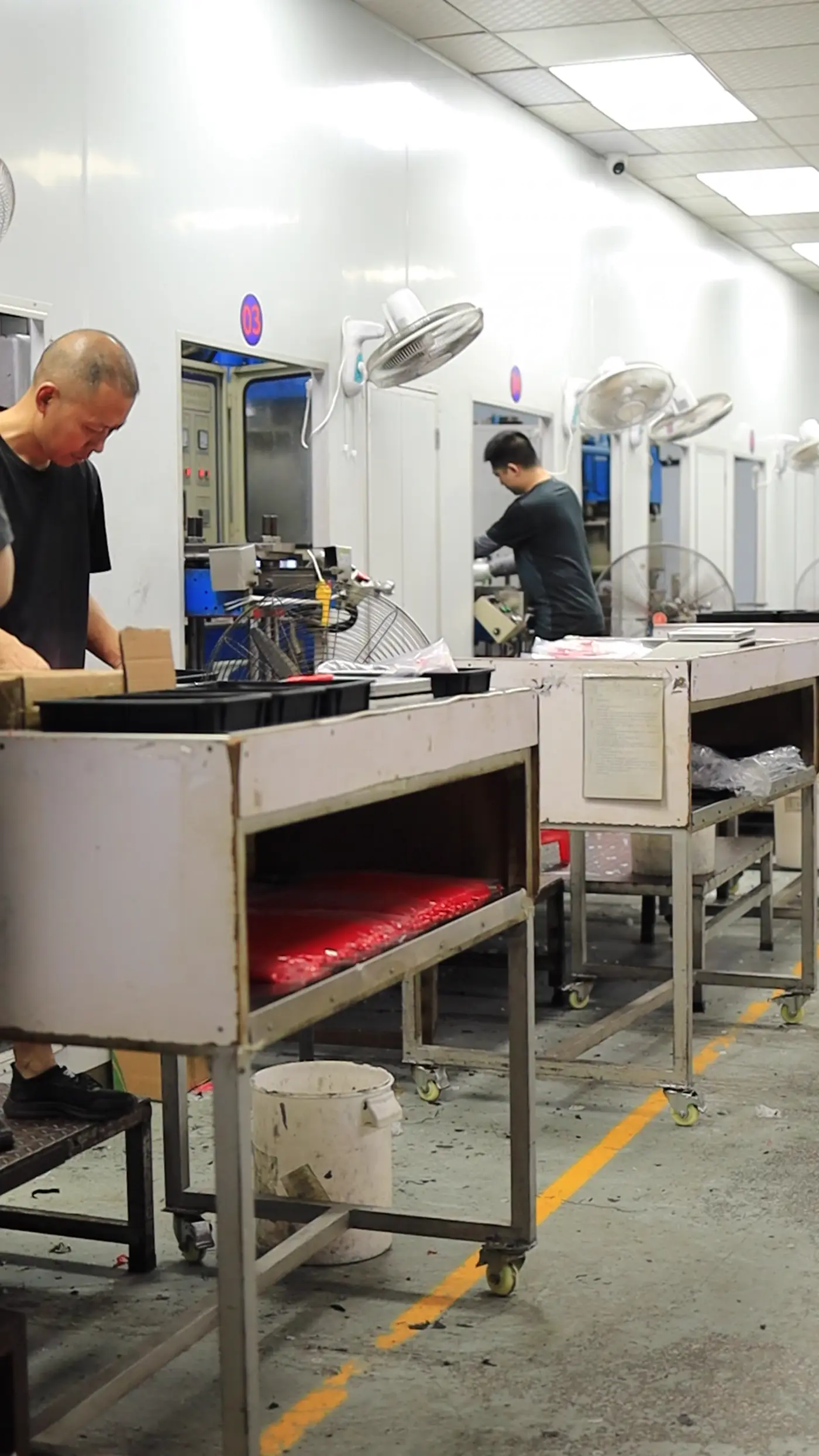
We sell RTV cavities. If the showroom is full of compression presses and cold-runners, you may be in a parts plant (a high-volume parts plant). That's a valid factory for *parts*, the wrong evidence for a pectin tray.
A one-pass RTV audit you can actually run
1. Legal and money
- Chinese legal name on the contract, invoice, and bank account match.
- Address is a workshop you can walk, not only a showroom in another district.
- Export docs (if you need them) use that same entity.
2. Process evidence (live or video)
- Master making or receiving: CNC, print post-cure, sample copy.
- A/B scale, mix ratio posted (1:1 or 10:1 by grade), vacuum chamber that gets used.
- Mold boxes, keys, cores, jackets — hardware, not a slide.
- A real dump test, not only a pretty unused cavity.
3. Engineering
- Someone can mark a split on *your* screenshot in the meeting.
- They can say open-back vs two-part vs core vs jacket using a structure rule, not "we can make any mold."
- They will say no.
4. Sample and change control
- Written prototype pass/fail. Golden sample ID. Reorder cites it.
- Compound changes need your signature.
5. Documents
- Food pack is compound/lot, 21 CFR 177.2600 extraction and/or LFGB as named — not "FDA factory."
- ISO 9001 if they have it is a QMS certificate, not a substitute for the compound file.
Traders: ask who pours, whether you may visit *that* shop, and who owns the master when the trader changes subcontractors.
Common mix-up: machines in the photo aren't the quoted process
LSR injection cells, two-roll mills, and flash presses prove a parts capability. They do not prove an RTV pour cell. The reverse is also true: a vacuum chamber does not mean they can run your 50,000-pc gasket. Match the machine to the object on the PI.
Typical shop values (what a serious RTV shop can state without theatre)
| Item | Typical shop value |
|---|---|
| Mix | Platinum 1:1 or 10:1; vacuum until foam collapses |
| Cavity Shore they can defend | 10A–20A with jacket when loaded |
| Prototype | 3–7 days after CAD lock |
| MOQ | 20 molds per design after approval |
| Shrink they should not mix up | RTV platinum ~0.1–0.3%; HCR ~1.5–2.5%; LSR ~2–3% |
| Food claim | Compound report, not a gate sticker |
Reference values only. Confirm material-specific limits against the supplier’s technical data and agree project acceptance criteria before production.
Failure: you paid a website, the pour happened somewhere else
Symptom: Sales cannot name the grade; workshop video is stock; payment name ≠ contract name; sample approved, production Shore different; nobody knows who has the master.
Confirm: Video call into the mix bench with your PO number on a card. Match business license, invoice, and warehouse. Ask for the recast path in writing.
Fix: Don't place the production PO until entity + process + golden sample line up. A cheaper trader who can show the pour cell and the change-control file may still be the right buy.
Worked example: two-hour Bao'an walk
A US buyer spent two hours at Licheng Technology Industry Park: license photo, mix bench with 10:1 platinum on the scale, vacuum lid scarred from real use, a jacketed 12-up tray, and the Rev B golden-sample card. They skipped the pretty press room that belonged to a parts conversation. We would not have used that press room as RTV evidence, and we would not have asked them to treat a WeChat catalog as an audit.
What to ask when you're buying (take this onto the floor)
- Show me the vacuum and the last mold box you poured, not a brochure.
- Who weighs A/B on my job, and at what ratio?
- Who marks the split, and will they say this geometry should not be one-piece?
- What is the payment legal name vs the workshop name?
- Where does my master sleep, and what happens if I recast in 18 months?
When this page is the wrong route
If you need an LSR/HCR parts audit (press tonnage, cold-runner, mill room), use a parts checklist as an HTV product RFQ here, or ask us for a high-volume LSR tool — this RTV list will miss the real risks. A one-off craft artist selling three glove molds doesn't need a seven-section audit. Geometry still overrides: a hollow concrete jacket deserves a walk of cores and shells even if the supplier is small.
Related: capabilities, quality control, materials, contact.
RFQ: audit pack before the first PO
Copy this.
- Legal entity name, address, payment beneficiary
- Quoted process: RTV pour (ban silent HCR/LSR substitution)
- Live video or visit of mix / degas / pour
- Named engineer for DFM
- Material grade + document list
- Sample approval method and reorder change control
- Tooling/master ownership terms
Send the drawing and ask for a workshop clip of mix, degas, and pour plus the legal name on the PI. If those don't match, you're not done auditing. [email protected] · +86 135 3006 2969.
We would not recommend treating a press photo as RTV capability
We would not recommend paying a different English brand name than the one on the workshop lease. We would not recommend skipping master-custody language because "they're a factory." We would not recommend disqualifying a trader who can show the real pour cell and contract it.
RUUIPON Mold Structure Decision:
- Quoted object is an RTV cavity? - yes -> See mix, vacuum, master, jacket
- See mix, vacuum, master, jacket -> Entity matches invoice
- Entity matches invoice -> Can they mark open-back vs split vs core vs jacket?
- Can they mark open-back vs split vs core vs jacket? - no -> Don't PO yet
- Can they mark open-back vs split vs core vs jacket? - yes -> Prototype written pass/fail, then MOQ
Production stays at MOQ 20 pieces per design. Custom/simple 3D modeling is USD 50 when that scope applies. Prototypes are commonly 3-7 business days after CAD lock.
FAQ
Is a trading company automatically a red flag? No. The flag is when nobody can show the pour or the master custody. A transparent trader plus a real workshop can be a stable supply chain.
What's the fastest remote audit? A live call into the mix bench and the master rack, license on camera, and a DFM mark-up of your file the same day.
Do you allow third-party inspectors? Yes by arrangement. Give them this checklist so they don't audit an LSR press on an RTV PO.
Does ISO 9001 mean the molds are food-safe? No. ISO is a management system. Food is the compound pack you named.
Can I visit Bao'an? Yes, by appointment. Licheng Technology Industry Park. Bring the drawing you actually want to buy.