
custom silicone chocolate molds
Custom Silicone Chocolate Molds
- DFM
- Before tooling
- SKU
- Weight and finish
- Logo
- At real scale
- Docs
- By grade & market
Send bar size, target weight, and whether the logo must stay sharp after demold.
The mold is reviewed around the real chocolate process. Food-contact papers are food-safe silicone molds, not a generic tray label.
Send Your Chocolate Mold Brief
chocolate mold manufacturing guide
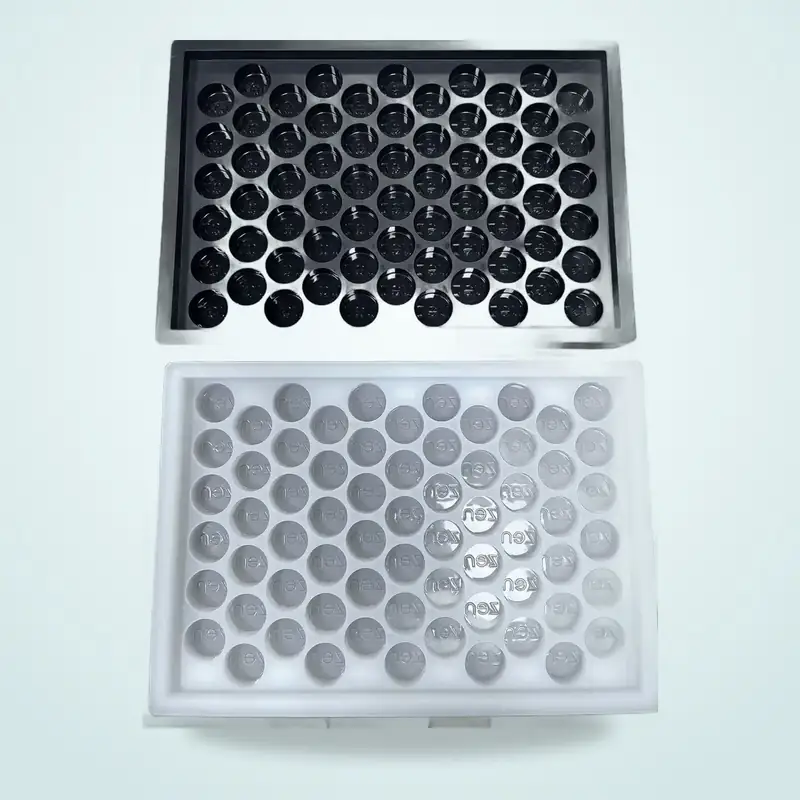
Face and tray: gloss or matte, cavity layout.
Define the Finished Chocolate First
Send:
- finished dimensions;
- target grams if weight matters;
- chocolate type/process;
- logo or artwork;
- required surface appearance;
- cavity-count target;
- tray-size limit;
- filling method;
- prototype and production quantity.
If the bar or bonbon must hit a specific retail weight, use that as an engineering target and validate the real result before repeating the mold.
Target Piece Weight and Cavity Volume
CAD volume is a useful starting point.
It is not a universal guarantee of final grams because actual results can depend on:
- chocolate formulation;
- fill/leveling method;
- tempering/process;
- overfill/meniscus;
- tray levelness.
A practical path is:
- define target grams;
- create the initial cavity;
- prototype;
- fill with the intended chocolate/process;
- weigh actual pieces;
- revise before production quantity if necessary.
This is more reliable than treating a nominal cavity volume as a finished-product guarantee.
Logo, Lettering and Branded Detail
For a branded chocolate, define:
- raised or recessed result;
- real logo size;
- smallest stroke;
- spacing;
- depth;
- visible face;
- product thickness behind the detail.
Deeper is not automatically better.
A narrow deep feature can:
- trap material;
- create fragile chocolate;
- reduce readability;
- make release harder.
Approve critical branding on the real chocolate where possible.
Custom logo molds: custom logo silicone molds
Surface Finish Starts With the Master
Silicone reproduces the surface of the master.
A polished master can produce a smoother/glossier cavity surface than a rough or matte master, but silicone alone does not guarantee a mirror-gloss commercial chocolate finish.
If ultra-high gloss is the priority, rigid mold routes such as polycarbonate may also be worth comparing depending on the product and production system.
The tooling choice should follow the product requirement rather than assuming silicone is always the best option.
Flexible Silicone vs Rigid Chocolate Tooling
Silicone can be useful when the buyer needs:
- custom shapes;
- lower-volume proprietary SKUs;
- undercuts or flexible release;
- prototype or seasonal development;
- branded forms that are difficult to eject from rigid tooling.
Rigid tooling may be better when:
- very high gloss is essential;
- rigid automated handling is required;
- production economics justify another tool route.
RUUIPON should review the actual product and volume instead of forcing every chocolate project into one process.
Multi-Cavity Layout
For production trays, cavity count must be balanced with:
- target grams;
- outside tray size;
- filled weight;
- cavity pitch;
- operator handling;
- depositor/filling method;
- support pan/frame;
- demolding sequence.
Do not maximize cavity count until the individual piece and production workflow are understood.
Multi-cavity molds: multi-cavity silicone molds
Food-Contact Material and Documentation
For a chocolate mold, provide:
- destination market;
- chocolate/food-contact use;
- contact temperature;
- repeated-use requirement;
- cleaning method;
- color/formulation requirement;
- buyer/retailer document requirement.
Food-contact evidence should match the selected material/article, use and market.
Do not rely on a generic FDA/LFGB badge.
Food-contact hub: food-grade silicone molds
Prototype With the Real Chocolate Process
A useful prototype can confirm:
- piece weight;
- complete fill;
- surface;
- logo/detail;
- release;
- tray stability;
- cavity consistency;
- operator handling.
If the mold is intended for a depositor, include the actual machine/nozzle constraints in the prototype review.
A visually correct empty mold does not prove the finished chocolate process.
What Affects the Quote?
- new 3D modeling/artwork conversion;
- cavity geometry;
- target grams;
- logo/detail;
- surface/master preparation;
- cavity count;
- tray dimensions;
- support;
- prototype/testing;
- selected silicone/material/document requirement;
- production quantity;
- packaging/shipping.
Commercial baseline: Standard MOQ is 20 pcs. If CAD/3D modeling is required, the standard modeling fee is USD 50. Tooling, unit price, lead time and shipping are confirmed for the specific project.
Chocolate Mold RFQ Checklist
Send:
- chocolate/bar/bonbon type;
- CAD, drawing, artwork, sample or photos;
- finished dimensions;
- target grams;
- logo/detail;
- surface requirement;
- cavity-count target;
- maximum tray size;
- filling/depositor information;
- prototype and production quantity;
- destination market/documents;
- delivery location and target date.
Request a Chocolate Mold Review
Frequently Asked Questions
Can you design from a target chocolate weight?
Yes, as a starting point. Final grams should be validated with the real chocolate and filling process.
Can silicone produce glossy chocolate?
The mold reproduces the master surface. For extremely high-gloss commercial bars, compare whether rigid tooling better matches the requirement.
What Shore A is best for chocolate molds?
There is no universal best value. Geometry, tray size, support, material properties and demolding all matter.
Can you make a logo mold from vector artwork?
Yes. The artwork still needs DFM for depth, stroke width, fill and release.
Can a chocolate mold use many cavities?
Yes, but cavity count should follow tray footprint, filled weight, filling method, support and demolding—not just available CAD space.