
Master Models for RTV Silicone Molds: CNC, SLA, Sample or Sculpture
The master is the source of truth for an RTV mold. A perfect platinum pour cannot correct a wrong pattern. If you're choosing how to make that pattern, pick the route that matches what has to be true on the cavity: CNC when a dimension or logo depth is commercial, SLA/DLP when the shape is sculptural, a physical sample when texture has to be copied, and reconstruction when the sample is already worn. Don't freeze surface finish after the rubber is mixed. A finished print is often a pattern, not the final production mother. Common shop path: print → temporary silicone flip → cast resin production mother → pour batch RTV molds. CNC masters and direct pour-on-print remain valid DFM choices when named - do not imply every job skips the flip/resin-mother stage.
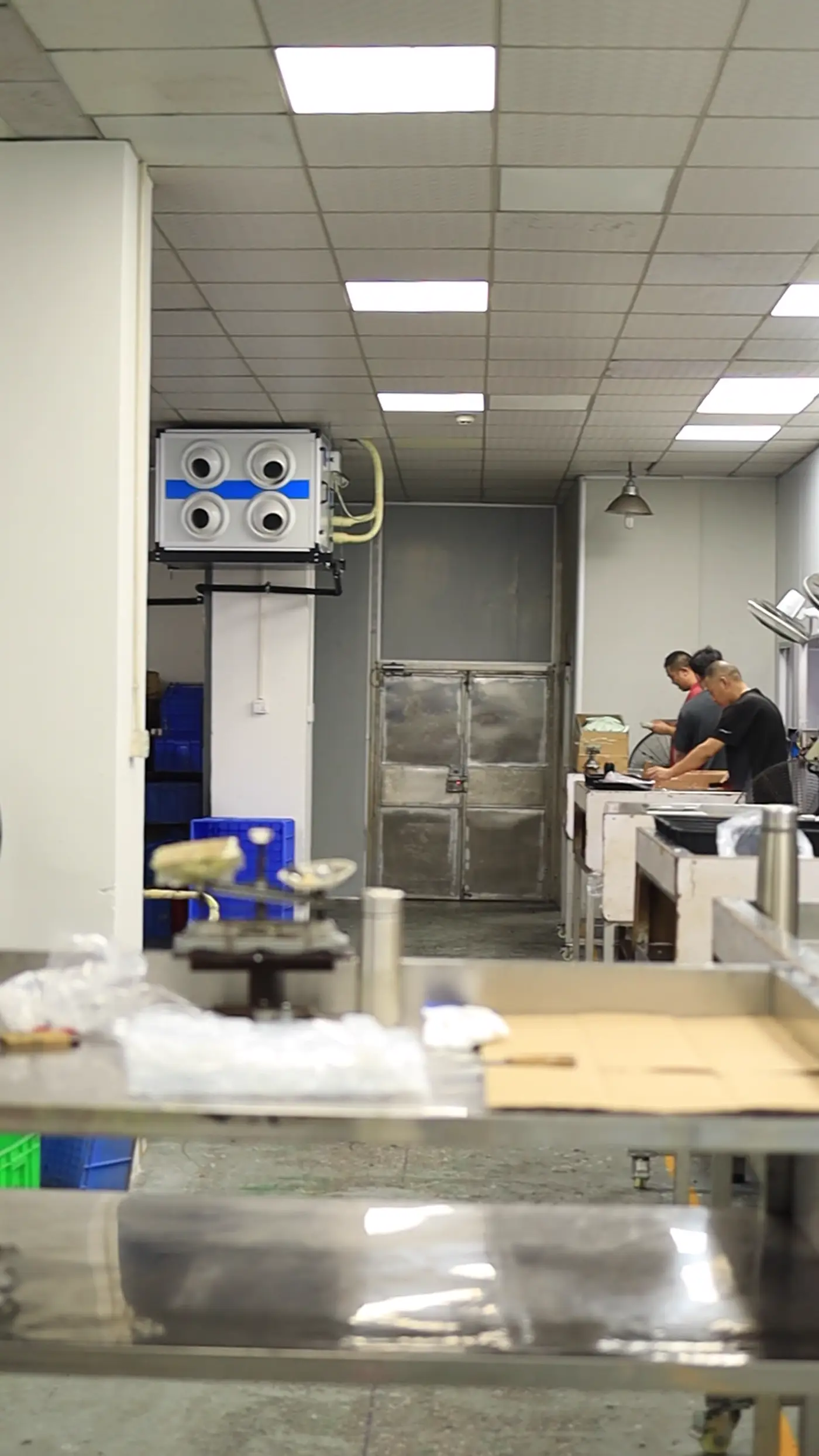
RUUIPON pours custom RTV cavities in Bao'an, Shenzhen. We sell the tool — 3D-printed pattern as needed, often a temporary silicone flip, then a resin production mother used to pour batch RTV molds — not an HCR compression part or an LSR cold-runner. Those belong on a separate RFQ - ask us. if you actually need thousands of molded silicone *parts*.
Pick the master by what it has to prove
| Route | Use it when | Typical shop catch |
|---|---|---|
| CNC (resin, aluminum, or steel slug) | Fit, grams, logo depth, or a depositor nest is a reject. Valid production mother when DFM names CNC; can also be a pattern if we still flip | Machined toolmarks print unless you specify the face finish |
| SLA / DLP / MJF print (often a pattern) | Organic sculpture, hairline texture; usually flipped to a temporary silicone tool, then a resin production mother. Direct pour-on-print only when DFM names it | Layer lines, sticky inhibition on platinum, wrong STL units; do not treat the raw print as the batch mother by default |
| Physical sample | You need the real leather, stone, or worn-in surface | Copying a stretched, yellowed, or chipped sample as the new nominal |
| Hand sculpture + scan | The art doesn't exist in CAD yet | Scale drift between clay, scan, and the pour box |
A mixed job is common: CNC the cavity map and grams, print the mascot insert, then register both in the box. That's still one master assembly, not two unrelated quotes.
Common mix-up: treating the STL as the master
A lot of RFQs send one STL and write "please make the mold." In the shop that file is a candidate, not a pattern. Units (mm vs inch), wall thickness, and whether the mesh is the *positive product* or the *negative cavity* still have to be named. If you send a 50 mm bear that lands as 50 inches, every later CTQ is theatre.
Photos without a millimetre scale are a review, not a master. See custom silicone mold from photos.
What we actually do to a master before A/B
- Confirm units, datum, and which faces are cosmetic.
- Check draft and undercuts against the RUUIPON Mold Structure Decision — peel, split, plug, or core — before anyone sands the pattern.
- Finish the face: machine marks vs layer lines vs the sample's real texture. The cavity will copy all of it.
- For printed masters going into platinum: wash, full UV post-cure, and a barrier coat. Uncured resin is a classic inhibition source. A small cure-compatibility patch on scrap RTV is cheaper than a ruined pour.
- Measure the master *before* the pour. If the pattern is already 0.4 mm long, the cavity will be too.
Don't approve the master from a phone photo of a grey print on a dirty bench. Approve it under raking light, with the CTQ dimensions written next to the photo.
Typical shop values
| Item | Typical shop value |
|---|---|
| Printed layer height on a food/logo master | 25–50 μm, then sand or coat the cosmetic face |
| Platinum RTV mix | 1:1 or 10:1 by grade; vacuum until the foam collapses |
| Platinum linear shrink | ~0.1–0.3% (tin-cure keeps moving in storage) |
| RTV cavity Shore | 10A–20A against the master, jacket behind it if the pour is wet/heavy |
| Custom 3D modeling (when that scope applies) | USD $50 |
| Prototype after CAD/master lock | 3–7 days in Bao'an |
| Production MOQ | 20 molds per design after the prototype is accepted |
Reference values only. Confirm material-specific limits against the supplier’s technical data and agree project acceptance criteria before production.
Failure: layer lines in every dump
Symptom: Every gummy, chocolate, or resin part shows stair-steps on a curved cheek, or a sticky patch in a logo pocket.
Confirm: Raking light on the master, then on the first cavity. If the steps are on the pattern, they are not a mixing problem. If the cavity is tacky only where the print was, suspect inhibition, not Shore A.
Fix: Refinish or reprint the master (finer layer, sand, primer, barrier). Recast the RTV skin against the corrected pattern. Raising Shore A will not hide a copied layer line.
Worked example: 18 mm bear, 12 cavities, pectin
A confectionery buyer sent an STL of an 18 mm bear and wanted a 12-cavity tray to dump pectin. The file was sculptural, so we printed the mascot, then CNC'd the cavity plate so grams and nest pitch stayed commercial. Layer lines on the belly would have printed into every dump, so the print was sanded and barrier-coated before the platinum pour. We would not have CNC'd hair-like fur, and we would not have poured platinum on the raw print.
What to ask when you're buying
- Is the master CNC, printed, a supplied sample, or a reconstruction — and who keeps it after the job?
- Are STL units millimetres, and is the file the positive product or the negative cavity?
- What face finish is approved *before* A/B is mixed?
- For printed masters: wash, UV post-cure, and barrier coat — yes or no?
- Must the physical master be returned, or may the shop keep a copy for recasts?
When this page is the wrong route
If you need thousands of molded silicone *parts* (gaskets, baking *articles*, overmolds), this master discussion is the wrong asset. Quote HCR compression or LSR with a cold-runner here as an HTV product RFQ. A tiny, shallow one-piece tray can skip a CNC master and use a well-finished print. Geometry can override quantity: one undercut-heavy 80 mm figurine still needs a split and a jacket even if you only want two molds.
Related: from photos or a sample, prototype validation, mother mold / support shell, contact.
RFQ: master package the pourer can use
Copy this. A price without these lines is not a master quote.
- Master type: CNC / SLA-DLP / physical sample / sculpture+scan
- File: STEP preferred; STL with units and scale stated
- One known dimension in millimetres, plus CTQ list
- Cosmetic face and required finish (gloss, matte, stone, leather)
- Casting material and working temperature (pectin, chocolate, resin, wax, soap, plaster, concrete)
- Master returned / shop keeps a recast copy
- Food-contact path if any: 21 CFR 177.2600 extraction and/or LFGB — not "FDA-approved factory"
Send the STEP or STL, four measured photos if there is no CAD, and the material you will cast. We will tell you whether the master should be CNC, printed, copied, or reconstructed *before* anyone weighs A/B. Email [email protected] or WhatsApp +86 135 3006 2969.
We would not recommend pouring platinum on a raw SLA master
We would not recommend copying a worn, stretched sample as the new nominal — reconstruct from the approved part or CAD instead (replacement & reorder). We would not raise Shore A to hide layer lines. We would not freeze surface finish after the mold has already been poured.
<a id="ruuipon-mold-structure-decision"></a>
RUUIPON Mold Structure Decision:
- Master exists and is dimensionally true? - yes -> Flat back?
- Flat back? - yes -> Open-back RTV
- Flat back? - no -> Deep undercuts?
- Deep undercuts? - silicone can peel safely -> Open-back RTV
- Deep undercuts? - cannot peel -> Two-part / removable plug / inner core
- Large wet casting or Shore 10A-20A? - tiny shallow tray -> Open-back RTV
Production stays at MOQ 20 pieces per design. Custom/simple 3D modeling is USD 50 when that scope applies. Prototypes are commonly 3-7 business days after CAD lock.
FAQ
Can I start the master from a photo? Often yes for an early review. For fit, grams, or a full-3D undercut, send a physical sample, several measured views, or CAD. A coin-for-scale photo is not a datum.
CNC or 3D print — which is "more accurate"? CNC is usually the better route when a millimetre or a logo depth is a reject. Print is usually the better route when the art is sculptural. Accuracy is to the *approved master*, not to the process name.
Will you return my physical sample? If you write it on the PO, yes. If the shop needs a recast copy, say whether we may keep a duplicate pattern. Paying for the mold does not, by itself, decide who keeps the master.
Do I need a prototype if the master looks perfect? For new geometry, yes. The prototype is a dump in the real material, not a photo of a grey print. Typical shop window is 3–7 days after the master/CAD is locked.
Can a bad master be "fixed in the silicone"? No. RTV copies the pattern, including scratches, inhibition tack, and wrong scale. Fix the master, then recast the skin.