
custom silicone gummy molds
Custom Silicone Gummy Molds
- SKU
- Weight + dimensions
- Formula
- Pectin / gelatin
- Fill
- Depositor fit
- Docs
- By material & market
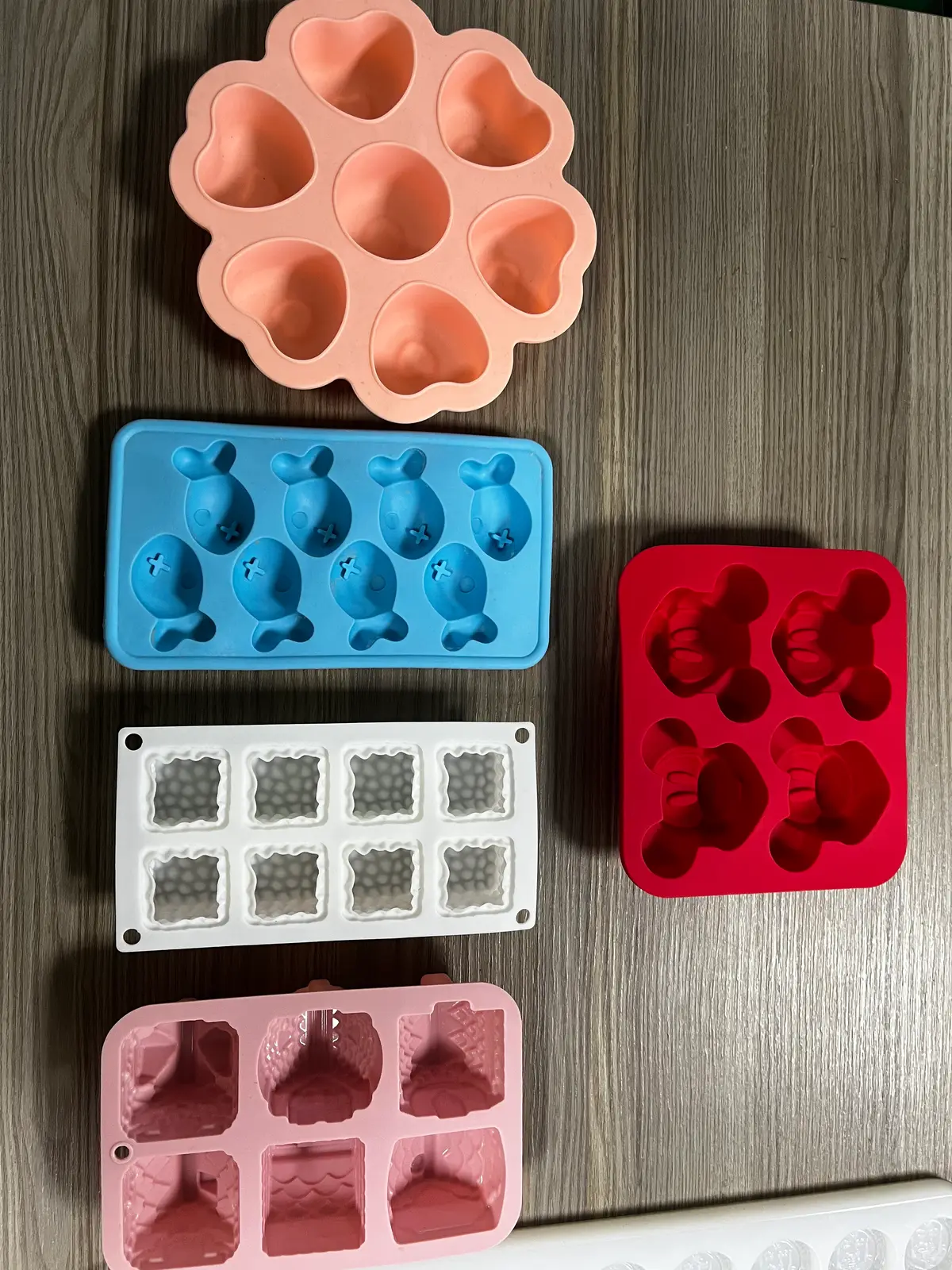
Send the piece weight, pectin or gelatin, and the depositor pitch. We size the cavity from the finished gummy, then check whether the filled tray still lines up with the nozzles.
Send CAD, artwork, a sample, or a measured photo.
Send Your Gummy Mold BriefRead the Gummy Mold Design Guide
Next checks: depositor pitch, grams to cavity volume, and gummy food-contact papers. The food-safe hub those papers belong to is food-safe silicone molds.

Start With the Finished Gummy
Before choosing cavity count or tray dimensions, define the SKU.
Send:
- target piece weight or finished dimensions;
- gummy formula/process type;
- artwork or 3D shape;
- required logo/text;
- filling method;
- expected production quantity;
- destination market.
If weight is important, the cavity should be designed from the target volume and then validated with the buyer’s real formulation/process.
A CAD volume is not a guarantee of the final gram weight.
Pectin, Gelatin and Other Formulas Do Not Demold Identically
Formula affects:
- flexibility/stickiness during release;
- how thin details behave;
- how aggressively the tray must be peeled;
- fill behavior;
- cleaning.
Do not select Shore A from a generic gummy-mold table alone.
Hardness, tear behavior, geometry and support need to work together.
If you already have a gummy formula and release process, include that information in the RFQ.
Custom Shape, Logo and Text
RUUIPON can review:
- brand logos;
- characters;
- letters/numbers;
- geometric shapes;
- supplement forms;
- custom product silhouettes.
For fine features, the design should balance:
- visible detail;
- complete fill;
- sufficient product section around the feature;
- clean release;
- mold durability.
If the logo is supplied only as a PNG/JPG, vector artwork or 3D modeling may be needed before the final cavity can be approved.
For a deeper technical review, see Custom Logo Silicone Molds.
Target Piece Weight and Cavity Volume
For a weight-controlled gummy SKU:
- define the target piece weight;
- use the actual formulation/density information available;
- create the initial cavity geometry;
- prototype;
- deposit the real formula;
- weigh the real pieces;
- adjust before repeating the production layout if required.
This is more reliable than promising that a nominal CAD volume will always produce an exact weight across different formulations and processes.
Cavity Count Comes After the Production Workflow
A higher cavity count is not automatically a better tray.
Review:
- maximum outside tray size;
- depositor/nozzle pitch;
- fill direction;
- scraper clearance if applicable;
- filled tray weight;
- support frame or pan;
- operator lifting/handling;
- demolding sequence;
- packaging/storage.
Two smaller trays can sometimes be more practical than one very large flexible sheet. The right answer depends on the line.
For production-layout decisions, see Multi-Cavity Silicone Molds.
Depositor and Equipment Fit
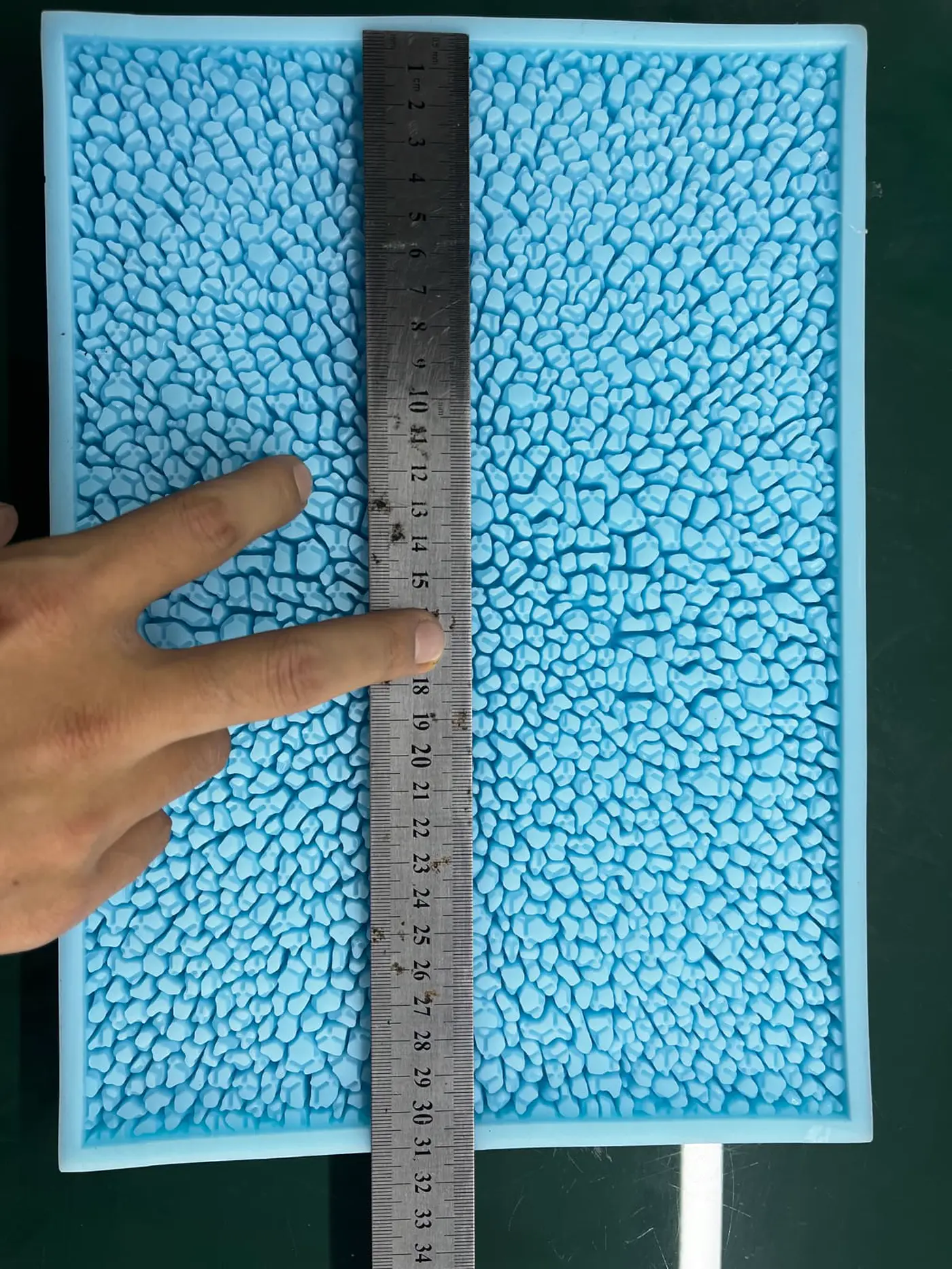
If the tray must work with equipment, send the equipment information before the layout is frozen.
Useful inputs include:
- nozzle count;
- center-to-center pitch;
- row pattern;
- indexing direction;
- scraper/fill clearance;
- maximum tray dimensions;
- carrier or support dimensions.
A custom mold should fit the production system, not force the operator to work around a decorative cavity grid.
Food-Contact Material and Documentation
For a gummy mold, define:
- destination market;
- contact temperature;
- repeated-use condition;
- formula/contact type;
- color/formulation requirement;
- cleaning method;
- customer/retailer document requirement.
Food-contact material and available test documentation should be confirmed for the selected silicone grade, article/use and market.
RUUIPON does not describe the factory itself as “FDA approved.”
Do not treat a generic FDA/LFGB badge as sufficient documentation.
See Food-Grade Silicone Molds for the purchasing-side document questions.
Prototype Before Repeating the Layout
A new gummy mold prototype should answer the specific production questions that matter to the SKU.
Check:
- target piece weight;
- cavity fill;
- release;
- logo/detail;
- tray handling;
- support;
- depositor alignment;
- cleaning.
If the design changes after prototype approval—especially cavity geometry, piece weight, logo or layout—the change should be treated as a revision and revalidated where necessary.
What Affects the Quote?
The main cost/schedule drivers can include:
- new 3D modeling or artwork conversion;
- master/cavity complexity;
- tray dimensions;
- silicone volume;
- cavity count/layout;
- support frame/shell;
- prototype/testing scope;
- required food-contact material/document set;
- production quantity;
- packaging/shipping.
Pricing and lead time are confirmed for the actual project rather than copied from another mold program.
Commercial baseline: Standard MOQ is 20 pcs. If CAD/3D modeling is required, the standard modeling fee is USD 50. Tooling, unit price, lead time and shipping are confirmed for the specific project.
Gummy Mold RFQ: What to Send
Please include:
- target gummy weight or dimensions;
- pectin, gelatin or other formula/process information;
- 3D file, drawing, artwork or reference images;
- logo/text requirement;
- cavity-count or output target;
- tray-size limit;
- depositor/nozzle pitch if automated or semi-automated;
- prototype and production quantity;
- destination market and food-contact document requirements;
- delivery location and target date.
Frequently Asked Questions
Can you make a mold from our logo or mascot?
Yes, the design can start from suitable artwork or reference geometry. Complex shapes may need 3D modeling and DFM before the cavity is released.
We know the gummy must weigh a certain number of grams. Is that enough to design the mold?
It is an important starting point, but the real formula and filling process should be used to validate the final weight.
Should pectin use a softer silicone than gelatin?
Do not apply a universal rule. Formula, geometry, tray support, material properties and release process all affect the selection.
Can you match our depositor pitch?
Yes, send the nozzle/row layout and tray constraints before finalizing the cavity layout.
Do we need a prototype?
For a new shape, weight-controlled SKU, difficult logo or equipment-fit requirement, a prototype is the safest way to validate the design before repeat production.