
Custom Silicone Molds for Plaster and Gypsum Casting
Plaster and gypsum are brittle when you demold them. The mold has to flex *around* a hanger island, a thin leaf, or a sharp relief so the casting doesn't carry the peel load. That's why plaster tools are usually Shore 10A–20A platinum RTV with a planned split, not a stiff 40A block “so it holds detail.” Wet gypsum still has mass: a large open-back plaque will sag 0.5–1.5 mm (and worse) without a jacket, and a full-3D figure will tear a one-piece glove.
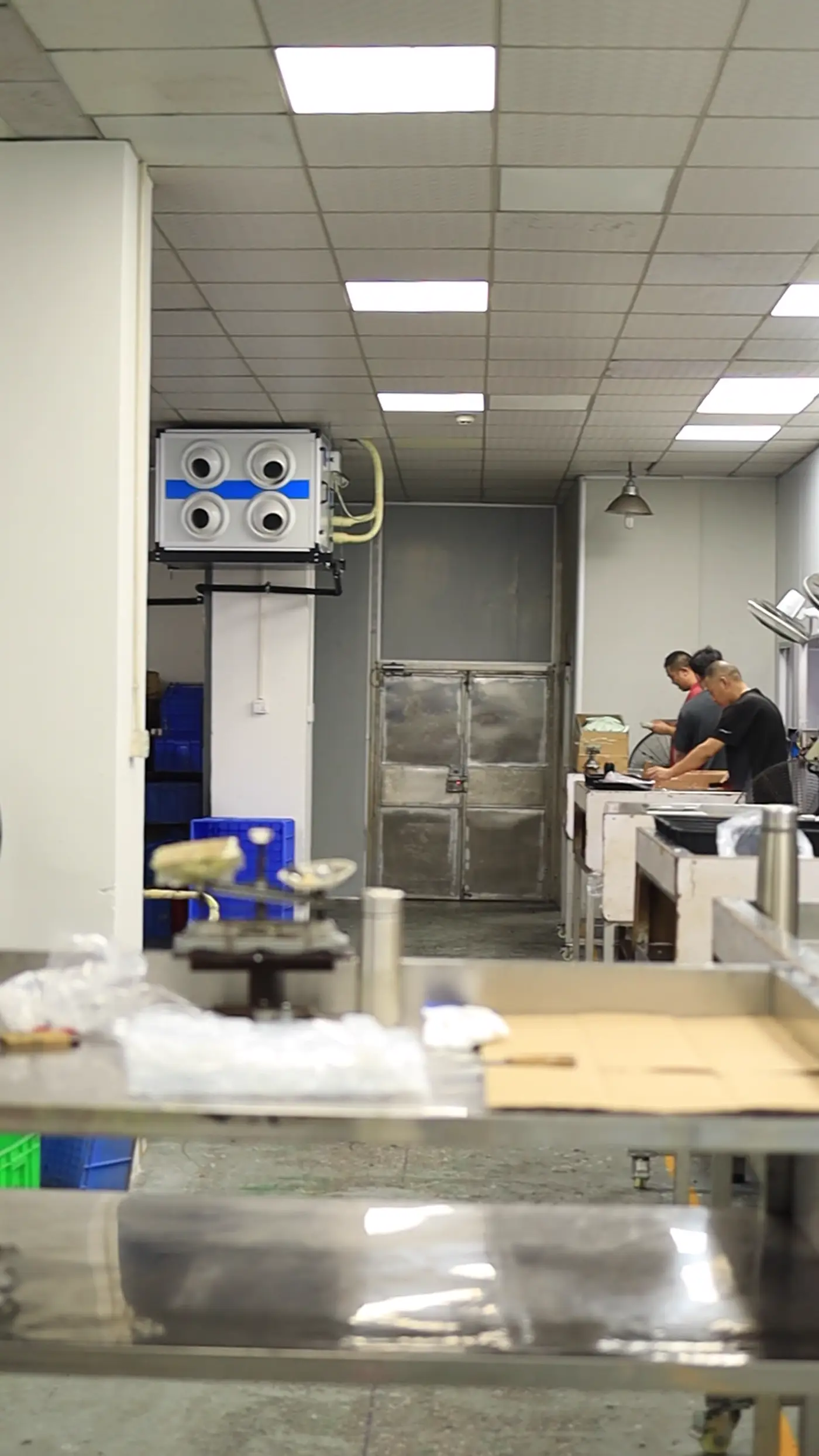
RUUIPON pours these as RTV tools in Bao'an, Shenzhen (since 2018): resin master to RTV casting mold. Prototype 3–7 days after CAD lock; MOQ 20 per design. If you wanted a molded silicone *part*, that's HCR or LSR with a cold-runner—wrong object. This page is the cavity you pour gypsum into.
Wet mass, undercut, jacket, Shore
Wet mass. Gypsum is lighter than concrete but a 300 × 400 mm relief plaque is still kilograms of wet slurry. Unsupported skins sag; wet gypsum also finds every unvented pit. Write filled mass and whether you vibrate or just pour. Tray-scale sag of about 0.5–1.5 mm is the conventional unsupported number; design the jacket for the real plaque, not the empty mold.
Undercut. Open-back wall plaques often peel as one piece if relief depth is modest. Hanger holes, undercut letters, and wrap-around frames do not. Full-3D busts and figurines need the same split logic as sculptures: seam off the show face, keys, maybe a plug for an arm. Don't ask a green plaster finger to survive a one-piece strip.
Jacket. Large wet plaques and any soft Shore 10A–20A cavity that must hold a flat back need a mother mold. The jacket must split or lift so you aren't prying on brittle plaster. See mother mold / support shell. A solid RTV block is heavy, expensive, and still creeps.
Shore. Typical cavity 10A–20A platinum so the skin peels off a hanger island instead of snapping it. Raising Shore to “protect detail” is backwards: stiffer rubber loads the plaster. Tear strength and peel path beat durometer. Platinum shrink ~0.1–0.3%. If a hanger hole is CTQ, put the shrink on the master and measure the hole on a real cast, mold seated in the jacket. ISO 3302-1 is a rubber-part class, not a plaster-mold slogan.
Common mix-up
Copying a resin-figurine mold for plaster. Resin can take a yank; plaster chips. Another mix-up: forcing a full-3D bust into an open-back “plaque mold” because the price looked better. You'll cut the mold apart on the first pull.
Worked example: 300 mm open-back wall plaque
Geometry: 300 × 220 × 18 mm open-back relief, 8 mm min at the thinnest leaf, 6 mm hanger island with a 4 mm hole, show face is the relief.
Cast: gypsum, ~2–3 kg wet, no vibration or light tap, 20 production molds after prototype.
Tool family: CNC or sculpted master (hanger island drafted) → platinum RTV skin Shore 10A–20A with a local peel at the island → plaster or printed jacket for the flat back → prototype one, then MOQ 20.
Acceptance: demold after a realistic set time with the leaf and hanger intact; hole diameter in the agreed window; back stays flat in the jacket (sag in the 0.5–1.5 mm typical band or better); surface pores on the master are not copied as a feature.
If the plaque gains a 20 mm wrap-around frame, stop calling it open-back. That's a split and a jacket split.
Failures you will actually see
| Symptom | How to confirm | Fix |
|---|---|---|
| Leaf, letter, or hanger chips on demold | Watch the peel; map the break to the undercut | Softer peel, more draft, split/plug; do not raise Shore |
| Hanger hole breaks out | Check island thickness vs hole | Thicker island, drafted pin, or drill after |
| Large plaque dishes in the middle | Full-weight pour vs empty | Jacket the back; don't thicken the RTV into a brick |
| Full-3D figure stuck in a one-piece glove | You had to cut the mold | Two-part with keys; seam off the face |
| Every cast shows the same pore or layer line | Compare to the master under raking light | Finish the master; don't recast a defect |
A photo that would prove the claim: hanger island intact next to the mold, jacket on the back, caliper on the hole. Ask for it at prototype validation.
Typical shop values
Reference values only. Confirm material-specific limits against the supplier’s technical data and agree project acceptance criteria before production.
| Item | Typical shop value |
|---|---|
| Cavity Shore | 10A–20A platinum RTV, jacket on large plaques |
| Mix | Platinum 1:1 or 10:1 by grade; vacuum degas until the foam collapses |
| Linear shrink | ~0.1–0.3% (platinum) |
| Loaded sag, unsupported | About 0.5–1.5 mm on a plaque-scale span |
| Prototype | 3–7 days after CAD lock |
| Production MOQ | 20 molds per design |
What to ask when you're buying
- Open-back plaque or full-3D? Don't let the quote assume the cheaper one.
- Where are the fragile bits: hanger, leaf, letters, fingers?
- Wet mass of the largest pour, and is there a jacket?
- Which Shore, and are you still adding a jacket at 10A–20A?
- Who keeps the master and jacket? Tooling charge is not unrestricted ownership.
- Will the first sample be real gypsum at a realistic set time, not a resin stand-in?
We would not recommend raising Shore to save a brittle hanger
We would not recommend a one-piece glove for a full-3D gypsum bust. We would not skip the mother mold on a large wet plaque. We would not copy 3D-print layer lines into a show-face relief. We would not put the seam across the face “because the box was easier.” We would not treat plaster as if it were PU resin and yank.
RUUIPON Mold Structure Decision:
- Flat-back plaque? - full-3D bust / figure -> Deep undercuts?
- Deep undercuts? - silicone can peel without chipping plaster -> Open-back RTV skin
- Deep undercuts? - cannot peel -> Two-part / plug / core
- Large wet gypsum or Shore 10A-20A? - tiny shallow tile -> Open-back RTV skin
- Two-part / plug / core -> Mother mold / jacket required
- Open-back RTV skin -> Large wet gypsum or Shore 10A-20A?
When this page is the wrong quote
Resin or PU figures that can take a harder pull belong on polyurethane resin or sculptures with that chemistry named. Architectural concrete with abrasive aggregate is the concrete page. A 50 mm sample tile you will cast twice can skip the jacket. High-volume silicone *parts* are not this tool.
Plaster / gypsum RFQ — copy this
- Open-back vs full-3D
- Finished size, wet mass, mix (plaster / gypsum / filler)
- Fragile features: hanger, holes, thin relief
- Show face and acceptable seam
- Master type (sculpt, CNC, print) and finish
- Jacket yes/no; Shore if already validated
- Prototype: real gypsum, realistic set time
- Quantity: prototype + production (MOQ 20)
- Ownership of master and jacket; recast of the RTV skin
- Current failure, if any: chips, dish, stuck glove
Send the master or STL, the hanger detail, and whether this is open-back. [email protected] · +86 135 3006 2969 · Licheng Technology Industry Park, Xinhe Blvd, Shajing, Bao'an, Shenzhen.
Matched CTA: Send open-back vs 3D, hanger/leaf photos, and wet kilograms for a peel-path and jacket review. Contact / RFQ · split lines · sculptures.
FAQ
Why do plaster molds run so soft? Green plaster chips if the rubber won't peel. Shore 10A–20A plus a jacket is the usual stack. A 40A cavity “for durability” is how hangers break.
Can I use a one-piece mold for a bust? Usually no. Full-3D gypsum wants a keyed split and a jacket. One-piece gloves get cut apart on the first pull.
Does wet gypsum need a mother mold? On a large plaque, yes. Typical unsupported sag is about 0.5–1.5 mm; that's enough to dish a flat back. Tiny tiles can skip it.
Will platinum shrink move my hanger hole? Typical linear shrink is 0.1–0.3%. If the hole is CTQ, oversize the master and measure a real cast in the jacket.
Do I own the master after I pay? Only if the PO says so. Recasts need that master. Write custody and whether a new RTV skin is included.