
DDP Shipping Custom Silicone Molds From China to the USA or Europe
DDP, DAP, FOB and EXW for custom silicone molds explained: volumetric weight, carton size, deformation-safe packing, destination data and when freight must be re-quoted.
 Kyler Yang · Founder12 min read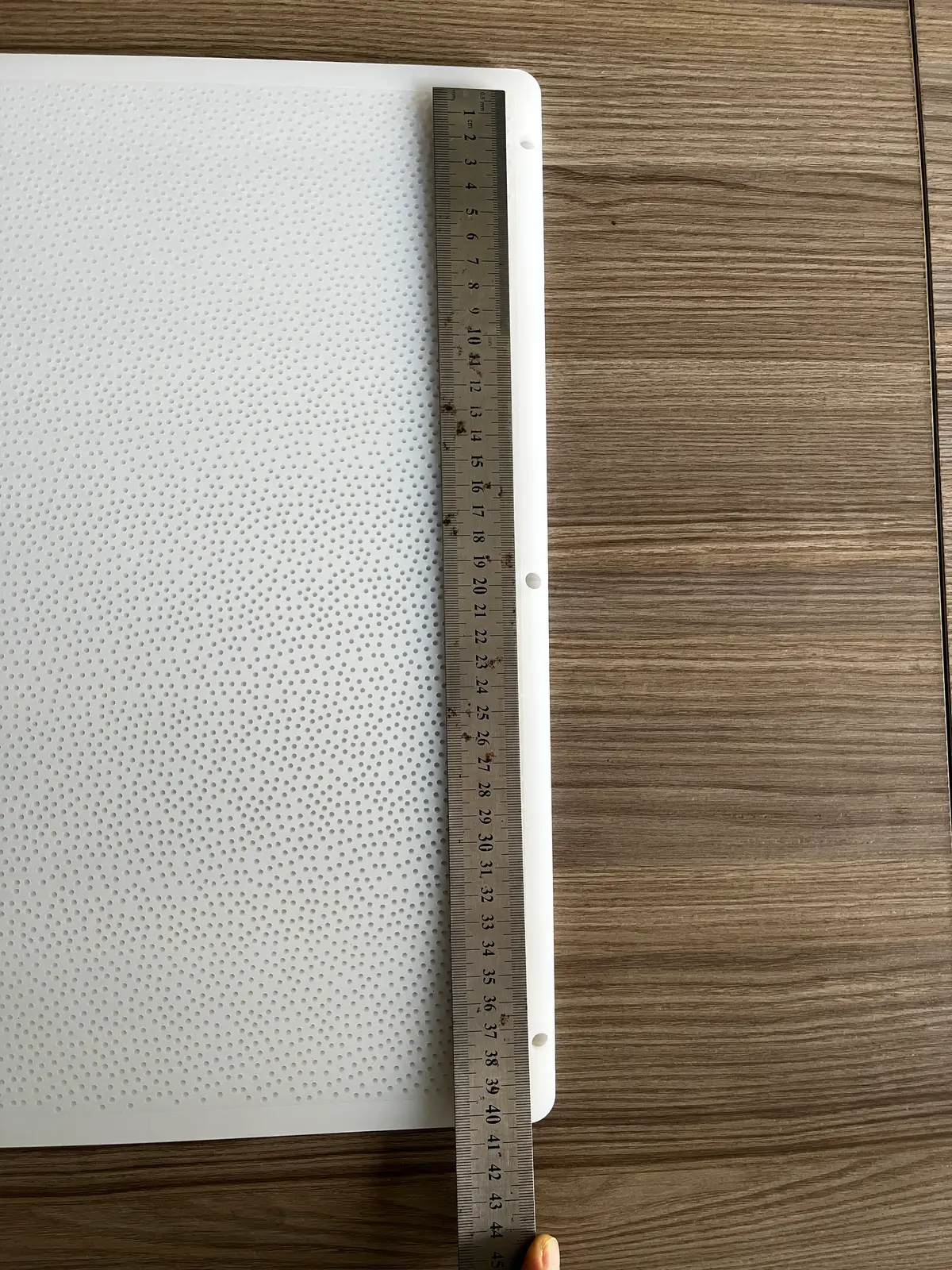
For custom silicone molds, the freight quote can change even when the product weight does not.
The reason is simple: many RTV molds are bulky relative to their mass. A 600 × 450 mm flexible tray may not weigh much, but the courier or air-freight charge can be driven by carton volume. If the mold must ship flat to avoid permanent deformation, packaging cannot always be compressed to reduce freight.
That is why a DDP quote given before the final mold footprint is locked should be treated as provisional.
First understand what DDP is solving for the buyer
DDP is generally used when the seller quotes delivery to the named destination with import duties/taxes and import handling arranged under the agreed commercial terms.
For a buyer, the attraction is predictability: one delivered price instead of separately arranging international freight and import clearance.
But the exact responsibilities, taxes and service scope should still be written on the quotation. Do not treat "DDP" as a substitute for a destination address and shipping method.
For commercial orders, confirm:
- named delivery location;
- courier/forwarder method;
- whether duties/taxes are included in the quoted amount;
- whether remote-area fees are included;
- any consignee information required;
- expected transit estimate after dispatch.
Incoterms do not replace local import requirements. The shipment still needs an accurate commercial invoice and product description.
DDP vs DAP vs FOB vs EXW in practical sourcing terms
EXW
Buyer takes responsibility from the supplier's facility and arranges pickup, export/freight and import logistics through its own forwarder.
Useful when:
- buyer has a strong China forwarding setup;
- multiple suppliers are consolidated;
- the buyer wants full control of transport.
FOB
Used mainly for larger freight movements where the supplier delivers to the agreed port/export stage and the buyer controls the main carriage/import side.
More relevant to larger consolidated shipments than one urgent prototype carton.
DAP
Seller arranges transport to the named destination, while import duties/taxes are generally handled by the buyer under the agreed term.
DDP
Seller quotes the broadest delivered responsibility to the named place, including import-duty/tax handling as agreed.
For small-to-medium mold shipments, buyers often ask for DDP because they want to compare a delivered number rather than manage a separate forwarder.
Why silicone mold dimensions can matter more than scale weight
Courier and air shipping frequently use chargeable weight, which can be the greater of:
- actual gross weight;
- volumetric/dimensional weight.
A light but large carton therefore behaves like a heavier shipment for pricing.
Illustrative example:
A carton holding large flat trays may be 65 × 50 × 30 cm. Even if the physical weight is modest, the carrier may rate it on dimensional weight according to its own divisor and service rules.
The lesson for quoting is not to memorize one divisor. It is to capture the final packed dimensions, because carriers and service types can use different formulas.
Why the mold cannot always be folded to save freight
Large silicone molds can develop storage deformation when they are:
- sharply folded;
- compressed under heavy cartons;
- stored with cavity walls bent;
- packed against rigid projections.
This matters for:
- large multi-cavity gummy/soap trays;
- thin flat food molds;
- long resin trays;
- brush-on silicone skins;
- molds with soft cavity walls.
A cheaper carton is not cheaper if the tool arrives distorted.
When flatness affects cavity volume or depositor alignment, the mold should be packed in a way that protects the intended geometry.
A good export pack starts from how the mold can safely deform
The packaging engineer should know:
- which direction may flex;
- which surfaces must remain flat;
- whether cavities may nest;
- whether the mold has an FRP shell;
- whether hardware can rub the silicone;
- how long the shipment may remain stacked.
Possible packing features include:
- flat corrugated or rigid support boards;
- cavity separators;
- individual poly bags;
- edge protection;
- nested orientation approved by engineering;
- separate hardware bags;
- reinforced cartons;
- wooden crate for large FRP-supported sculpture tools.
The goal is not "premium packaging." It is to prevent shipping forces from changing the mold.
Large FRP mother molds are a different freight problem
A silicone skin may be flexible, but the FRP support shell is rigid and volumetric.
A large sculpture mold can require:
- several shell sections;
- bolted flanges;
- internal bracing;
- loose silicone skins;
- hardware.
Packing may need the shell sections nested or crated while preventing damage to flange edges.
For this type of project, freight should be budgeted early but finalized only after the support-shell split and pack orientation are known.
What the factory needs for an initial DDP estimate
Provide:
- destination country;
- full postcode;
- city/state/province;
- mold quantity;
- approximate mold dimensions if known;
- estimated mold weight if known;
- requested delivery speed;
- whether delivery is residential, business or to a warehouse/3PL if relevant.
For the USA, a ZIP code matters. For Europe, country + postal code is needed because rates and import handling differ by destination.
Why freight should be re-quoted after the prototype
A CAD estimate may predict a tray size, but the final packed dimensions can change after:
- border reinforcement;
- mother-mold design;
- splitting one tray into two;
- packaging tests;
- stacking/nesting decisions.
The safest commercial flow is:
RFQ: estimated freight for budget.
After prototype/final pack plan: confirm final freight.
This avoids a supplier absorbing a major pack-size change or a buyer receiving a surprise surcharge.
Prototype shipping and production shipping may use different methods
A single prototype often ships by express courier because speed matters more than cost.
A production order may justify:
- express courier;
- air freight;
- consolidated air;
- sea/LCL for bulky volume;
- buyer's forwarder.
Do not assume the prototype courier method should be multiplied by 20 to estimate production freight.
Ask for the production pack-out separately.
What should be on the shipping quotation
A useful logistics line should state:
- Incoterm / delivered term;
- named destination;
- carrier/service if known;
- number of cartons;
- carton dimensions;
- gross weight;
- chargeable weight basis if available;
- freight amount;
- estimated transit time;
- validity period of the freight quote.
Freight rates change. The quotation should have a time validity rather than implying one rate is permanent.
Customs description should describe the actual product
Do not create misleading declarations to reduce tax or avoid import rules.
The shipment should use a commercially accurate description such as custom silicone molds / silicone casting molds as appropriate, together with the correct invoice value and agreed customs information.
The exact HS classification can depend on product characteristics and customs interpretation, so it should be confirmed for the shipment rather than copied blindly from an unrelated mold order.
When DDP is not the best choice
DDP may be unnecessary when:
- the buyer already consolidates China shipments;
- a 3PL or forwarder manages imports;
- the order is large enough for the buyer to control freight economically;
- the destination has special import requirements better handled by the buyer's broker.
In those cases, EXW/FOB/DAP or the buyer's nominated forwarder may make more sense.
The best shipping term is the one that matches the buyer's logistics capability-not the one that sounds easiest on a website.
What RUUIPON needs to quote delivery
Send:
- final or estimated mold quantity;
- destination postcode;
- required delivery date;
- known tray/mold dimensions;
- whether the project includes rigid FRP mother molds.
RUUIPON can provide a budget shipping estimate during RFQ and reconfirm the delivered freight after final mold and carton dimensions are available.
Ready to order custom silicone molds?
Free quote for OEM/ODM projects. MOQ 20 · Prototype 3-7 days · FDA/LFGB available.