
custom silicone ice molds
Custom Silicone Ice Molds
Custom silicone ice molds built to your part by a Shenzhen mold manufacturer. DFM review before tooling, MOQ 20 per design. Send the drawing, target weight and cavity count for review.
- DFM
- Before tooling
- Shape
- Cube / sphere / tray
- Lid
- If required
- Docs
- By grade & market
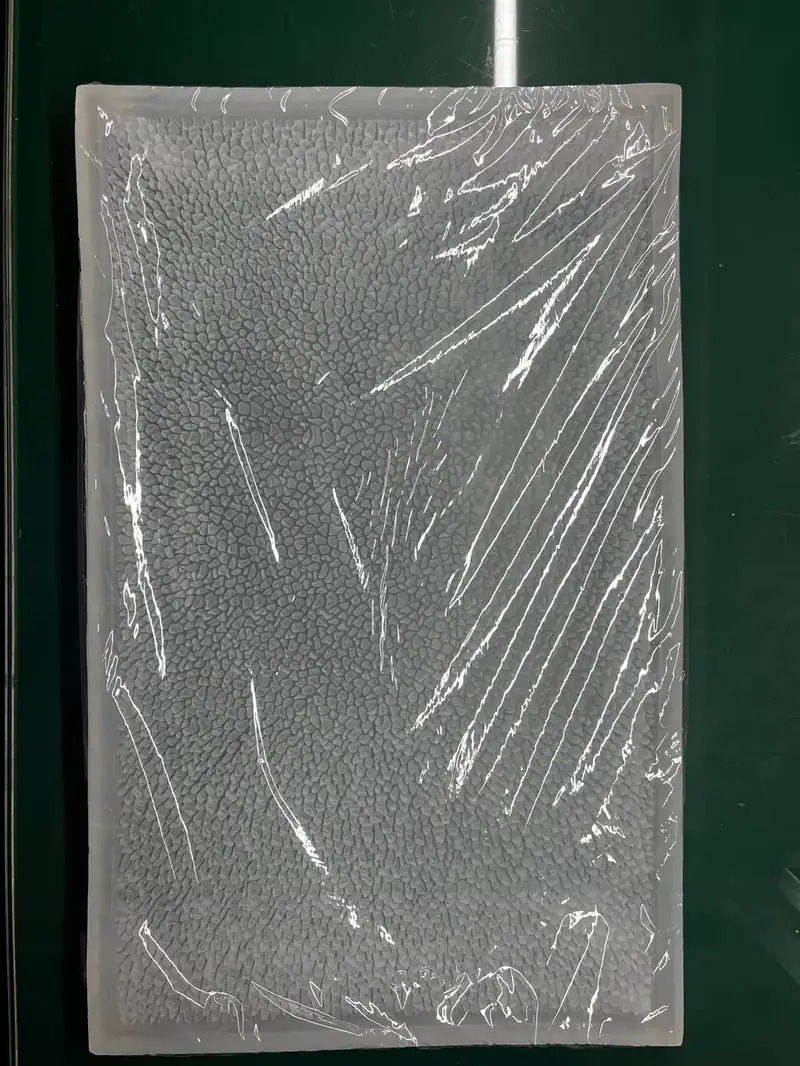
RUUIPON develops custom silicone ice molds for branded cubes, spheres, spears and hospitality trays. Send the finished ice size, artwork, cavity requirements and intended use. We review filling, release, lid or split features and full-tray handling before confirming the mold design, prototype requirements and quotation.
Your project can start from a new shape or an existing tray reference. Include the finished ice dimensions, desired logo result and service workflow so we can assess what needs to be customized. Sphere-specific alignment and filling details are covered on the dedicated ice-sphere mold page.
Send Your Ice Mold Brief Ice mold design guide
For material and document requirements, see food-safe silicone molds. For the difference between an empty-tray demonstration and filled handling, see ice tray hand-press note.
Work Out Fill Volume Before Tray Size
A fill-volume calculation helps size a supporting tray and plan the water load. For a design example, a rectangular cavity measuring 50 × 50 × 50 mm has a nominal volume of 125 mL. Six such cavities total 750 mL before allowances for the final geometry and filling method.
| Design-example input | Initial calculation | Confirm in the prototype |
|---|---|---|
| 50 mm cube cavity | 50 × 50 × 50 ÷ 1,000 = 125 mL | Actual fill level and room for freezing expansion. |
| Six cavities | 6 × 125 = 750 mL nominal capacity | Support and safe movement with the full water load. |
| Added logo or shaped cavity | Use the revised CAD cavity volume | Readable detail and release after a complete freeze. |
These dimensions illustrate the calculation. Choose your finished ice dimensions, freezer clearance and glass fit first. Then confirm the cavity, fill opening and support with a freeze-and-release trial.
Guides for Your Project
- How a custom silicone ice tray is developed
Review the cavity, flexibility and support together.
Choose the Ice Format
Cubes
Suitable for standard or large-format ice and molded branding.
Key questions:
- cube size;
- cavity count;
- logo face;
- tray support;
- release.
Spheres
Often require a two-part, lid or split geometry.
Review:
- fill opening;
- air escape;
- alignment;
- seam;
- opening/removal sequence.
Spears / Collins Ice
Long narrow cavities create different handling and release requirements than cubes.
Custom Brand Shapes
Bottle silhouettes, icons, letters and other custom forms need DFM for thin tips, undercuts and release.
Specify the Finished Ice and the Release Method
Send the finished ice dimensions, artwork and the face where the logo must appear. Mark whether the lettering should be raised or recessed on the ice. Include your freezer shelf clearance, filling method and how the mold will be opened.
For the first sample, freeze using your normal water and freezer conditions, then check logo legibility, edge damage, release and the fit in your serving glass. Record any resting time before demolding so repeat tests use the same procedure.
Send your ice shape, logo and glass dimensions.
Logo and Branding
Send:
- vector logo if available;
- target ice size;
- desired raised/recessed result;
- visible face;
- required packaging/photo angle.
Logo geometry must balance:
- readability;
- fill;
- air release;
- ice strength;
- mold release.
A deeper logo does not automatically produce clearer branded ice.
If the mark has to read in the ice face, send the artwork with the cube or sphere size so we can review it as a molded logo, rather than a mark applied after freezing.
Sphere and Two-Part Mold Design
A sphere mold may need:
- upper/lower sections;
- alignment features;
- fill opening;
- controlled vent/air path;
- support;
- a manageable seam.
The design should make filling and opening repeatable.
Review the filling, alignment and opening sequence for the intended user and service conditions. The four-cavity shaped ice mold example shows how two halves divide the shape and where the upper half provides filling access.
If your product is an ice sphere, the dedicated custom silicone ice sphere molds page covers lid, fill and seam. For cubes, branded trays and mixed hospitality formats, include the complete service workflow in your brief.
Filled Tray Handling
Review the full water load when deciding tray size and support. For layout considerations, see multi-cavity silicone molds.
A large flexible tray should be reviewed in the filled state for:
- sag;
- movement to the freezer;
- spill risk;
- support pan/frame;
- lid fit;
- stacking;
- operator grip.
Material hardness is only one variable.
An external support tray can be more useful than simply making the silicone harder.
Clear Ice Is a Different Problem
A silicone mold controls:
- geometry;
- branding;
- fill path;
- release.
It does not by itself guarantee clear ice.
Ice clarity is affected by the water and freezing process. If the buyer needs clear presentation ice, the mold must work with that process rather than being marketed as the sole solution.
Hospitality vs Retail Requirements
Hospitality / Bar Service
Important factors can include:
- repeated daily handling;
- service speed;
- support/stacking;
- washing;
- station footprint;
- consistent logo orientation.
Retail / Gift Set
Additional factors can include:
- lid;
- packaging dimensions;
- consumer instructions;
- color;
- retail document requirements.
State which route the project is intended for.
Food-Contact Material and Documentation
For an ice mold, define:
- water/food-contact use;
- repeated-use condition;
- cleaning;
- color/formulation;
- destination market;
- required buyer/retailer documents.
Food-contact evidence should match the selected silicone grade/article and intended use.
Do not rely on a generic FDA/LFGB badge.
See our food-contact silicone mold guidance. The selected material and supporting documentation should match the intended ice-making use and destination market.
Manufacturing Route
For custom flexible ice molds, the manufacturing route depends on:
- design;
- quantity;
- repeat-volume;
- tooling economics.
RUUIPON can review an RTV-cast silicone route for suitable custom programs and HCR/HTV compression molding for appropriate repeat-production silicone trays.
The RFQ should describe the product, quantity and use before locking the route.
For factory scope and development stages, see the custom silicone mold manufacturer page. Send your ice brief through contact once the format and handling path are clear.
Prototype the Real Fill, Freeze and Release Process
Test:
- filling;
- air escape;
- lid/split fit;
- freeze;
- release;
- logo;
- seam;
- tray handling;
- support;
- washing.
For a branded sphere or complex shape, prototype validation is especially useful before repeating the design across many molds.
What Affects the Quote?
- ice size and geometry;
- logo/detail;
- one-piece vs split/lid structure;
- cavity count;
- overall tray size;
- silicone volume;
- support/lid components;
- CAD/modeling;
- prototype/testing;
- manufacturing route;
- food-contact documentation;
- order quantity;
- packaging/shipping.
Commercial baseline: Standard MOQ: 20 pcs per design for applicable custom RTV production. Standard CAD / 3D modeling fee: USD 50 when RUUIPON builds or revises 3D. Tooling, unit price, lead time and shipping are confirmed for the specific project.
Ice Mold RFQ Checklist
Send:
- cube/sphere/spear/custom shape;
- ice dimensions;
- logo/artwork;
- cavity-count target;
- outside tray-size limit;
- lid or split requirement;
- hospitality or retail use;
- support/stacking requirements;
- prototype and production quantity;
- destination market/documents;
- packaging requirement if retail;
- delivery destination and target date.
Request a Custom Ice Mold Quote
Send ice dimensions, logo artwork, cavity count, lid or split requirements, tray-size limits, mold quantity and destination market.
Frequently Asked Questions
Can a silicone mold make clear ice?
The mold controls shape and release, but clear ice mainly depends on the water/freezing process.
Is a softer mold always easier to use?
Not necessarily. A very soft large tray can be difficult to carry when full. Review support, geometry and material together.
Can you make a branded sphere?
Yes, subject to DFM for logo placement, split/seam, fill/air path and release.
Can a bar/hotel use the same design as a retail tray?
Sometimes, but the handling, lid, packaging, cleaning and service workflow can lead to different requirements.
Do all ice molds use the same food-contact documentation?
We review the available documentation against the selected material, intended use, destination market and buyer requirements. Share any retailer document list before material selection.
Can I order custom ice molds for a private-label program?
Yes. Share the ice shape, logo artwork and any packaging requirements so we can review the mold and branding together.
A custom ice mold manufacturer, not a catalog seller
We do not stock finished trays. A ice mold here starts from your part: cavity count, piece weight, surface finish and the way the mold opens. The first step is a DFM review of your drawing or reference sample, not a price list.
These programs suit brands that need their own shape instead of a catalog shape. Soft tooling typically starts at MOQ 20 per design, and the mold is built to your brand rather than ours. If you are comparing suppliers, the useful question is not who quotes lowest but who can show the material documentation and a sample that matches your production run.
Next: how we work as a custom silicone mold manufacturer · low MOQ mold programs
Why buyers work with RUUIPON
RUUIPON is a Shenzhen silicone mold manufacturer. We run a DFM review before tooling, supply food-grade platinum-cured silicone with available material documentation for the required market, and build a sample before mass production. Soft-tooling custom mold programs typically start at MOQ 20.
Ice cube tray clip
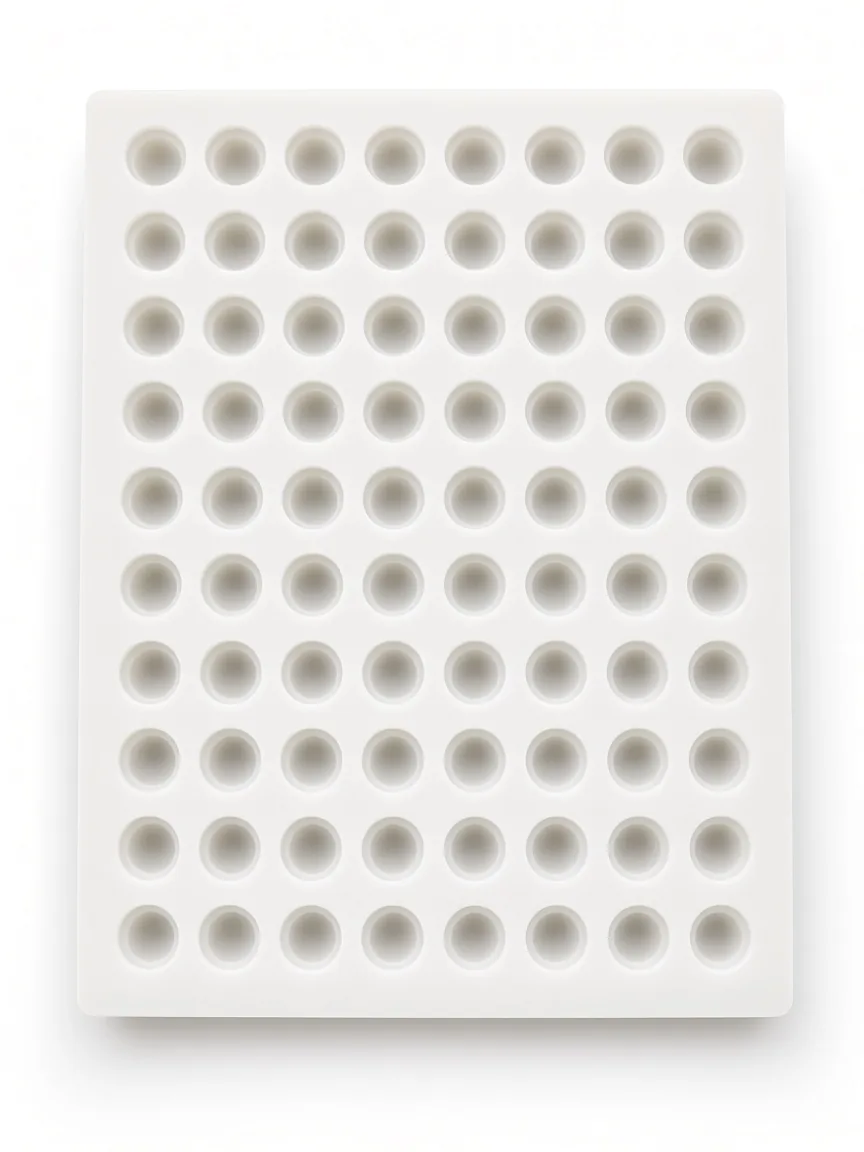
A silicone tray with square cavities is shown under hand pressure. The clip demonstrates the flexibility of an empty tray. Filled-tray handling and material documentation are reviewed separately for your project.
Cube tray that stays flat under hand pressure
Hand press on a square-cavity sheet. Wall and bottom thickness keep the tray from collapsing - not a cycle-life number.
Before you approve the mold
Review Filling, Freezing and Ice Release
Use these questions to define the design review and prototype checks for your project.
Is the shape an open cavity or a complete sphere?
A complete shape may require mating halves, registration and a defined fill opening. Confirm the assembly before tooling.
Prototype check: Check alignment, filling and any unwanted seam on the frozen piece.
How will the filled mold reach the freezer?
Review freezer clearance, loaded weight and tray or base support. Allow for the intended freezing process.
Prototype check: Move a filled prototype through the actual handling route and check for spilling or distortion.
Does the ice need to carry fine lettering?
Check lettering at the intended size and agree on an acceptable appearance. Mold geometry alone does not guarantee clear ice.
Prototype check: Inspect frozen samples made with the intended water and freezing method.
Include in your project brief
Ice shape and size; logo artwork; freezer space; fill and freezing method; cavity count; support needs; mold quantity; destination.