
Scaling Custom RTV Resin Molds: How to Choose a Production Supplier
If you're choosing a production supplier to scale custom RTV resin trays - not shopping an epoxy how-to and not browsing the crafts hub - design the tool around how the resin fills, cures, and leaves the cavity. The same decorative part may need a different structure for slow epoxy than for fast polyurethane. RUUIPON pours reusable platinum RTV resin tools in Bao'an, Shenzhen (Licheng Technology Industry Park, Xinhe Blvd, Shajing; USCC 91440300MA5FAXCN9W) since 2018. Production is MOQ 20 pieces per design. Simple 3D is USD 50 when that CAD scope applies. Prototype is 3-7 business days after CAD lock. Application chemistry lives on silicone mold for epoxy resin. The crafts landing is crafts and resin solutions.
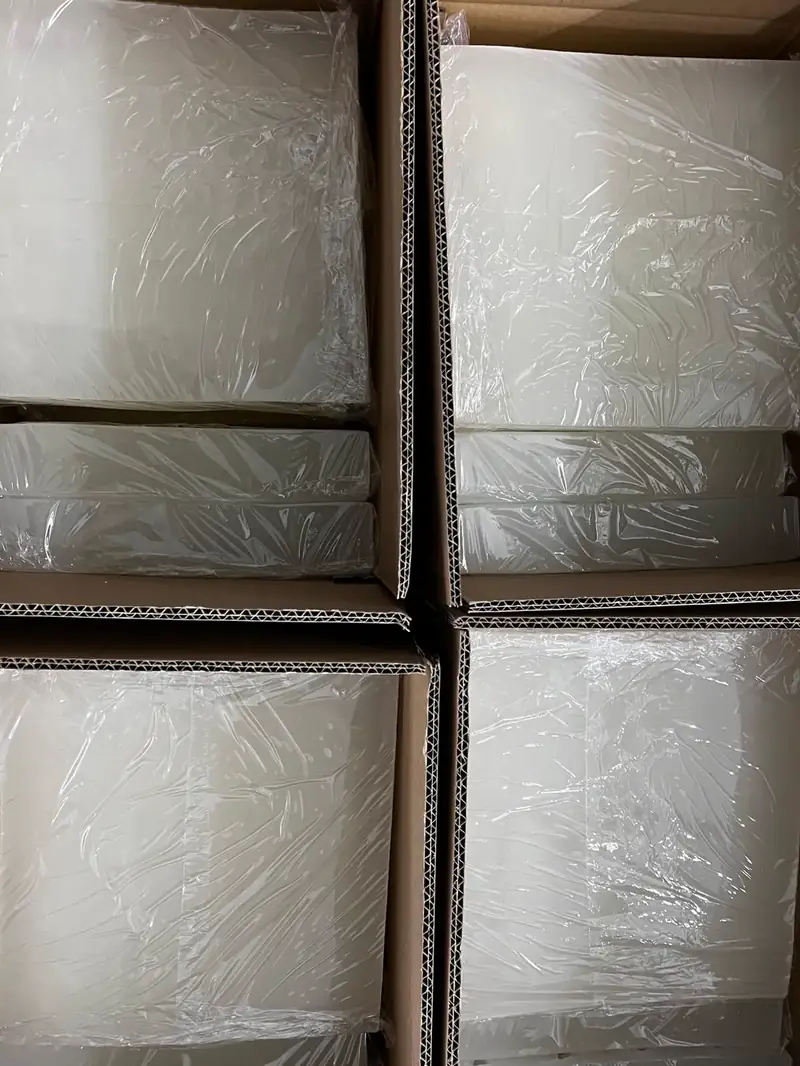
A production supplier should ask about resin chemistry and process conditions before choosing Shore or quoting from overall dimensions. Don't send a generic quote with only a render.
Where this page sits in the cluster
Use this page when you're multiplying trays, comparing quotes, and locking archive/reorder after a working prototype. If you need epoxy fill, exotherm, and coupon compatibility as the application question, stay on silicone mold for epoxy resin. Jewelry-scale holes and UV dumps: silicone mold for jewelry resin. First-time craft brands still deciding whether to leave kitchen molds: crafts and resin solutions. The product SKU is custom silicone resin molds.
Epoxy and polyurethane create different problems
Epoxy resin
Epoxy systems often give more working time, but viscosity, exotherm, and long cure still matter. Typical mold issues: bubbles in fine texture, heat in thick pours, surface contamination from incomplete cure, difficult release around deep undercuts, and distortion of a large unsupported mold during a long cure. Detail on the epoxy application page - we won't clone that H1 here.
Polyurethane resin
Many PU systems have shorter pot life and punish a slow fill path. The mold may need a direct pour path, high-point vents, fast assembly, positive registration, and pressure-pot compatibility if that's the process. Some resins interact differently with silicone over repeated cycles. Pick the grade from the actual resin, not the label "craft resin."
The master surface becomes the resin surface
Resin copies detail aggressively. That's useful when the master is good and expensive when it isn't. Inspect print lines, sanding scratches, pinholes, gloss, sharp edges, logo corners, and SLA support marks before anyone pours RTV. A polished coaster needs the master approved at that gloss. Stone texture has to live on the master - we don't invent it later.
Cure compatibility should be checked before the full mold is poured
Some masters, coatings, adhesives, or contaminants interfere with cure - especially platinum. Before committing a large RTV shot, a supplier should patch-test SLA/DLP faces, fresh paint, sulfur sculpting materials, unknown sealers, and repaired areas. A failed patch is cheap compared with a sticky production mold.
Typical shop values
Reference values only. Confirm material-specific limits against the supplier’s technical data and agree project acceptance criteria before production.
| Item | Typical shop value |
|---|---|
| Open-back coaster / shallow tray | Often 20A-40A platinum, no split |
| Deep undercut / peel skin | Often 10A-20A plus a jacket, or a keyed split |
| Mix | Platinum 1:1 or 10:1 by grade; vacuum degas until the foam collapses |
| Linear shrink | About 0.1-0.3% platinum, compensated on the master; tin keeps moving in storage |
| Large wet epoxy pour | Mother mold / support jacket - not optional on a floppy skin |
| MOQ | 20 mold pieces per design after prototype approval |
| 3D / CAD | USD 50 when that modeling scope applies |
| Prototype | 3-7 business days after CAD lock, in the resin you actually pour |
| Contact | [email protected] · +86 135 3006 2969 |
One-piece, split mold or removable plug?
Start by drawing the demolding path.
One-piece open mold
Good for shallow coasters, simple trays, flat-back reliefs, and shapes where the cured resin can leave by a controlled peel.
Two-part mold
Useful when the part is fully 3D or cannot leave a single cavity without excessive stretch. Decide where the seam lands, how the halves register, where resin enters, where air escapes, and how the mold is clamped during cure.
Removable plug
A plug can unlock a handle opening, an undercut behind an arm, a small transverse hole, or a local trap without forcing a full multi-part split. The best structure is the simplest one that survives the cycle and keeps cosmetics acceptable.
RUUIPON Mold Structure Decision
Flat back? Open-back RTV. Deep undercuts the silicone cannot peel safely? Two-part, removable plug, or inner core. Large wet casting or a soft Shore? Mother mold required. Thin posts, leaves, or bails? Redesign or reinforce before you copy x20. SLA master? Full UV post-cure, wash, barrier, then a coupon.
- Flat back? - no -> Deep undercuts?
- Deep undercuts? - silicone can peel safely -> Open-back RTV
- Deep undercuts? - cannot peel -> Two-part / plug / core
- Large wet casting or soft Shore? - tiny shallow tray -> Open-back RTV
Bubble problems are usually geometry + process problems
A silicone mold does not automatically eliminate air. If bubbles return in the same place, check whether that point is a geometric high during fill, whether resin has to flow around a narrow obstruction, whether a vent exists there, whether texture holds air, whether viscosity is too high for the path, whether a detail coat should go down before the bulk pour, and whether vacuum or a pressure pot is part of your process. Random vents everywhere create flash. Vent where the air is trying to leave.
Exotherm belongs in the mold review
A thick epoxy block can produce more heat than a thin jewelry part. That heat hits the resin and the RTV. For thick pours, send resin system, recommended max pour depth, peak exotherm if you have it, casting mass, room temperature, and expected cure time. The answer may be a staged pour, a different resin, more support, or a material review. "Silicone is heat resistant" is not enough.
Large resin molds often need external support
A soft RTV cavity can copy detail and still fail to hold a large casting in position. A sculpture or planter may use a rigid mother mold around a flexible skin. The jacket can be FRP, a rigid resin composite, or another engineered support. It should control bulge, seam alignment, core position, base flatness, and repeat assembly. If the resin mass is heavy, test the assembled mold under load before you approve 20 copies.
Shore hardness is only one variable
Buyers often ask for Shore A 20, 30, or 40 as if that were the quote. Hardness affects flexibility, but wall thickness, unsupported span, ribs or shell, undercut depth, casting weight, and peel direction decide the real behavior. A thick 25A block can be harder to flex locally than a thin 40A lip. Select the grade after geometry, not from a catalog default.
The prototype acceptance test should use the real resin
A working prototype should answer: does the part fill; where do bubbles collect; can you demold without overstretching the same thin area; is the seam cleanup acceptable; does the mold deform during cure; does the surface match the approved master; is the cycle practical. The empty mold is half the product. Timing is commonly 3-7 business days after CAD lock.
When this page does not apply
This supplier-selection path does not apply if you need the epoxy application page, a jewelry-scale UV dump, or the crafts hub overview. It also does not apply if the thing you sell is a molded silicone part (coaster that is silicone, a gripper, a wearable) tooled in HCR or LSR - that's an HTV product RFQ here. Production polyurethane injection-plastic parts are a different tool class. A one-off hobby mold you'll pour three times is the wrong commercial fit for MOQ 20.
What to send for an accurate resin-mold quotation
Provide STEP/STL/OBJ or a physical master; finished dimensions; epoxy/PU/UV type; viscosity and pot life if known; casting weight or volume; cure condition; cavity count; first mold quantity; monthly/annual casting target; acceptable seam locations; vacuum or pressure-pot use; destination. If you already have a failure, send photos of the tear or bubble location. A failure photo often beats a generic spec sheet. USD 50 3D only if we still have to model.
RFQs we will not accept as-is
A one-piece glove for a bail, negative-draft letter, or two-sided logo. Raising Shore A first on a locked undercut. Duplicating twenty cavities from an inhibited SLA master. Skipping the jacket on a large wet epoxy pour to cheapen the quote. Routing a silicone-part RFQ (HCR/LSR goods) through this production path - thhere as an HTV product RFQ.
Matched next step
Send resin type, pot life, part size, CAD or master, and the number of production trays you actually need after a working prototype. We'll name open-back vs split vs jacket, and we'll say if this is a finished part. "Resin mold, 20 pcs" with no chemistry is not enough to quote.
Send a resin production-mold RFQ · Custom resin molds · Epoxy application · Jewelry resin · Crafts and resin hub
[email protected] · +86 135 3006 2969 · Licheng Technology Industry Park, Xinhe Blvd, Shajing, Bao'an, Shenzhen. USCC 91440300MA5FAXCN9W.