
Split Lines and Registration Keys for Two-Part RTV Molds
The best split line is not the easiest place to cut silicone. If you're tooling a full-3D part, put the seam on the least-visible equator, lock the halves with keys that still find each other after heat and stretch, and give air a high-point vent so the first dump isn't a short shot. Thin rubber at the shut will tear on the fifth open, not the fiftieth. Don't force a one-piece peel because a video showed a glove mold of a miniature.
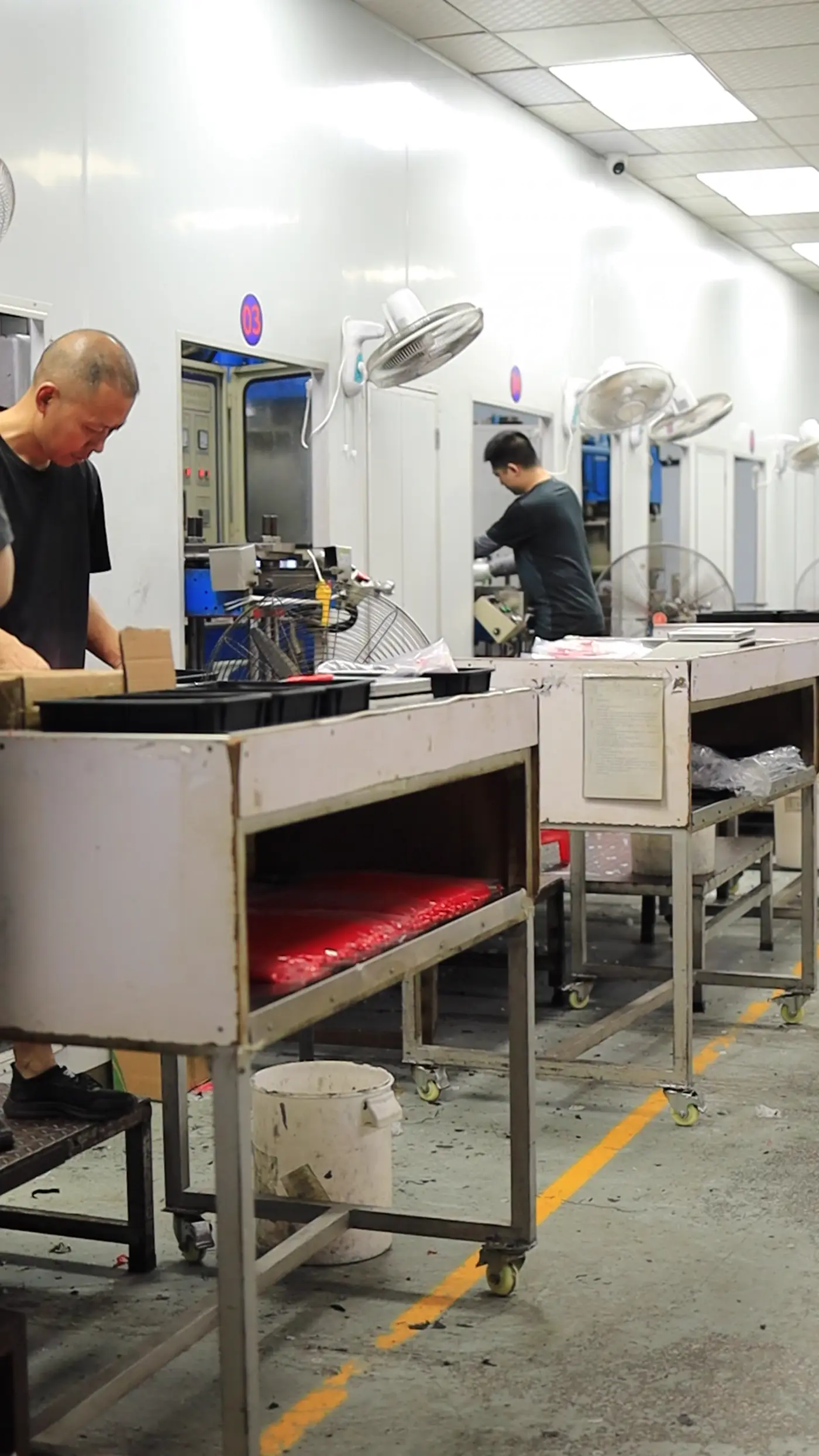
RUUIPON builds keyed two-part (and plug/core) RTV cavities in Bao'an. We sell the mold as a tool — resin master to RTV casting mold, recast. An LSR cold-runner or HCR compression plate is a different object; ask us. if you need molded silicone *parts*.
Where the seam actually belongs
Walk the part the way the operator will peel it:
- Hide the flash on a natural equator (belt line, base ring, hair parting), not across a logo cheek.
- Give each half enough rubber wall that opening the mold doesn't rip the shut.
- Put the pour gate where the dump can fill downhill, and vents at the last place air will sit.
- If a feature has negative draft that will not peel — a bail, a letter with undercut serifs, a two-sided logo — stop arguing about Shore A and add a split, a removable plug, or an inner core.
Keys are how the halves return to the same shut. Pips, bushes, or CNC bosses all work. "The flash line will show me" does not, after a few hot pectin or resin cycles.
Common mix-up: more keys instead of a better split
A buyer sees mismatch on the first cast and asks for extra pips. Extra keys on a warped, thin flange still mismatch. First move the split so both halves are stiff enough, then size the keys so they cannot assemble 180° wrong. A core that can go in backwards is a shop-floor defect, not an operator skill issue.
What we review before anyone cuts the box
- Cosmetic face and the one seam location the brand will live with.
- Undercuts: peel, split, plug, or core — named, not "shop to advise."
- Pour orientation and viscosity of the real dump (pectin is not water; epoxy is not wax).
- Whether a mother mold will carry the shut, because a floppy 10A–20A skin cannot hold key alignment by itself.
- Seam cleanup labor on every cast. A pretty split that needs five minutes of flash pick is a recurring cost.
Typical shop values
| Item | Typical shop value |
|---|---|
| Cavity Shore at the shut | 10A–20A platinum RTV; jacket if the mold is large or wet |
| Registration | 3–6 keys on a hand-sized two-part; odd count or a unique key so halves cannot swap |
| Key style | Pips / bushes / CNC bosses that still seat after thermal cycles |
| Platinum mix | 1:1 or 10:1; vacuum degas until the foam collapses |
| Platinum linear shrink | ~0.1–0.3% |
| Prototype after CAD lock | 3–7 days; MOQ 20 molds per design after approval |
Reference values only. Confirm material-specific limits against the supplier’s technical data and agree project acceptance criteria before production.
Failure: seam across the face, or halves that walk
Symptom: A hairline on the logo; mismatch you can feel with a fingernail; flash that changes every dump; a tear starting at the thinnest shut.
Confirm: Dry-assemble the empty mold and check key seat. Cast once in the real material, not water. Mark which half walked. Measure rubber thickness at the tear.
Fix: Move the split off the cosmetic face, thicken the shut or add the jacket, re-cut keys so they cannot assemble backwards. Recast the skin against the same master. Don't "just run it softer."
Worked example: 40 mm lollipop letter with negative draft
A confectionery buyer needed a 40 mm lollipop with a letter that undercut the face, food-contact, first a single cavity then a 6-up sheet. A one-piece peel would have torn the serif. We put the split off the letter, CNC bosses in the jacket, and a high-tear platinum skin against the master. The pour gate sat at the stick, vents at the letter counters. That seam is cleanup on every dump — named on the RFQ, not a surprise.
What to ask when you're buying
- Where is the seam in a screenshot, and is that face cosmetic?
- How do the halves key, and can they assemble backwards?
- Where are the pour gate and the high-point vents for *this* viscosity?
- Is a removable plug cheaper than stretching a one-piece glove?
- Who inspects alignment on the first real-material dump, and with what note?
When this page is the wrong route
A flat-back chocolate or gummy tray with no undercut is an open-back RTV job; don't buy a two-part because the catalog photo looked "more professional." If the article is a molded silicone *part* in the thousands, you need steel/aluminum and a parts OEM, not a keyed RTV jacket. Geometry can override quantity: two molds of a two-sided mascot still need keys.
Related: inner core design, mother mold, prototype validation, contact.
RFQ: split and key package
Copy this.
- Preferred cosmetic face and forbidden seam zones
- Pour orientation and dump material / viscosity
- Split vs plug vs inner core — your preference, or "shop to mark"
- Key style if you already have a mating jacket
- Expected seam cleanup (zero flash vs trim-ok)
- Rigid support shell: yes/no
- Quantity now and whether the CAD is frozen
Send a marked screenshot of the seam you can live with, the dump material, and whether the mold sits in a jacket. We will return a split, key count, and vent plan before A/B. [email protected] · +86 135 3006 2969.
We would not recommend a one-piece glove for this geometry
We would not recommend a one-piece open-back mold if the part has a bail, a letter with negative draft, or a two-sided logo. We would not raise Shore A first to hide a walking shut — add keys and a jacket. We would not put the seam across the most visible face to make the box easier to cut.
RUUIPON Mold Structure Decision:
- Flat back? - no -> Deep undercuts?
- Deep undercuts? - silicone can peel safely -> Open-back RTV
- Deep undercuts? - cannot peel -> Two-part with keys / removable plug / inner core
- Two-part with keys / removable plug / inner core -> Keys cannot assemble backwards
- Large wet casting or Shore 10A-20A? - tiny shallow tray -> Open-back RTV
FAQ
Can you hide the seam completely? On a full-3D part, no. You can hide it on an equator the customer doesn't photograph. If zero flash is a CTQ, say so — that drives shut design and cleanup labor, not a promise of an invisible cut.
How many registration keys do I need? Enough that the halves cannot shift *and* cannot be closed 180° wrong. Three to six on a hand-sized mold is a common shop band. A unique key or odd layout beats a pretty symmetric four that still swaps.
Do I still need vents if the silicone is flexible? Yes. Air traps are a fill problem, not a Shore problem. High-point vents and a sensible pour gate matter more as viscosity goes up.
Will a mother mold replace good keys? No. The jacket stops bulge. Keys stop mismatch. You usually want both on a large two-part.
Can we change the split after the first molds are poured? Sometimes, by recasting the skin against a revised master or a new clay wall in the box. Production molds already in the field don't pick up the new seam. Lock the split at prototype.