
custom silicone candle molds
Custom Silicone Candle Molds
- DFM
- Before tooling
- Structure
- Open / slit / split
- Seam
- Off the hero face
- Wick
- Path reviewed
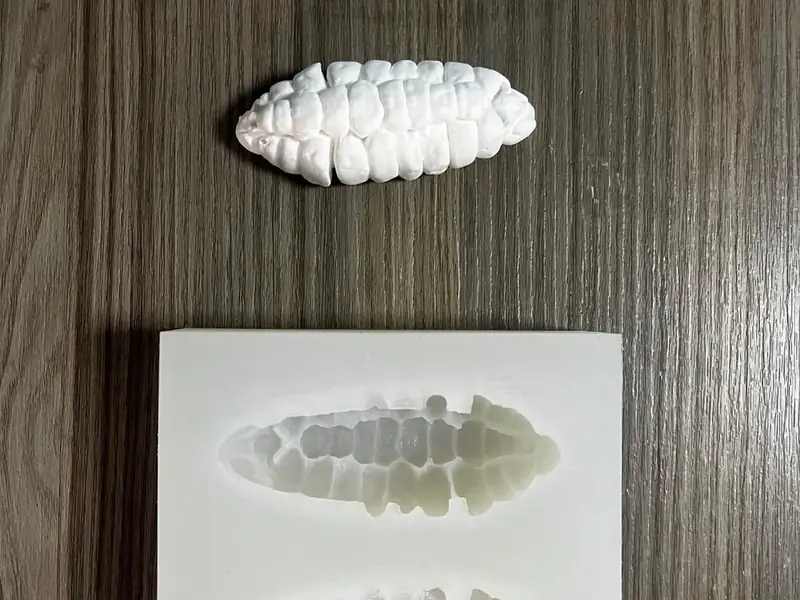
A candle mold should be designed for the moment the wax has cooled and the finished candle has to come out.
A pillar can peel from an open cavity. A figurine usually needs a planned slit so the seam misses the face.
The mold can be one-piece, slit, split, cored or supported depending on the geometry and the production workflow.
Send Your Candle Design Candle seam-line guide
A wick that has to stay centered is a separate cut: wick hole design. A brand silhouette starts from the outline, not Shore: brand candle silhouette.
A custom candle mold manufacturer has to pick structure from the finished candle. A simple pillar may peel from an open cavity. A figurine often needs a planned slit or a keyed split so the seam sits off the hero face.
Start With the Finished Candle
Send:
- finished dimensions;
- wax type/blend;
- pour condition if known;
- target candle weight;
- logo/texture;
- wick position;
- 360° geometry;
- surfaces where a seam is unacceptable;
- expected mold quantity.
For sculptural candles, front-only references are not enough. Side/back details often determine the mold structure.
One-Piece, Slit or Split?
One-Piece / Open Mold
Suitable where the candle can peel out without severe locking.
Planned Slit
Useful for some sculptural forms where one controlled opening provides release while minimizing a long visible seam.
Two-Part Mold
Useful where:
- the candle has strong undercuts;
- arms/handles/loops trap the mold;
- the geometry cannot pass through one opening;
- a controlled seam is preferable to overstretching the silicone.
Local Plug/Core
Useful when one undercut can be isolated instead of making the whole mold more complex.
The correct solution is the structure that gives reliable release with acceptable finishing effort.
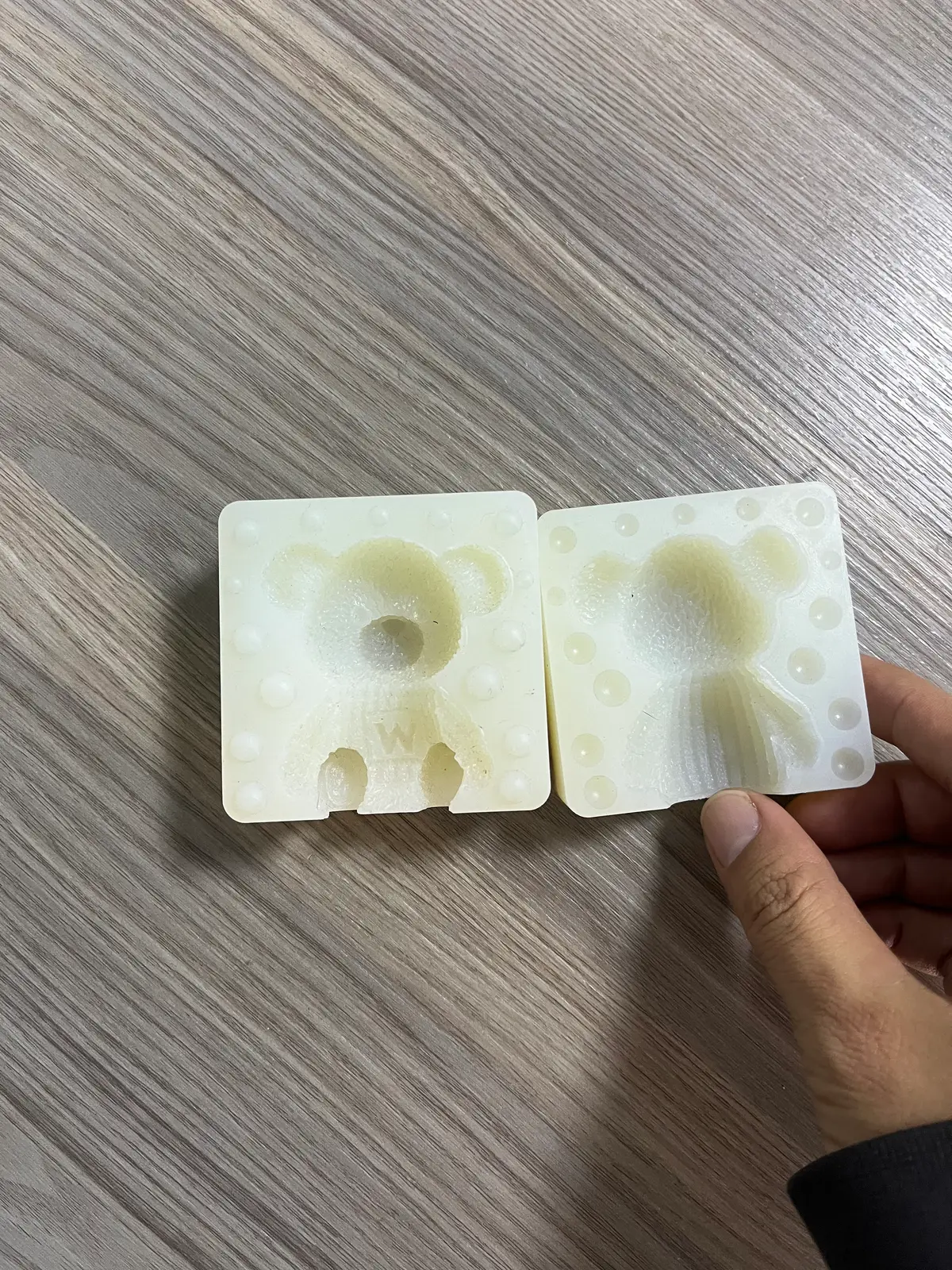
Put the Seam Where the Customer Will Not Look First
For branded or decorative candles, identify the hero face before tooling.
Try to keep the parting/seam away from:
- face;
- front logo;
- smooth presentation panel;
- fine decorative features.
Better seam zones can include:
- rear edge;
- natural texture valley;
- clothing/fold line;
- facet edge;
- underside/base area.
A slightly more complex mold can be commercially worthwhile if it reduces hand-finishing on every candle.
If the seam already shows on poured wax, read the candle mold seam-line notes before asking for a harder Shore.
Wick Access Belongs in the Design Review
Possible approaches can include:
- molded pilot hole;
- removable wick pin;
- controlled slit;
- opening through a split;
- post-demold drilling/piercing where appropriate.
Review:
- wick location;
- wick/pin diameter;
- sealing/leakage;
- local silicone strain;
- operator threading method;
- mold support.
Do not force a tiny unreinforced puncture to perform the same repeated production task if another design is more practical.
Tall and Sculptural Molds May Need Support
A flexible mold may release a difficult candle but bulge while full of hot wax.
Possible support approaches:
- outer sleeve;
- rigid support shell;
- tray/frame;
- structural base;
- local reinforcement.
Harder silicone is not always the correct solution because it can increase demolding force.
Prototype the mold at the intended fill level with the intended support.
Wax Type Changes the Validation
Paraffin, soy blends, beeswax and other systems can differ in:
- shrink/cooling behavior;
- rigidity at demold;
- surface reproduction;
- fragrance/additive loading;
- preferred pour/release conditions.
Use the real production wax for prototype validation where possible.
Do not copy one wax temperature or shrink percentage onto every project.
Logo, Texture and Fragile Detail
For sculptural candles, review:
- thin projections;
- loops/handles;
- letters;
- deep texture;
- narrow gaps;
- small decorative elements.
The visible candle may look strong while the negative silicone section around a detail becomes thin or highly strained.
For brand-critical detail, approve an actual wax casting, not only a CAD render. For brand-critical detail, review the actual stroke width, depth, local section thickness and demolding path for the candle geometry and wax system. Artwork and raised/recessed direction still belong on custom logo silicone molds; candle, ice and chocolate do not share one logo treatment.
Factory-scope questions sit on the custom silicone mold manufacturer page. Send wax type, hero face and wick path through contact.
Prototype the Full Production Sequence
A useful candle mold prototype can check:
- complete fill;
- seam;
- wick setup;
- release;
- surface;
- support/bulging;
- fragile features;
- closure/alignment;
- operator effort.
If the buyer requires a specific test pour, define the wax and acceptance points in the quotation.
What Affects the Quote?
- overall size;
- undercuts;
- one-piece/slit/split/core structure;
- support shell;
- master/3D modeling;
- logo/texture;
- wick feature;
- silicone consumption;
- prototype/test-pour scope;
- mold quantity;
- packaging/shipping.
Commercial baseline: Standard MOQ: 20 pcs per design for applicable custom RTV production. Standard CAD / 3D modeling fee: USD 50 when RUUIPON builds or revises 3D. Tooling, unit price, lead time and shipping are confirmed for the specific project.
Candle Mold RFQ Checklist
Send:
- CAD/STL/photos/sample;
- finished candle dimensions;
- wax type/blend;
- target weight if known;
- logo/texture;
- hero face/no-seam area;
- wick position and preferred installation;
- prototype requirement;
- mold quantity;
- expected monthly/repeat use if known;
- destination and target date.
Frequently Asked Questions
Do all pillar candles need a two-part mold?
No. The structure depends on taper, undercuts, detail and release path.
Can a silicone mold include the wick hole?
Yes, but the wick feature should be designed around the actual production method and local tear risk.
What Shore A should a candle mold use?
There is no universal number. Geometry, mold size, support, wax behavior and demolding strain should be considered together.
Can you make a mold from photographs?
Potentially. For a full 3D sculptural candle, multiple views plus at least one verified dimension are needed before accurate modeling.
Should we test with our actual scented wax?
Where practical, yes—especially when release, surface or formulation compatibility is important.
Candle molds on YouTube
Three jobs from the RUUIPON channel: brand silhouette, bear character, and a sphere / floral face. Custom trays, not catalog candles.
Custom candle mold for a brand shape
Platinum RTV candle tray for a signature silhouette - hot-wax release, not a catalog SKU.
Bear candle silicone mold
Character undercuts need draft and Shore matched to the pour. This clip is that job, not a stock mold.
Candle mold - sphere and floral face
Wax candles from a custom cavity (round body, flower top). Candle page only - not a food-contact claim.