
custom silicone baking molds
Custom Silicone Baking Molds & Trays
- DFM
- Before tooling
- Support
- Loaded tray
- Route
- After review
- Docs
- By grade & market
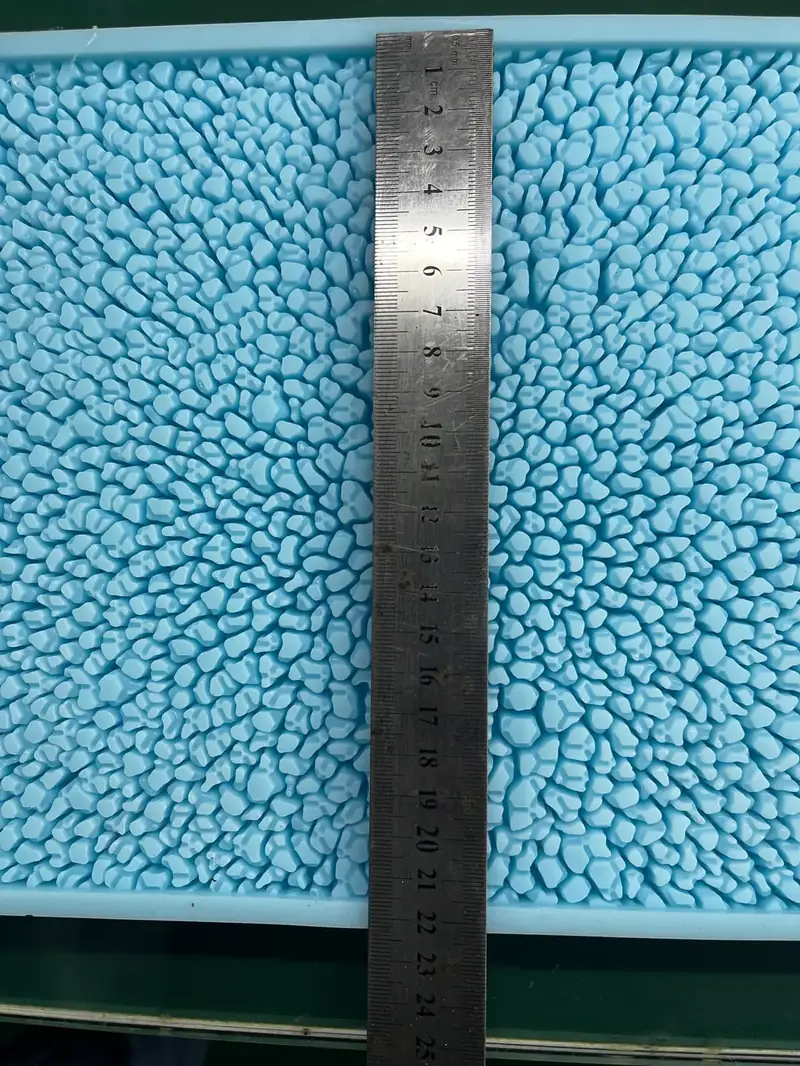
A custom baking mold has to keep the filled tray flat in your pan, release the bake, and go back in the oven. Heat resistance alone does not set the tool.
Send CAD, a drawing, a sample, or a sketch. We check whether the loaded tray stays flat.
Send Your Baking Mold Requirements Baking heat-limit guide
Food-contact papers are food-safe silicone molds. The shop quote is the Shenzhen manufacturer page.
Custom cake molds and production baking trays fail for different reasons. A decorative cake cavity is a release and face-detail problem. A production tray is a loaded-span and oven-support problem. Send both the baked shape and the bakery setup.
Start With the Baked Product and the Production Setup
Send:
- finished product dimensions;
- portion weight if relevant;
- cavity shape;
- cavity count target;
- oven/rack or sheet-pan constraints;
- expected operating temperature and time;
- filling method;
- support method;
- production quantity.
If the mold has to fit a standard bakery tray, rack or carrier, send those dimensions before the cavity layout is frozen.
Custom Cavity Geometry
RUUIPON can review projects such as:
- muffins, cakelets and custom cake molds;
- bars and molded portions;
- decorative or branded shapes;
- multi-cavity baking trays;
- specialty food-support forms;
- molds with functional internal features.
A buyer inquiry may require more than a simple open cavity. For example, a concept can include flexible internal supports to hold an irregular food item upright. That type of geometry needs DFM around fill, support, cleaning, release and the loaded condition before it should be treated as production-ready.
The fact that a feature can be drawn does not mean it will automatically work in a flexible mold.
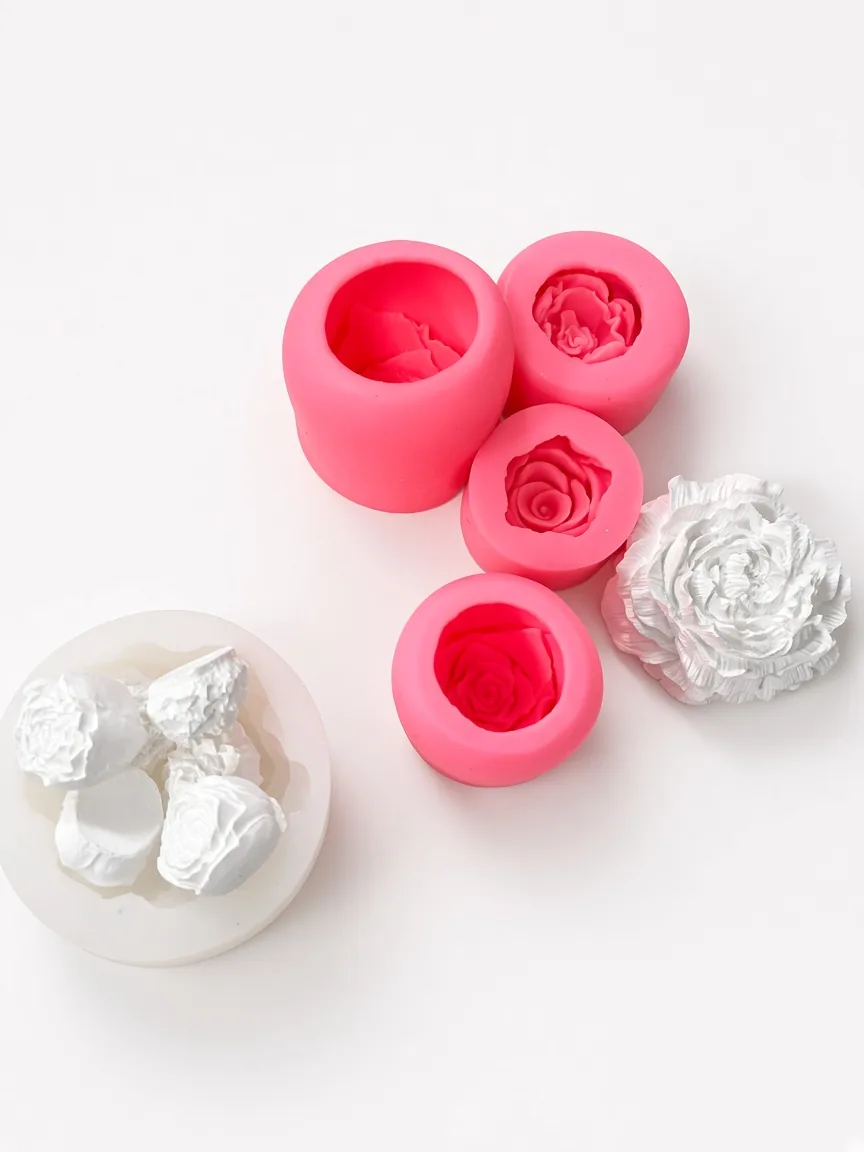
Loaded Tray Stability Matters
An empty silicone tray can look acceptable on a table and still become difficult to handle after it is filled.
Review:
- total filled weight;
- unsupported span;
- perimeter structure;
- inter-cavity webs;
- lift/transfer method;
- support pan or frame;
- whether the mold must move while the batter/product is still liquid.
The solution may involve geometry, material selection, an external support pan or a combination of these.
Do not solve every stability problem by specifying a harder silicone.
Release and Product Detail
A baking mold must release the actual baked product without damaging:
- edges;
- fine texture;
- logos;
- thin projections;
- filled centers.
The correct geometry depends on:
- product formulation;
- cavity depth;
- surface detail;
- undercuts;
- product strength after baking;
- demolding method.
For branded shapes, approve the logo/detail at real product scale and test it with the actual recipe where possible.
Oven Conditions Must Be Specified
Do not write only “oven-safe silicone.”
Provide:
- normal oven temperature;
- maximum expected temperature;
- exposure time;
- repeated cycle;
- whether the mold is filled or empty;
- support pan/rack;
- cleaning method.
The selected silicone grade should be reviewed against its actual technical data and the intended food-contact/use conditions.
There is no one temperature range that should be copied onto every custom baking project.
Food-Contact Material and Documentation
For a baking mold, define:
- food/product;
- contact temperature;
- contact duration;
- repeated-use condition;
- color/formulation;
- cleaning method;
- destination market;
- buyer/retailer documentation requirement.
Food-contact documentation should match the selected silicone grade/article and intended use.
RUUIPON does not describe the factory itself as “FDA approved.”
Document questions belong on the food-contact silicone molds page. Grade, oven use and destination market still have to match the baking program.
RTV-Cast Mold or Compression-Molded Silicone Tray?
A custom baking mold is a finished silicone tool. The manufacturing route can depend on:
- geometry;
- quantity;
- surface/detail;
- tooling economics;
- repeat production needs.
For some custom or development programs, an RTV-cast silicone route may be appropriate.
For repeat-production silicone trays, HCR/HTV compression molding may be reviewed where it better fits the product and order scale.
The RFQ should describe the product and quantity first; process selection follows.
Route options sit on silicone manufacturing capabilities. Cavity count vs tray span is covered on multi-cavity silicone molds. Factory-scope questions sit on the custom silicone mold manufacturer page.
Prototype the Real Baking Workflow
A useful prototype should answer the production questions that matter.
Depending on the project, test:
- cavity fill;
- loaded tray stability;
- fit to pan/rack;
- product release;
- surface/detail;
- internal support features;
- handling from fill to oven;
- cleaning;
- repeated real-use behavior where relevant.
A material data sheet can confirm material properties, but it cannot prove that the tray geometry works in your bakery process.
What Affects Price and Lead Time?
Main variables can include:
- overall mold/tray dimensions;
- silicone consumption;
- cavity geometry;
- cavity count;
- support features;
- new CAD/modeling;
- master/tooling method;
- RTV vs HCR/HTV route;
- prototype/testing scope;
- food-contact documentation;
- production quantity;
- packing and shipping.
These are project-specific. Do not compare two quotations unless they describe the same manufacturing route and scope.
Commercial baseline: Standard MOQ: 20 pcs per design for applicable custom RTV production. Standard CAD / 3D modeling fee: USD 50 when RUUIPON builds or revises 3D. Tooling, unit price, lead time and shipping are confirmed for the specific project.
Baking Mold RFQ Checklist
Send:
- baked product type;
- drawing, CAD, artwork, physical sample or photos;
- finished dimensions/portion size;
- cavity-count target;
- tray outside-size limit;
- oven temperature and cycle;
- pan/rack/support dimensions;
- filling and demolding method;
- prototype and production quantity;
- destination market and required documents;
- delivery location and target date.
Frequently Asked Questions
What silicone hardness is best for a baking tray?
There is no universal value. Tray span, loaded weight, cavity geometry, support and the selected silicone’s mechanical properties all matter.
Can a baking mold include flexible fingers or support features?
Potentially, yes. The feature needs DFM for food contact, filling, cleaning, deformation and release. A concept should be prototyped before repeat production.
Is every platinum-cure silicone suitable for our oven process?
No. Confirm the exact material grade, use conditions and food-contact documentation.
Can you make a large multi-cavity tray?
Yes, but outside dimensions, filled weight and support must be reviewed before simply maximizing cavity count.
Can we start from an existing physical sample?
Yes. A sample plus the intended changes and operating conditions can be used as a development input.