
RTV Mold Materials, Food-Contact and Compliance Documents
Material should follow the dump, and documents should follow the compound. If you're buying a food-contact RTV mold, say US retail, EU, or craft-only on the RFQ, pick a platinum grade that matches that path, and ask for the report that belongs to that lot — not a PDF from a cousin grade. 21 CFR 177.2600 is extraction testing of a rubber article, not a factory blessing. RUUIPON is not an "FDA-approved factory." We also don't treat an LSR compound report as proof for an RTV cavity.
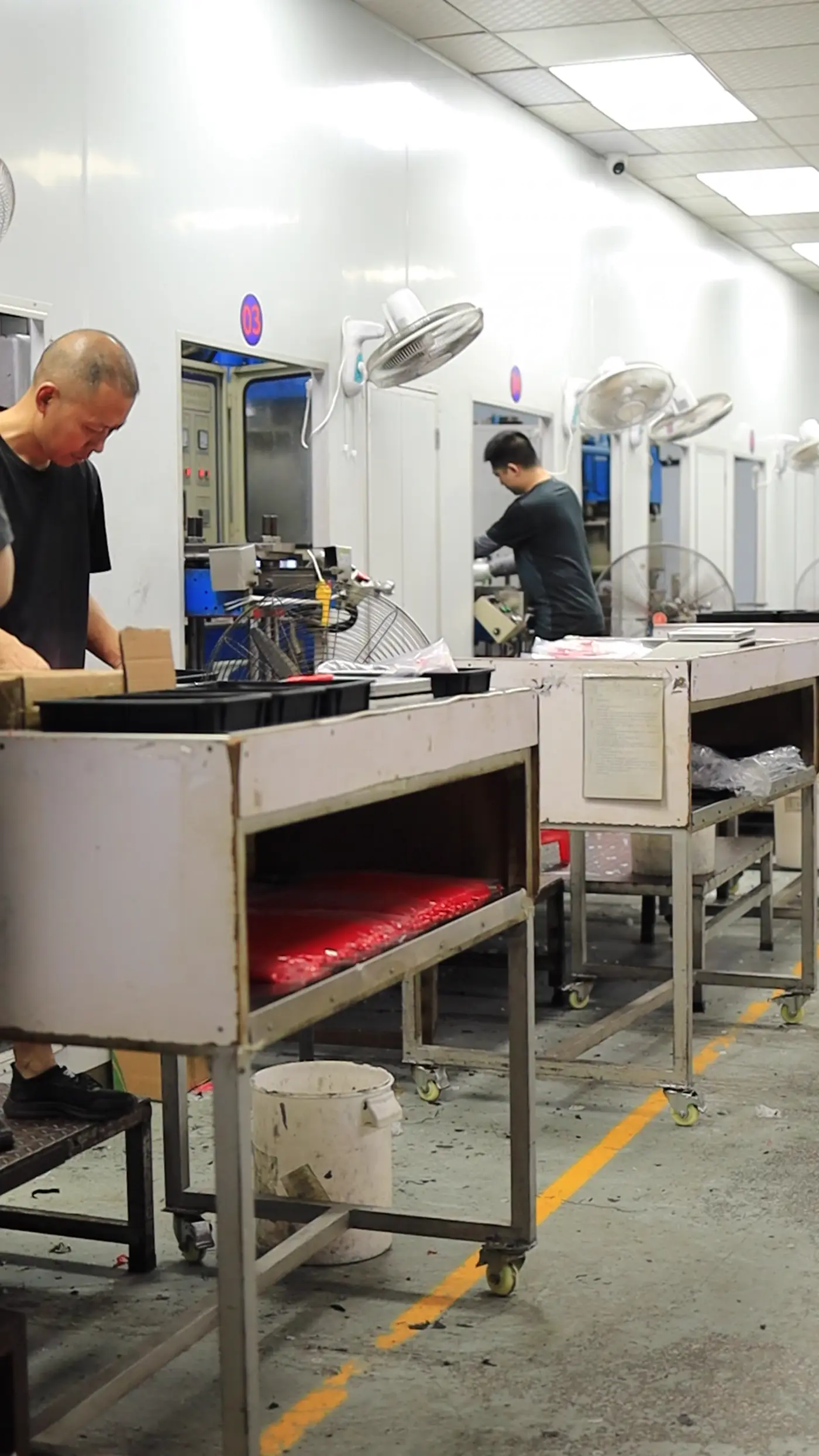
We pour platinum or tin RTV in Bao'an (typical mix 1:1 or 10:1 by grade). HCR mill rooms and LSR cold-runners are a parts RFQ - ask us.
What "food-grade" has to mean on this site
- US food-contact path: 21 CFR 177.2600 extraction on the relevant article/compound, plus whatever finished-goods rules your retailer adds. That is not a logo on our gate.
- EU path: LFGB / BfR XV style documentation on the named grade when you ask for it at RFQ.
- Craft / resin / concrete: industrial platinum or tin is often enough. Don't pay for a food pack you will not use — and don't skip it if the cavity will see chocolate next season.
- REACH / RoHS: available when relevant to the compound. Still compound-matched.
A report that does not name the mixed silicone you received is a brochure. Keep lot/CoC with the golden sample so a reorder cannot silently switch.
Common mix-up: FDA sticker on the factory, Shore A as the grade
Buyers ask "are you FDA?" because that's the search string. The useful question is "which compound, which test, which market, which lot?" Shore 10A–20A describes a skin, not a food path. A thick 25A wall can feel stiffer than a thin 40A lip; neither fact is a certificate.
Platinum addition-cure is the usual food and low-shrink choice. It can inhibit on dirty SLA, sulfur clay, amines, or tin contamination — that's a master-prep issue, not a document issue. Tin-cure (condensation) can be the practical craft route; it keeps shrinking in storage and is the wrong default when grams are a CTQ.
Pick chemistry from the dump, then document it
| Dump / use | Typical RTV call | Document watch-out |
|---|---|---|
| Pectin / gelatin gummy | Platinum food-grade, 10A–20A, jacket | US vs EU pack named before pour |
| Chocolate / baking / ice | Platinum food-grade | Same; odor/post-cure if the buyer requires it |
| Resin / PU | Platinum or tin per inhibition and cost | Don't print a food claim on a craft tool |
| Wax / soap | Usually platinum or tin RTV | Heat and fragrance oils can shorten life |
| Plaster / concrete | Platinum, jacket, often a core | Food docs usually don't apply |
| Skin-contact (non-food) | Named grade + the test the buyer actually needs | Don't paste 177.2600 on a wearable and call it done |
We would not select silicone from Shore A alone.
Typical shop values
| Item | Typical shop value |
|---|---|
| Platinum mix | 1:1 or 10:1 by grade; vacuum until foam collapses |
| RTV cavity Shore | 10A–20A for most peel-heavy food trays |
| Platinum linear shrink | ~0.1–0.3% (tin keeps moving) |
| Prototype / MOQ | 3–7 days after CAD lock; MOQ 20 |
| Food docs | Compound/lot pack on food-contact RFQs — not a factory stamp |
| Rubber drawing default if you need one | ISO 3302-1 M2, with a measurement method |
Reference values only. Confirm material-specific limits against the supplier’s technical data and agree project acceptance criteria before production.
Failure: the PDF doesn't match the rubber
Symptom: Retailer rejects the file; odor on first bake; sticky pocket from inhibition; reorder Shore or color shifted; buyer printed "FDA approved" on a carton.
Confirm: Compare report grade/lot to the packing list and the golden sample. Confirm destination market was on the original RFQ. Check whether production substituted a cheaper craft grade.
Fix: Stop shipment claims. Re-pour on the named food-contact compound or re-test the actual lot. Don't "add a certificate" to the wrong rubber.
Worked example: US gummy vs EU chocolate vs craft resin
Three RFQs, three packs. The gummy tray named US retail → platinum food-grade + 21 CFR 177.2600 extraction pack on that compound. The chocolate named EU → LFGB-related documents on the grade used. The resin figurine named craft-only → no food pack, platinum for detail, inhibition check on the SLA master. One generic "FDA silicone" line on all three quotes would have been a lie on at least two of them.
What to ask when you're buying
- Which compound, platinum or tin, and why for *this* dump?
- Which exact reports ship, and do they name this grade/lot?
- US, EU, UK, or craft-only — written on the quote?
- Post-cure or odor limit if the food will be baked or stored in the mold?
- Change control: no silent substitute on reorder?
When this page is the wrong route
If you need ISO 10993 / USP Class VI medical devices, this is not that lab. If you need molded LSR *parts* with a cold-runner, the compound report will be for that LSR, not for an RTV cavity — ask us. A non-contact mother mold doesn't need a food extraction file. Geometry doesn't waive chemistry: a tiny chocolate mold still needs the food pack if that's the market.
Related: gummy molds, quality control, manufacturer, contact.
RFQ: document-first material pack
Copy this.
- Target market: US / EU / UK / other / craft-only
- Food-contact, skin-contact, or industrial
- Retailer document list if you have one
- Candidate grade if already approved at your end
- Dump material and temperature
- Post-cure / odor / volatile requirement
- Lot/CoC required: yes/no
- Ban on compound substitution without written approval
Send market, dump material, and the document names you must file. We will match platinum vs tin, Shore, and the report to that list — or tell you we cannot. [email protected] · +86 135 3006 2969.
We would not recommend printing "FDA-approved factory" on your carton
We would not recommend using an LSR compound PDF to release an RTV mold. We would not recommend a tin-cure default when piece weight has to hold in storage. We would not switch grade on a reorder because the food pack "already exists."
RUUIPON Mold Structure Decision:
- Market and contact type named? - food US or EU -> Platinum food-grade RTV + matching report
- Market and contact type named? - craft / industrial -> Platinum or tin from dump and master
- Platinum food-grade RTV + matching report -> Shore 10A-20A typical; jacket if loaded
FAQ
Are your molds FDA approved? The factory is not. Food-contact jobs use a platinum grade with extraction/document packs that match the compound and the market you named. 21 CFR 177.2600 is a test method path, not a door sticker.
Can I use the same report on every color and Shore? Only if those builds are the same compound the report names. Color paste and a different Shore can be a different recipe. Ask.
Platinum or tin for chocolate? Platinum is the usual call for food and dimensional hold. Tin can be cheaper for dirty masters and craft, with more shrink in storage. Don't pick tin to "save the food certificate."
Do REACH and RoHS come automatically? On request, matched to the compound, when they apply. They are not a substitute for food extraction.
What if my retailer wants an SGS number on the quote? We don't invent certificate numbers. Name the test and the market; we supply the real file for the grade poured, or we say no.