FDA vs LFGB Extractives for Chocolate and Baking RTV
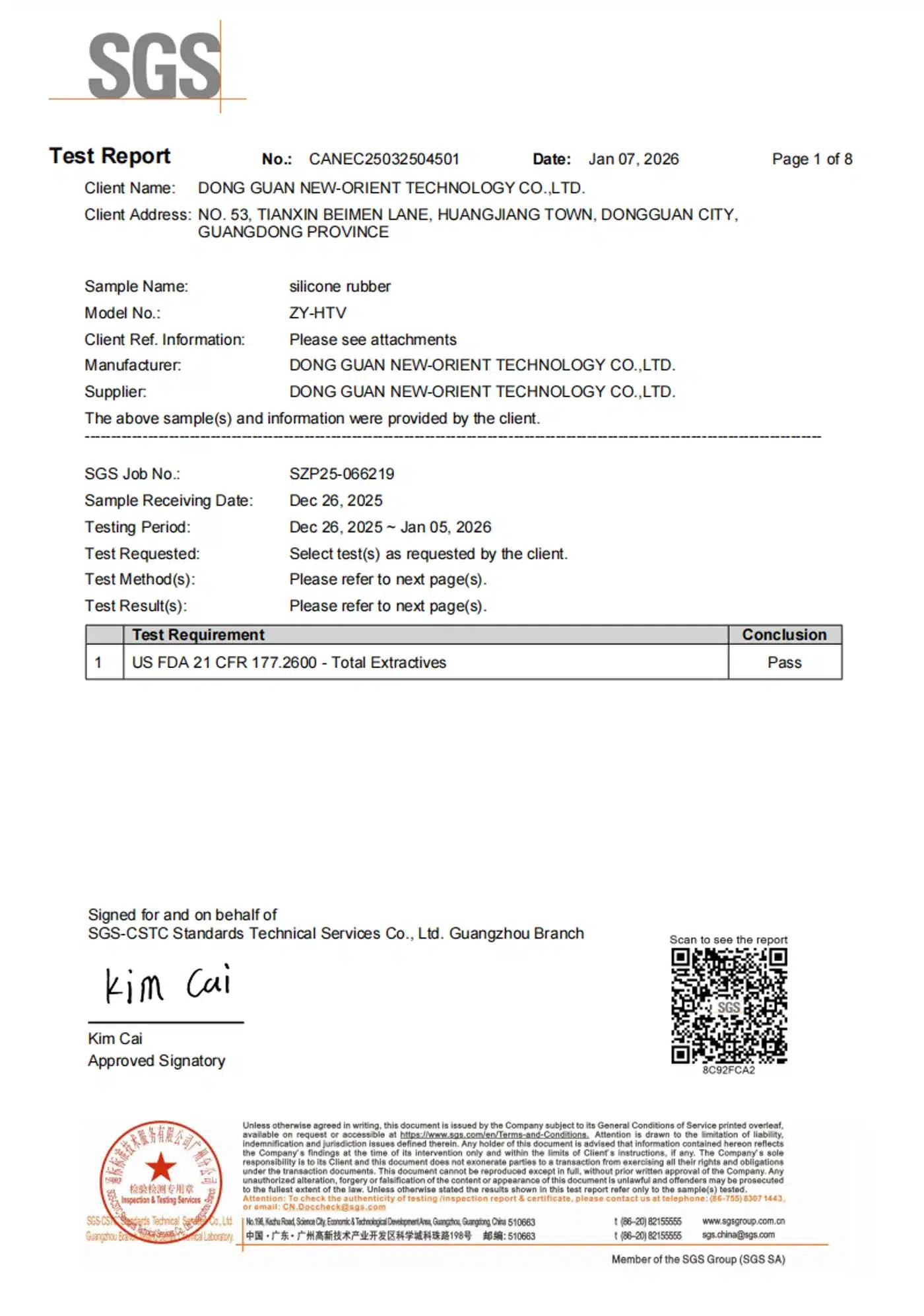
21 CFR 177.2600 and LFGB/BfR XV are extractives tests, not badges. Chocolate fat and oven heat fail different limits. Test the colored, post-cured RTV
Read article -Custom silicone development · RTV mold MOQ from 20 · DFM & prototype support
Explore practical silicone mold guides from RUUIPON, covering design, release, materials and production planning. Start with the problem you need to solve, then open the relevant product page when you are ready to discuss a quotation. CAD, drawings, samples and measured reference photos can all help define the project.
A broad DFM guide covering release, undercuts, splits, detail, multi-cavity layout, material selection and prototype validation.
The information that helps a supplier identify the correct mold structure, process, quantity and documentation requirements.
Understand when a flexible casting mold, compression tool or LSR tool fits the product.
Understand what food-contact documentation means and what to request for the destination market.
Use this cluster for one-piece vs two-part molds, undercuts and split molds, registration keys, wall thickness and support, edge radius, logo/text detail, tolerance and shrinkage, and DFM review.
One-piece vs two-part · Undercuts and split molds · DFM review
Use this cluster for gummy mold design, gummy size and cavity volume, chocolate molds, baking, ice and food-contact documents.
Choose the mold application first, then prepare the care and measurement requirements that the prototype must meet.
Define the tray, oven fit and trial process.
Review shape, filling, freezer space and release.
Match cavity layout to filling and handling.
Prepare care instructions and an inspection handover.
Check actual-size artwork and the sampled chocolate.
Separate master, supported cavity and cast-product results.
Use this cluster for platinum vs tin cure, vacuum degassing, cure time, RTV vs HCR/HTV vs LSR, and overmolding.
Use this cluster for RFQ preparation, low MOQ, lead time, custom vs off-the-shelf, factory sourcing, prototype to production, and ownership/reorder.
RFQ guide · Low MOQ · Custom vs off-the-shelf · Manufacturer
Use this cluster for common defects, tearing, resin bubbles, storage/warping, lifespan and cleaning.
Common defects · Resin bubbles · Storage and warping · Mold lifespan
Latest articles · 411 guides · page 22 of 42 · 10 per page
Title preview

21 CFR 177.2600 and LFGB/BfR XV are extractives tests, not badges. Chocolate fat and oven heat fail different limits. Test the colored, post-cured RTV
Read article -

On RTV work, release belongs on the master, not in the cavity. Semi-permanent films sit on steel parts tools. Never solvent-spray a culinary pour face.
Read article -
Dry ice and ultrasonic clean metal parts tools. Do not blast a soft RTV skin. Wash the cavity; recast when residue is in the rubber, not on it.
Read article -
Stabilize the tear, match chemistry and hardness, then bond the RTV mold in a closed jacket. Recast if the split crosses a sealing land or a datum.
Read article -Clean culinary RTV by soil: cocoa fat, baked sugar, then sanitizer. Skip solvent sprays, bleach soaks, and dishwashers the article never qualified for.
Read article -
Store RTV molds cool, dark, and unstressed. Heat and UV embrittle; humidity hits tin-cure and jackets differently. Tin shrinks on the shelf; platinum
Read article -
Production O-rings are a parts quote. An RTV analog is a casting cavity: split flash, jacket sag, peel through a membrane. Tool each geometry as its
Read article -Optical gloss is a master finish the RTV copies. Soft-touch is hardness plus micro-texture, not a spray. Split faces: mirror for windows, texture for grip.
Read article -
Paraffin at pour heat is not lye soap. Match platinum RTV hardness to undercuts, then check heat and alkali. Name the compromise if one rubber serves both.
Read article -Architectural gypsum and concrete load molds with weight, suction, and abrasion. Use a supported platinum skin, not a jewelry 10A block without a jacket.
Read article -