
Why Chocolate Sticks to Silicone Molds | RUUIPON
Temper, moisture, and logo undercuts cause most chocolate stick. How to confirm each cause, when the RTV tray is at fault, and what to send for a recast.
 Kyler Yang · Founder8 min read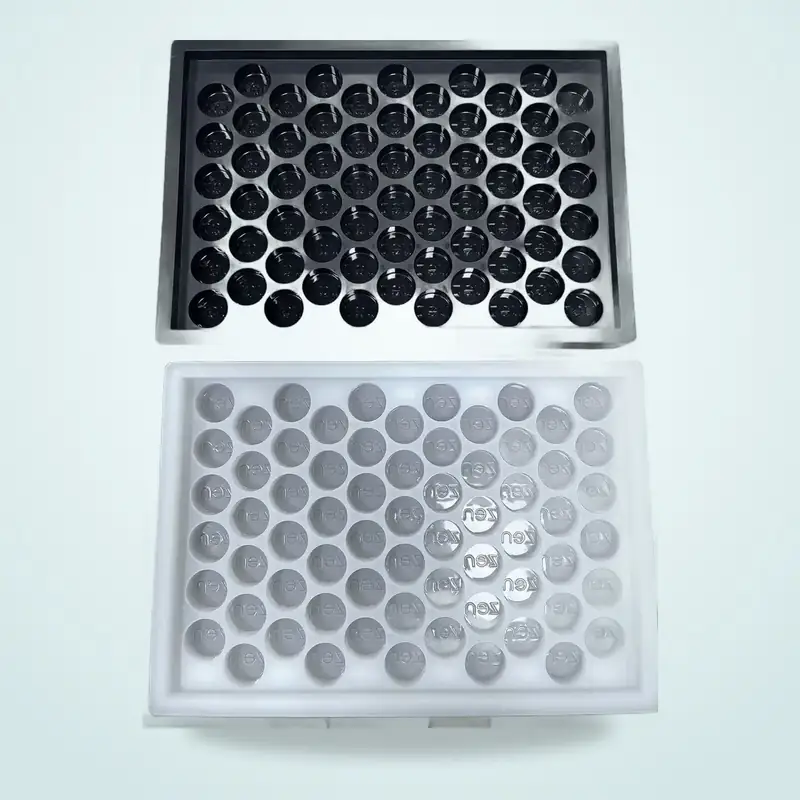
Chocolate that will not leave a custom silicone cavity is usually a contraction problem, not a "bad silicone" problem. Tempered couverture shrinks as Form V cocoa-butter crystals set. That shrink is what opens a hairline gap between the bar and the cavity. If the mass never reaches that crystal state, or the cavity is wet, the bar stays glued even when you flex the tray.
This article is for people pouring real chocolate or compound into a custom RTV silicone mold they ordered as a tool: logo bars, filled shells, cocoa-bomb halves, hospitality bites. It is not a polycarbonate-bar class, and it is not a WYD steel/LSR *part* job. If your piece is a silicone spatula or baby teether, that RFQ belongs on wydsilicone.com.
Does not apply when you are using a rigid PC mold for gloss retail bars, when the pour is ganache that is supposed to stay tacky, or when the tray is a $10 stock SKU with unknown tin-cure rubber. Those are different release physics.
Symptom → likely cause → how to confirm → fix
Bar tears in the serifs / logo wells, rest of the slab peels. Cause: undercut or logo too deep for the Shore you bought, *or* the chocolate never contracted in the detail. Confirm: look at the cavity under a raking light. If the leftover chocolate is shiny and the cavity wall is dry, the geometry is grabbing. If both sides look greasy, temper or moisture came first. Fix: re-temper and dry the tray fully; if it still tears in the same serifs after three good tempers, send us the cavity photo — we recast with a shallower logo or a split, not a harder Shore guessed from a chat.
Whole bar stays matte and smears when you flex. Cause: untempered or badly tempered couverture; compound that was overheated. Silicone will still let you peel it, which hides the QC signal PC molds give you. Confirm: the bar bends, fingerprints easily, or shows fat bloom within a day. Fix: this is not a mold recast. Temper (or use a compound that is meant to set in silicone). We would not add a release spray to "help" food contact.
First use was fine; after dishwashing it started sticking. Cause: water left in texture, or detergent film. Micro-texture on an RTV face holds droplets you cannot see. Confirm: weigh the tray dry vs after a "dry" cycle, or fog the cavity with a cool breath — droplets nucleate on wet spots. Fix: rinse, then dry cavity-up at room temp until the face is matte-dry. Skip oiling. If the shop dishwasher is leaving film, switch that SKU to a hand-wash spec on the next PO — say so in the RFQ.
Sticks only after a fridge-to-room move. Cause: condensation → sugar syrup on the surface (sugar bloom feels gritty; fat bloom looks streaky). Confirm: white speckles vs grey streaks. Fix: demold in the cool room, don't shock-freeze a warm pour. A freezer yank is a common YouTube shortcut and a common way to vacuum-lock a bar in silicone.
Sticky, under-cured rubber on the cavity face (new mold). Cause: cure inhibition on the master — sulfur clay, latex gloves, some SLA resins — not "cheap silicone." Confirm: the face against the master is tacky; the back of the jacket is fully cured. Fix: don't wash and hope. That mold is scrap for food. We remake from a sealed or post-cured master. Tell us what the master was printed in.

Typical shop values
These are conventional RTV chocolate-tray values on our Bao'an floor, not a named lot or a lab report number.
| Item | Typical shop value | Why it shows up in stick complaints |
|---|---|---|
| Rubber | Platinum RTV, food-contact path discussed per market | Tin-cure leftovers can taste and inhibit; we would not spec tin for a chocolate cavity |
| Shore A | 20A–40A for bars and shells | Softer peels; too soft on a deep logo tears the chocolate instead of the bond |
| Mix | 1:1 or 10:1 by weight, vacuum degas | Face bubbles become chocolate anchors |
| Shrink (platinum RTV) | about 0.1–0.3% | Geometry, not chocolate contraction |
| Logo depth (start) | 0.3–0.6 mm on a 15–30 g bar | Deeper serifs need a draft conversation, not a harder Shore guessed in email |
| Prototype | 3–7 business days after CAD lock | First food pour is the real release test |
| Production MOQ | 20 pieces per design | One tray is a paid test, not a production PO |
| Simple 3D | USD $50 when that CAD scope applies | Photo-only logos get a scale lock before we freeze mm |
Worked example (anonymized)
A 24-cavity logo bar, about 12 g target, platinum 25A tray. First sample pour used untempered couverture; the buyer flexed the tray and the bars came out dull and smeared. They asked for a harder Shore. We asked for a second pour with a documented temper and a fully dry tray. Bars released. The third complaint was only in the 0.8 mm serif. We recast the master with 0.4 mm logo and a touch of draft. Harder Shore was never cut. That is the sequence we want on your RFQ notes — not "make it 40A."
We would not recommend
We would not recommend greasing a food-contact RTV cavity with butter or spray to "help release." You will fight streaks and a documentation problem later.
We would not recommend judging a custom bar tool from one freezer yank. Contraction needs a stable cool, not a thermal shock.
We would not recommend quoting polycarbonate chocolate molds on ruuipon.com. If you need a glossy snap-out PC bar, that is a different process — say so and we will not pretend an RTV tray is a gloss PC.
We would not recommend freezing production from a single unscaled phone photo of a competitor bar. $50 CAD/3D when that scope applies is how we lock mm before the rubber is poured.
flowchart TD
  A[Chocolate sticks in RTV cavity] --> B{Bar dull, bends, fingerprints?}
  B -->|Yes| C[Temper / compound setup — not a recast]
  B -->|No| D{Cavity wet or dishwasher film?}
  D -->|Yes| E[Dry fully; stop oiling]
  D -->|No| F{Only logo / undercut tears?}
  F -->|Yes| G[Draft or shallower logo — send cavity photo]
  F -->|No| H{Face tacky, jacket cured?}
  H -->|Yes| I[Inhibition — remake from a sealed master]
  H -->|No| J[RFQ: Shore, pour, dishwasher, food-doc path]
What to send so we can tell mold vs process
Copy this into the email to [email protected]:
- Photo of the stuck piece *in the cavity* and after you flexed it
- What you poured (couverture / compound / cocoa butter content if you know it) and whether it was tempered
- Wash method (hand / dishwasher) and whether the tray was bone-dry
- Gloss vs matte is acceptable; logo file or the CAD we already locked
- Destination market if you need a 21 CFR 177.2600 extraction path or LFGB — that is a document pack, not an "FDA-approved factory" stamp
- Quantity: prototype only, or MOQ 20 production trays
Matched next step: send that pack, not a blank "quote." If the geometry is the problem we recast the master. If the pour is the problem we will say so instead of selling you a harder Shore. Phone +86 135 3006 2969. Bao'an / Shajing, since 2018.
Steel high-volume chocolate *tools* or molded silicone parts go to wydsilicone.com. This blog stays on the RTV tray you actually flex.
FAQ
Do I need to grease a food-grade silicone chocolate mold? No. A dry platinum food-contact cavity is the release surface. Oil fights temper marks and makes the next wash worse.
Silicone vs polycarbonate for a glossy bar? PC is the gloss / snap standard. RTV silicone is for shapes PC cannot pull, logo undercuts, and short-run custom tools. We would not sell you RTV by promising PC shine.
Can a too-soft Shore cause stick? It causes *tear* in deep detail more often than stick. Confirm temper and dryness first. Shore is a recast decision after that.
Is freezer demold OK? A short chill can help set. Shock-freezing a warm pour makes condensation and a vacuum lock. Demold in a cool, dry room.
Will you remake the mold if chocolate still sticks after a good temper? If the same serifs tear on a dry tray with documented temper, yes — we look at logo depth, draft, and inhibition, then recast. Pay the $50 3D only when we still need CAD scope. Production stays MOQ 20 per design.
Ready to order custom silicone molds?
Free quote for OEM/ODM projects. MOQ 20 · Prototype 3-7 days · FDA/LFGB available.