
Silicone Color Matching for Molds and Products
First specify whether color applies to an RTV casting mold or to the finished silicone product. Mold tint can support visual inspection or operator identification; finished-product color may be a brand requirement. Send a physical color reference, material and finish requirements, and the approval method so the appropriate color-matching scope can be confirmed.
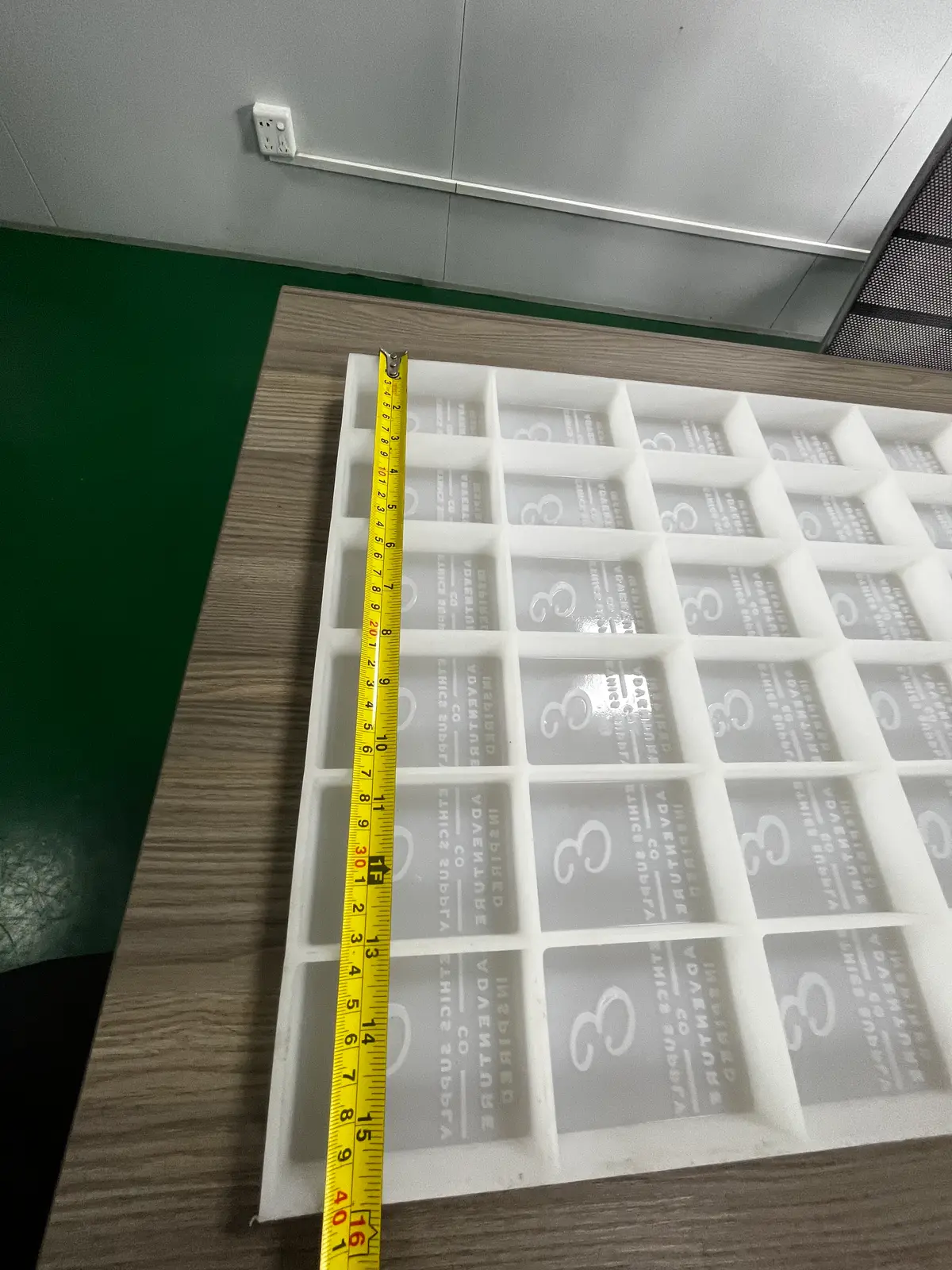
Live pages that mixed LSR/HCR color routes were the wrong object. Parts color lives here as an HTV product RFQ. RUUIPON, Bao'an since 2018. Custom/simple 3D is USD $50 when that scope applies. Prototype 3-7 days after CAD lock. MOQ 20 per design. Materials: materials and compliance. Catalog: process catalog.
What mold color is for
- Translucent platinum: see short shots, pits, and whether the dump filled the logo.
- Opaque / tinted skin: listing photography; operator ID (food vs craft); hide dust that would show in clear resin only on the *casting*, not as a part color spec.
- Don't pigment to "make it food-grade." Food-contact is compound + 21 CFR 177.2600 extraction and/or LFGB on this article - food-contact quoting.
Approve a physical plaque of the tray under agreed light if tint matters. Don't approve from a monitor. Don't copy a parts ΔE onto a 10A-20A skin.
Common mix-up: Pantone on the mold as if it were the product
Buyers send PANTONE 186 C and expect the chocolate to come out red. The chocolate is the chocolate. The mold tint is independent. Pigment loading can also shift perceived Shore slightly and can hide bubbles you needed to see - a QC cost, not a brand win.
When we will not chase a ΔE
- Craft tin that yellows in storage (tin keeps moving; platinum is the production default).
- Translucent food sheets where you need to see fill.
Typical shop values
Reference values only. Confirm material-specific limits against the supplier’s technical data and agree project acceptance criteria before production.
| Item | Typical shop value |
|---|---|
| Default production skin | Platinum, often translucent or a shop tint |
| Mix / shrink | 1:1 or 10:1; ~0.1-0.3% linear |
| Cavity Shore | 10A-20A typical; jacket if loaded |
| Color approval | Physical tray plaque, not a screen |
| Custom/simple 3D | USD $50 when that scope applies |
| Prototype / MOQ | 3-7 days after CAD lock; 20 pcs/design |
Failure: pigment hid the pit; listing color was the candy
Symptom: Opaque soap mold hid a vacuum miss; buyer rejected "wrong red" on a chocolate SKU; parts Pantone attached to an RTV PI.
Confirm: Is color a tray ID or a product spec? Was the pour vacuum-degassed? Is the RFQ a cavity or a part?
Fix: Name tray tint as optional. Keep food sheets readable. Move part color as an HTV product RFQ here, or ask us for a high-volume LSR tool.
Worked example: two tints, one pectin SKU
A brand wanted "Pantone green molds" for listing consistency. We tinted the 12-up platinum skins a shop green for operator ID, dumped pectin (the candy color is the formula), vacuum-degassed so pits weren't the bear's eye, prototype 3-7 days after lock, MOQ 20. We did not quote ΔE 1.0 against a coated-paper chip on a glossy 15A tray.
What to ask when you're buying mold color
- Do I need to see fill (translucent) or ID the sheet (tint)?
- Will pigment hide bubbles on a logo face?
- Is food-contact on the compound, independent of hue?
- Are we accidentally quoting a parts Pantone?
- Same tint on recast lots?
When this page is the wrong lab
LSR/HCR article color, overmold color, medical keypad matching - a different RFQ - ask us. A clear-resin *casting* color is your resin, not our platinum. Geometry can override: a tiny stamp can be any tint; a chocolate logo face should stay readable.
Related: vacuum platinum, QC sign-off, contact.
RFQ: tray tint, not product color
Copy this.
Object: RTV cavity tint (not part Pantone) Translucent / shop tint / match a tray plaque: Dump color is the dump (yes): Food-contact path or craft-only: Vacuum degas on logo face? yes 3D at $50 in scope? Prototype 3-7 days after lock, MOQ 20
Send whether you need to see fill. contact - [email protected] · +86 135 3006 2969. Don't send a spatula Pantone.
Color matching limits for mold tints
We would not recommend pigment as a food-contact claim. We would not recommend opaque skins on a shallow chocolate logo without vacuum. We would not recommend matching candy color in the rubber. We would not recommend an LSR color pack on this quote.
RUUIPON Mold Structure Decision:
- Cavity or part? - part Pantone -> an
- Cavity or part? - tray tint -> Need to see fill?
- Need to see fill? - yes -> Translucent platinum + vacuum
- Need to see fill? - operator ID -> Shop tint + plaque approval
- Translucent platinum + vacuum -> CAD lock / prototype
- Shop tint + plaque approval -> CAD lock / prototype
FAQ
Can you match Pantone on the mold? We can tint toward a plaque. Soft glossy RTV is not coated paper. Don't expect parts-grade ΔE here.
Does color change food-contact? Pigment must belong to the same documented compound path. Hue is not a certificate.
Will a colored mold color my chocolate? No, if the sheet is cured and clean. The dump is the dump.
Clear resin shows everything. Yes - pits and dust. Vacuum + cleanliness beat a tinted cover-up.
MOQ / 3D / prototype? 20 per design; USD $50 when simple 3D applies; 3-7 days after CAD lock.