
Vacuum-Degassed Platinum RTV Mold Manufacturing
Vacuum degassing during suitable liquid RTV mold production can reduce entrained air before cure and help replicate fine cavity surfaces.
It is a process step — not a food-grade certification and not a guarantee that every finished mold will be completely free of visible bubbles.
The correct procedure follows the selected silicone system, viscosity, pot life, batch size, geometry and the material supplier’s processing guidance.
Remove Entrained Air From Mixed Liquid Silicone
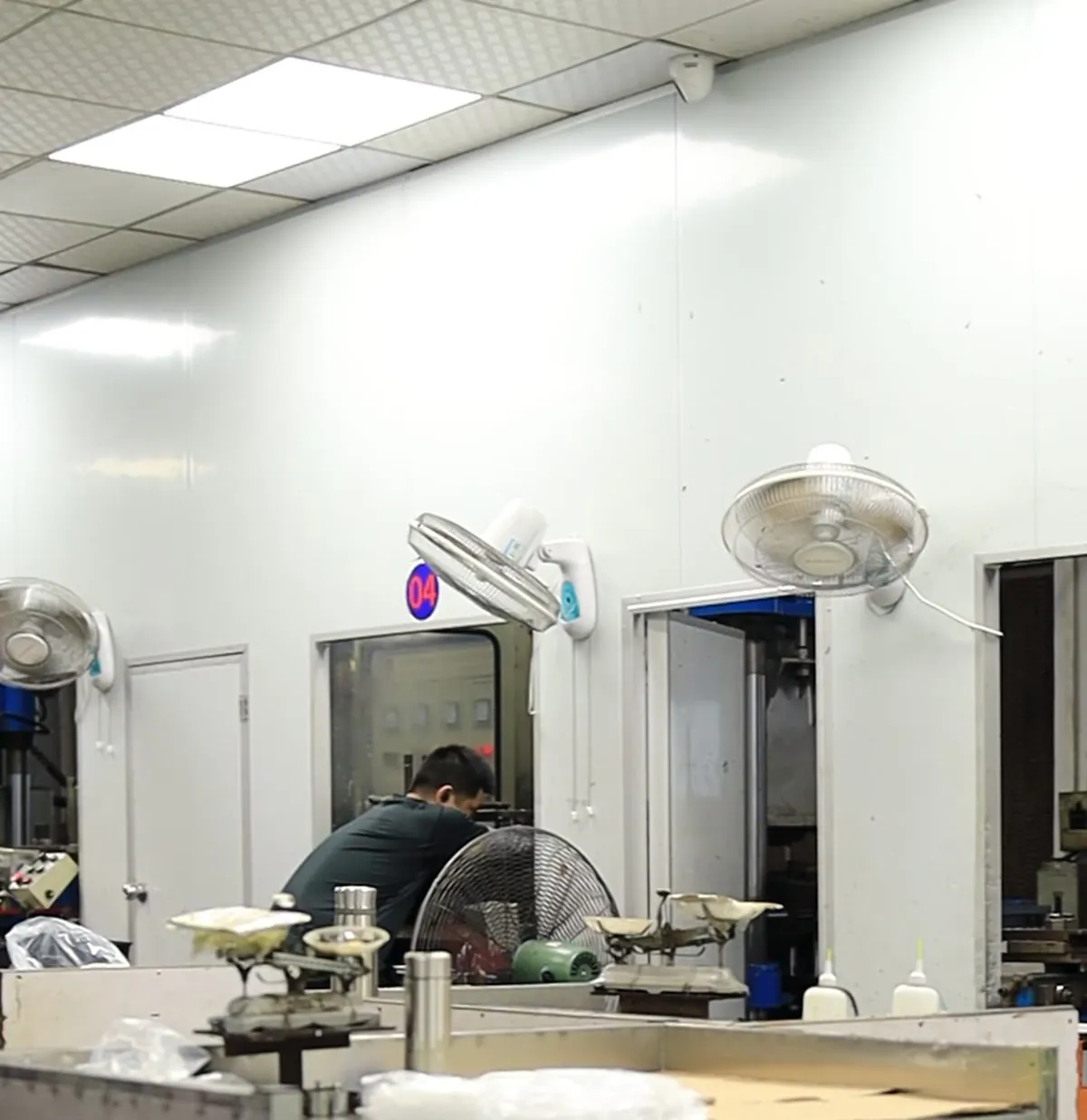
Air can enter during:
- mixing
- pigment/additive incorporation
- transfer
- scraping/folding
- filling around detailed master geometry
Vacuum can help the mixed liquid release entrained air before cure.
Vacuum does not automatically fix:
- cure inhibition
- incompatible master/release agent
- poor mix ratio
- badly placed parting lines
- undercuts
- inadequate support
- trapped air caused by impossible cavity geometry
- food-contact documentation
These are separate engineering/process questions.
Air is more important when bubbles create:
- pits on cosmetic surfaces
- missing logo/detail
- weak thin sections
- voids at tear-sensitive areas
- repeatable cavity defects
Inspect the defect location before assuming the cure system itself is wrong.
Follow the Selected Material, Not a Universal Timer
The degassing process depends on:
- viscosity
- pot life
- batch size
- temperature
- chamber/pump capability
- container headspace
- mixing method
Degassing conditions depend on the silicone formulation, batch size, equipment and remaining working time. Use the material supplier’s processing guidance and verify the result for the actual batch.
This service focuses on platinum-cure RTV where that material is selected for the project.
Platinum vs tin is a separate material-selection decision. Do not claim vacuum makes one cure chemistry universally better.
/blog/platinum-vs-tin-cure-silicone-molds/
A vacuum-degassed platinum silicone is not automatically “food-grade.”
Food-contact suitability depends on the selected grade/article, intended use and available documentation for the target market.
Send:
- CAD/master/sample
- casting application
- cosmetic/detail requirements
- selected silicone/material requirement if known
- mold size
- quantity
- food-contact market if applicable
Does vacuum degassing guarantee zero bubbles?
No.
Is vacuum always required?
No. The correct processing method depends on the material and mold.
Does vacuum degassing make silicone food-safe?
No. Food-contact documentation is a separate requirement.
We see bubbles in the finished resin. Does that mean the silicone mold was not vacuum-degassed?
Not necessarily. Random bubbles can come from resin mixing, viscosity, moisture, fill direction or pressure/vacuum conditions. Check whether the defect repeats in the same mold location.
Does a vacuum chamber remove every bubble?
No. It reduces entrained air when the material/process supports it, but it does not correct poor cavity geometry, inhibition or incompatible materials.
Should we vacuum longer to be safer?
Not as a universal rule. Follow the selected silicone supplier’s processing guidance and the actual batch behavior within the available pot life.