
Approve the First RTV Tray Before You Buy MOQ 20
A thumbs-up on a cavity photo is not an approval you can reorder against. If you are about to sign for MOQ 20, "approve" on an RTV tray means the real dump passed a written checklist: fill, peel, named CTQs, loaded sag, and a revision letter. It is not an LSR T0 and not a lighting brief. Write the pass sentence before the sample lands, then test in the pour you will sell.
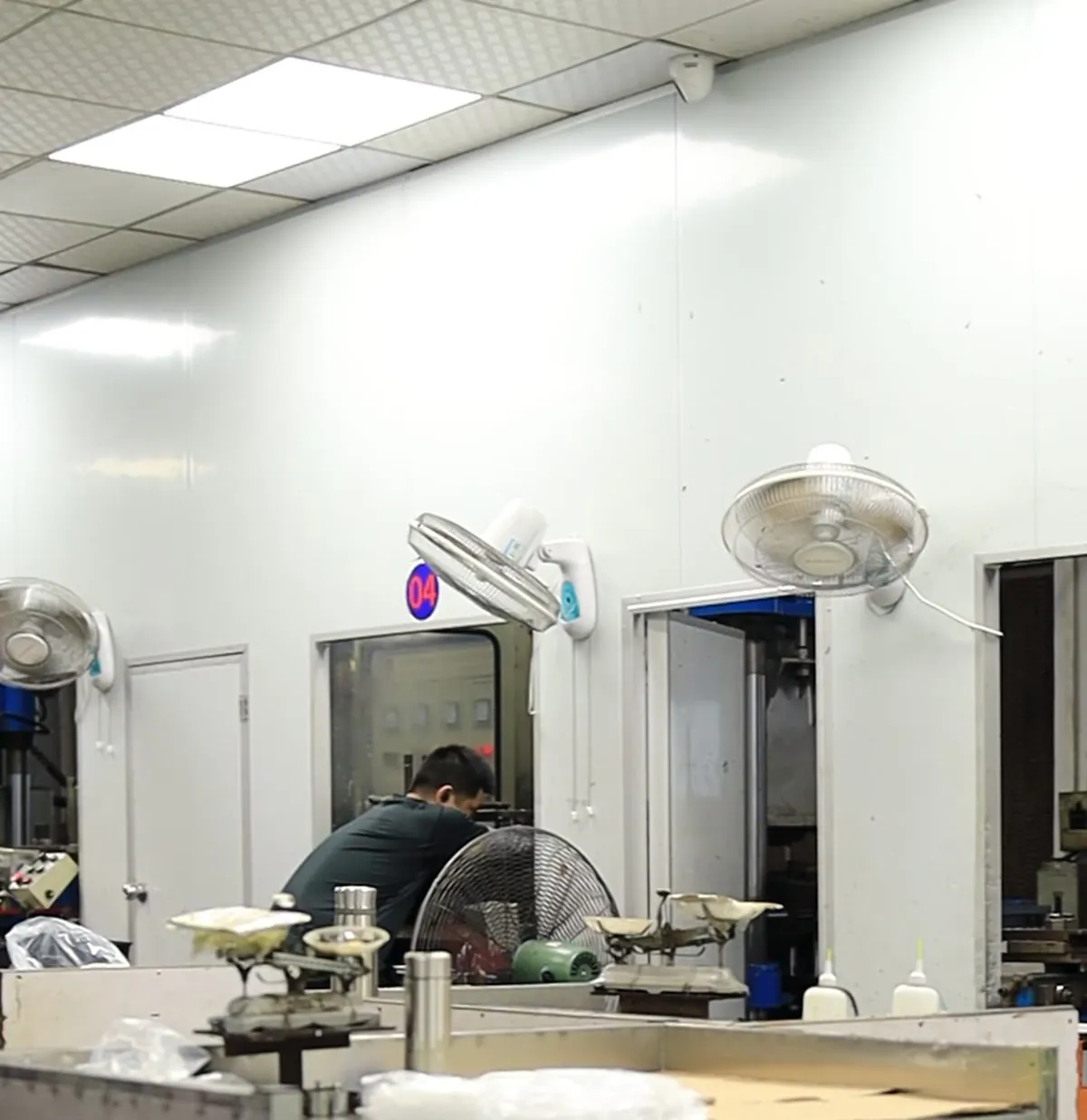
RUUIPON pours that first working tray in Bao'an, Shenzhen (Licheng Technology Industry Park, Xinhe Blvd, Shajing; USCC 91440300MA5FAXCN9W) since 2018. The usual RTV chain is photos, sketch, or CAD, then a 3D-printed pattern, often a temporary silicone flip, a resin production mother, then batch RTV. DFM is free. Simple 3D is USD 50 when that CAD scope applies. Prototype timing is 3-7 business days after CAD lock. Production is MOQ 20 pieces per design after the note is signed.
Where this page sits
What a prototype is, and the 3-7 day clock, live on silicone mold prototype. What to measure on tray 1 lives on prototype inspection CTQ. The shot-list service is test-cast QC sign-off. Lot QC after you have already approved is silicone mold quality control. This page is the buyer gate: pass/fail before anyone mixes twenty skins.
What approve means on an RTV tray
Finish this sentence before the sample arrives:
The prototype passes if ________.
Useful endings: piece weight holds across center and edge in the real dump; the part peels without tearing a serif or shut; loaded sag stays inside the agreed mm; the logo is complete after a real-material pull; the halves still register after several open/close cycles. If you cannot finish the sentence, you are still in DFM, not approval.
Approve is a dated note tied to a CAD revision. It is not a WeChat sticker, not a water fill on a pectin job, and not an LSR first-article on a cold-runner.
Pass/fail checklist
| Gate | Pass | Fail / revise |
|---|---|---|
| Real dump | Intended material, temperature, fill method | Water, a cousin resin, or a beauty pour |
| CTQs | Named grams / OD / logo / sag with a measurement state | Every CAD dim treated as equal |
| Peel | Pulls 3-5, same path, no metal picks as the method | One heroic demold that will not survive a shift |
| Structure | Same split, registration, support shell, and cavity count as production | A one-cavity toy that will be "scaled later" |
| Revision | Letter on the note matches the CAD / pattern revision | Unsigned WhatsApp crop |
Typical shop values
Reference values only. Confirm material-specific limits against the supplier’s technical data and agree project acceptance criteria before production.
| Item | Typical shop value |
|---|---|
| Prototype after CAD lock | 3-7 business days in Bao'an |
| Production after written pass | MOQ 20 pieces per design |
| 3D / CAD | USD 50 when that modeling scope applies |
| Cavity Shore | Often 10A-20A platinum; jacket if loaded |
| Platinum shrink | About 0.1-0.3% linear |
| Loaded-tray edge sag if unsupported | About 0.5-1.5 mm |
| Outer-row drift if the sheet sags | Often 3-6% heavy |
| Contact | [email protected] · +86 135 3006 2969 |
Test in the production material
Viscosity, fill temperature, exotherm, set time, and peel strength are why water lies. Pectin is not chocolate. Epoxy is not PU. Wax is not CP soap. Use the intended process or the closest controlled substitute and write the difference on the note. Multi-cavity jobs need a position map - center, corners, outer row - not only the pretty middle pocket. Details of the map sit on the CTQ sheet.
When to revise instead of sign
Do not approve to protect a launch date if the same functional miss will copy twenty times. Revise when a seam crosses the cosmetic face, a fragile casting cannot leave, the tray deflects past your process limit, cavity weight misses systematically, a logo island tears, a core walks, or the real dump sticks in a way the demo never showed. Fix the mechanism. Do not relight the photo.
Lock the revision after you sign
The approval record should carry job/PO, CAD revision, silicone grade and Shore if controlled, prototype ID, dump used, CTQ results, photos, accepted deviations, and the date. A reorder six months later should point at this paper. If the production lot omits the jacket that the sample used, that is a new design, not a QC miss.
Approval sheet you can copy
- Prototype ID / revision:
- Dump material + peak C:
- Pass sentence:
- CTQ 1 / 2 / 3 and results:
- Demold method and tear notes:
- Loaded support condition:
- Required revision (or none):
- Buyer name and date:
Worked example: tempered bar before MOQ 20
Typical job, not a named customer. Buyer wanted to approve from a render. We required a temper dump, weighed center and edge bars, marked equator flash as trim-ok, rejected a seam that walked onto the wordmark, recut registration, then released MOQ 20. The beauty shot would have missed the walk. USD 50 3D applied only because the logo still needed a lock into the cavity map.
When this page does not apply
This gate does not replace the prototype hub, the CTQ sheet, or lot QC. It does not apply to a catalog tray that already matches. It does not apply to LSR T0 / part FAI - use an HTV product RFQ here. A one-off sculpture you will pour twice still needs a written pull if the face is commercial, but it is the wrong commercial fit for a 20-tray plan.
RFQs we will not accept as-is
Approving from a three-quarter hero photo. Water as the sign-off on pectin, epoxy, or concrete. A lighting brief or mood board as the approval record. Sending an LSR T0 through this RTV gate. Asking us to multiply 20 skins while CAD is still moving.
Matched next step
Send photos, a sketch, or CAD (revision letter), pour material and peak C, quantity after approval, and the one failure you cannot accept. We will build the checklist around that failure, not around appearance. "Looks good, please quote 20" is not a gate.
Send photos, sketch, or CAD, pour, and qty for the approval gate · Prototype hub · Inspection CTQ · Test-cast sign-off
[email protected] · +86 135 3006 2969 · Licheng Technology Industry Park, Xinhe Blvd, Shajing, Bao'an, Shenzhen. USCC 91440300MA5FAXCN9W.
FAQ
Is approve the same as a prototype order? The prototype is the experiment. This page is the written yes/no before MOQ 20.
Can we skip the gate and cut 20? You can ask. On a new sticky, undercut, or logo-depth job the 3-7 day sample is cheaper than 20 wrong skins.
Is this an LSR T0? No. RTV tray in the real dump. Parts FAI is a different RFQ - ask us.
Who keeps the signed note? Write custody on the RFQ. A tooling charge is not automatic archive.
What if the dump changes later? New sign-off. Chemistry lock first.