
Food-grade silicone mold buyer spec: an RFQ you can compare
Use this checklist when you need quotes from more than one shop that can actually be compared. A food-grade RTV mold RFQ that says "FDA silicone, 24 cavities, best price" is how you get three numbers that don't name the same compound, Shore, or document pack. Write the dump, target grams, tray envelope, fill method, market, and which reports must match *this* lot. 21 CFR 177.2600 is extraction of the finished article, not an FDA-approved factory. RUUIPON pours platinum food-contact tools in Bao'an since 2018. Prototype in 3-7 business days after CAD lock. MOQ 20 pcs/design. Custom 3D modeling is USD $50 when that scope applies. This page is the spec. The chemistry explainer is food-grade silicone molds and materials and compliance.
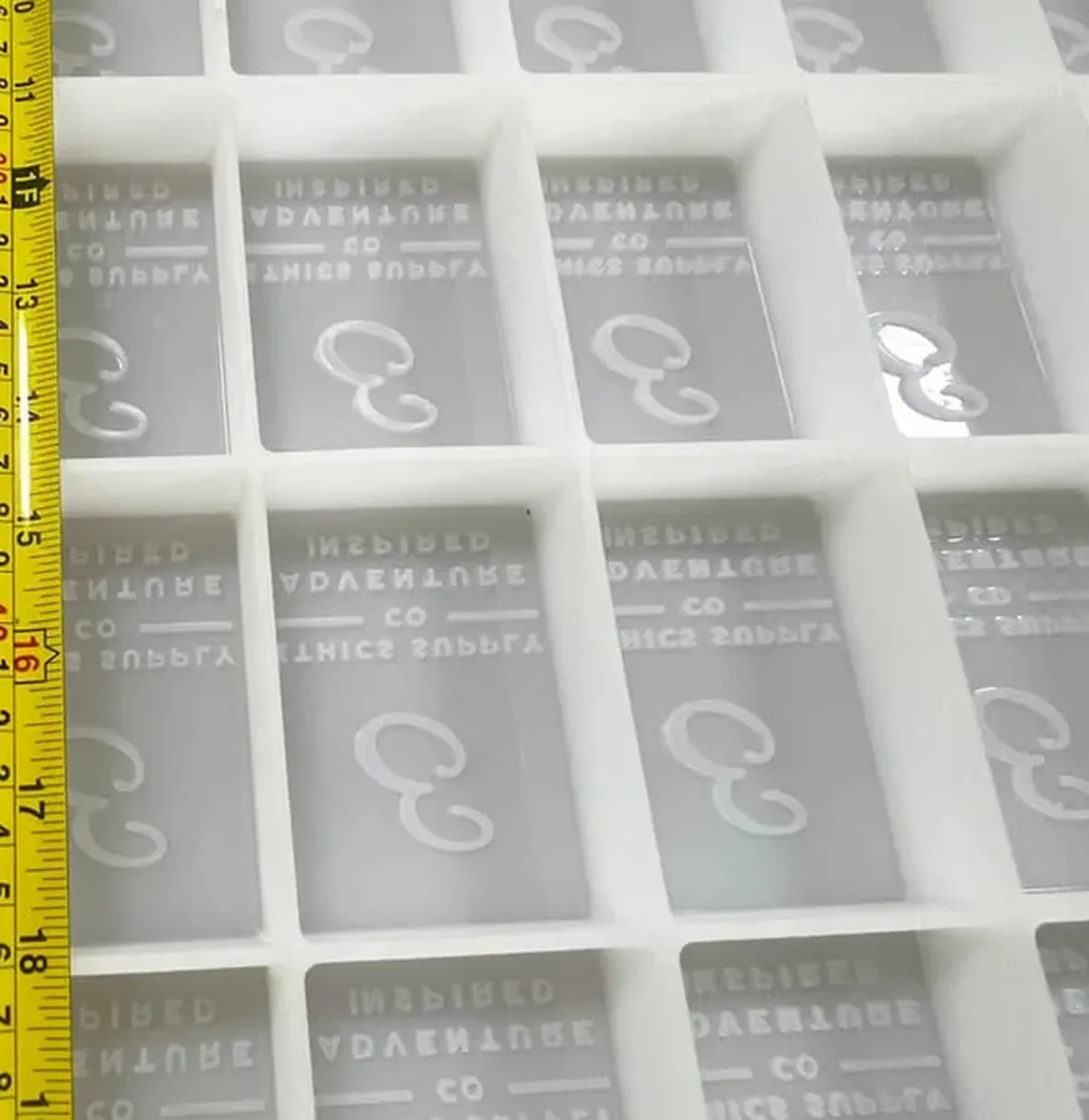
1. Product and formula
State what will contact the mold: pectin gummy, gelatin gummy, tempered chocolate, batter, ice, dairy, other. Formula changes release and hardness. Pectin is stickier than gelatin - don't copy a gelatin tray onto a pectin SKU.
2. Finished piece
Target weight in grams or volume in mL, finished dimensions, allowed variation if it matters commercially, logo/relief, surface finish. If weight matters, don't approve only a pretty rendering. For 4.0 g gummies, outer-row vs center belongs in acceptance.
3. Tray and fill method
Cavity count, maximum tray dimensions, spacing/pitch if a depositor is used, border width, handling method, support tray yes/no. Wide soft trays twist. For depositor work see depositor-compatible gummy molds - send the machine drawing; don't freeze pitch from a catalog photo. Flood-and-scrape: flood-and-scrape gummy molds.
4. Silicone and documents
Ask the supplier to state cure system (platinum), nominal Shore A, color, post-cure, material identification, and which 177.2600 / LFGB files correspond to that compound. Don't rely on a certificate copied from another grade.
5. Prototype, QC, commercial
Define what must be approved before production: cavity drawing, actual fill volume, demolding, tray handling, logo. For repeat orders: dimensional points, visual defects, flash, batch records if required. Ask for separate line items: CAD/NRE, prototype, unit price, docs, packaging, freight, Incoterm, lead time.
When this spec does not apply
Soap, candle, and resin RFQs shouldn't paste 177.2600. Steel high-volume confectionery *part* tools are quoted here as HTV products or molds, or as a different LSR-tool RFQ - ask us. A one-cavity kitchen test can skip multi-cavity fields. Geometry can override quantity: a locked mascot still needs draft at 20 trays.
Buyer-spec RFQ to copy
- Dump and formula family
- Target grams or mL; allowed range
- Cavity count; tray envelope; depositor pitch *from the machine drawing* if any
- Jacket / pan: yes/no
- Platinum grade; Shore band; color; post-cure
- Market; 177.2600 / LFGB on this compound
- Custom 3D modeling: USD $50 when that scope applies
- Prototype then MOQ 20 pcs/design
- Acceptance: weigh every pocket; outer-row vs center
Send the filled checklist to contact ([email protected] / +86 135 3006 2969). Licheng Technology Industry Park, Xinhe Blvd, Shajing, Baoan.
Matched CTA: Paste this checklist with grams, market, and document names - not a generic free quote.
We would not recommend quoting "FDA silicone, best price"
We would not recommend freezing depositor pitch from a photo of someone else's tray. We would not call 177.2600 a factory approval. We would not mix soap and chocolate on one spec sheet. We would not skip outer-row weights on a 4 g SKU.
RUUIPON Mold Structure Decision: dump and market first. Open-back if draft peels. Depositor or flood-and-scrape? nest/jacket so the sheet stays flat. Steel parts path? an HTV product RFQ here.
- Dump and market named? - no -> Stop: not comparable quotes
- Dump and market named? - yes -> Fill method?
- Fill method? - hand / flood-scrape -> Flat scrape plane + jacket
- Fill method? - depositor -> Pitch from machine drawing + nest
- Flat scrape plane + jacket -> Prototype; weigh every pocket
- Pitch from machine drawing + nest -> Prototype; weigh every pocket
- Food-mold RFQ -> Steel/LSR parts?
- Steel/LSR parts? - yes -> HTV product or mold RFQ
Typical shop values
Reference values only. Confirm material-specific limits against the supplier’s technical data and agree project acceptance criteria before production.
| Item | Typical shop value |
|---|---|
| MOQ | 20 pcs/design after sample approval |
| Custom 3D modeling | USD $50 when that scope applies |
| Prototype | 3-7 business days after CAD lock |
| Mix | Platinum 1:1 or 10:1; vacuum degas |
| Platinum shrink | About 0.1-0.3% after full cure |
| Loaded-tray edge sag without a jacket | About 0.5-1.5 mm |
| Gummy tell | 4.0 g target; outer-row 3-6% heavy vs center if the tray sags |
| Food docs | Compound/lot pack - not a factory stamp |
FAQ
Why can't I compare three "FDA mold" quotes? They may not name the same compound, Shore, color, docs, or tray envelope. This checklist forces those lines.
Is 21 CFR 177.2600 a factory certificate? No. It's extraction of the finished rubber article.
Do I need depositor pitch on a hand-fill tray? No. Don't invent a machine pitch you don't have.
What's the 3D modeling fee? USD $50 when that scope applies. Chargeable CAD doesn't start until that scope is confirmed.
When is steel the right next step? When volume has outgrown RTV trays. That's a parts/tooling OEM here as an HTV product RFQ, not this cavity.