
Epoxy Heat vs Residue vs Geometry Lock
When epoxy starts sticking, do not assume the RTV "lost release." Four failures can look the same: the pour ran hot, the resin was undercured, the rubber face changed, or the geometry locked the part. If you are diagnosing a stuck epoxy dump, this page is that split. The location and the cycle when it first stuck usually name the path.
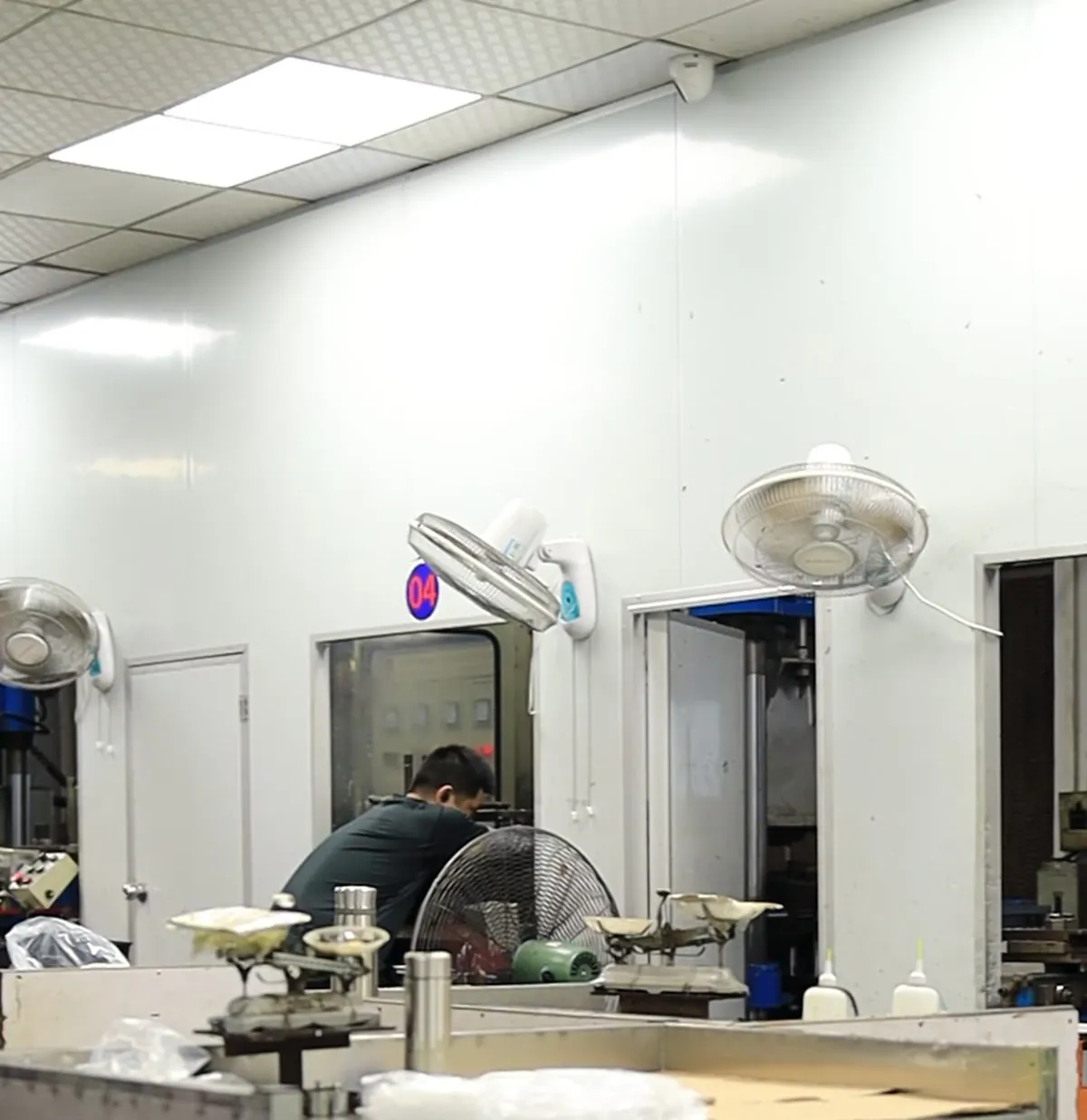
RUUIPON pours platinum RTV tools in Bao'an, Shenzhen (Licheng Technology Industry Park, Xinhe Blvd, Shajing; USCC 91440300MA5FAXCN9W) since 2018. Simple 3D is USD 50 when that CAD scope applies. Prototype is 3-7 business days after CAD lock. Production is MOQ 20 pieces per design. These are not food-contact trays.
Where this page sits
Buy the mold on custom silicone resin molds. STL intake lives on STL to an RTV epoxy mold. Application chemistry lives on silicone mold for epoxy resin. Cleaning, solvent damage, and small tears live on resin mold cleaning and repair. This page covers heat vs residue vs lock.
Four failures that look like sticking
- Exotherm - thick mass, fast cure, or an insulated cavity cooked the face.
- Undercure film - off-ratio or short mix left a tacky layer on a good tool.
- Surface change - the empty rubber stays tacky or swollen after a correct clean.
- Geometry lock - a hook, neck, or deep logo holds the part; the face is clean after peel.
Typical shop values
Reference values only. Confirm material-specific limits against the supplier’s technical data and agree project acceptance criteria before production. No universal safe-pour thickness.
| Item | Typical shop value |
|---|---|
| Thin coating vs 50 mm block | Not the same heat. Name resin, mass, and max section |
| Heat-aging pattern | Works at first, then tack / discolor after repeated hot pours |
| Immediate stick | First or second dump: mix, coupon, or a lock |
| Geometry lock clue | Clean rubber after peel; same feature every cycle; whitening at the root |
| Soft skin + hot mass | Jacket or nest before you raise Shore |
| 3D / CAD | USD 50 when that modeling scope applies |
| Prototype after CAD lock | 3-7 business days, in the resin you will sell |
| Production after written pass | MOQ 20 pieces per design |
| Contact | [email protected] · +86 135 3006 2969 |
Heat aging vs first dump
Heat-aging: the tool works, then release fades, the face stains, or the rubber locally hardens or softens. Immediate stick: first or second dump. Check mix ratio, pot life, master contamination, and whether one undercut is the only lock. Time-to-failure is the first log line.
Check the cup before the mold
If a cup sample is also tacky, fix the resin first. Verify ratio, mix completeness, age, additives, cure time, and temperature. An undercured film makes a good cavity look defective. Clean with the least aggressive method that lifts the film. Do not write one solvent list for every epoxy / RTV pair.
Lock is not adhesion
If the part hangs at a deep undercut, sharp recess, narrow neck, deep logo, or internal hook, and the empty face is clean, the fix is split, plug, radius, shallower relief, or a different peel - not more spray. Release agent can hide a lock for a few cycles.
Hot mass can move a soft skin
A 10A-20A glove under a large hot pour can bulge, lose flatness, grip an undercut, or open a seam. A rigid jacket carries the span. Raising Shore first often raises peel force and still leaves the mass unsupported.
Coupon before you scale
For a new resin / mold pair: cast a representative thickness, record mass and cure, measure peak temperature if the section is thick, inspect the empty face, and repeat several cycles. A 3 mm coupon does not prove a 50 mm block.
Worked example: 50 mm block
Typical job, not a named PO. Buyer blamed the rubber after a 50 mm epoxy brick stuck on dump 4. The cup was fully cured. The empty face was clean. The lock sat at a 2 mm undercut around the logo. We refused a Shore bump, added draft, and jacketed the next skin. The first thin-coating coupon had looked fine.
When this page does not apply
This diagnosis page does not replace the resin product, the epoxy application page, or cleaning and repair. It does not apply to food trays. HCR compression products and molds stay on a RUUIPON HTV RFQ. High-volume LSR cold-runner part tools are a different RFQ - ask us.
RFQs we will not accept as-is
One safe-pour thickness for every epoxy. Raising Shore to skip a jacket on a thick hot pour. Skipping the cup check. Sending an HCR / LSR part through this RTV sticking page.
Matched next step
Send resin name, max pour thickness, when it first stuck, and a photo of the empty cavity and the hung feature. We will say heat, film, or lock. "Mold lost release" is not enough.
Send resin, thickness, and stick location · Resin product · STL intake · Clean / repair
[email protected] · +86 135 3006 2969 · Licheng Technology Industry Park, Xinhe Blvd, Shajing, Bao'an, Shenzhen. USCC 91440300MA5FAXCN9W.
FAQ
Is this the resin product page? No. Buy the mold there. Diagnosis lives here.
Can you publish a safe pour thickness? No. It follows the resin, the mass, and the mold insulation.
Do you hang FDA papers on epoxy tools? No.
When is USD 50 3D in scope? Simple cavity-map modeling. Sculpture rebuild is quoted separately.
What is MOQ after a pass? 20 pieces per design.