
Where Should the Parting Line Go on a Two-Part Silicone Mold?
The best parting line is not always the geometric equator. It is the split that lets both mold halves release, keeps the seam away from the most.
The best parting line is not always the geometric equator. It is the split that lets both mold halves release, keeps the seam away from the most important cosmetic surfaces, provides stable registration, and gives the operator a practical opening path. On figurines, candles and branded castings, a few millimeters of parting-line movement can change both appearance and mold life.
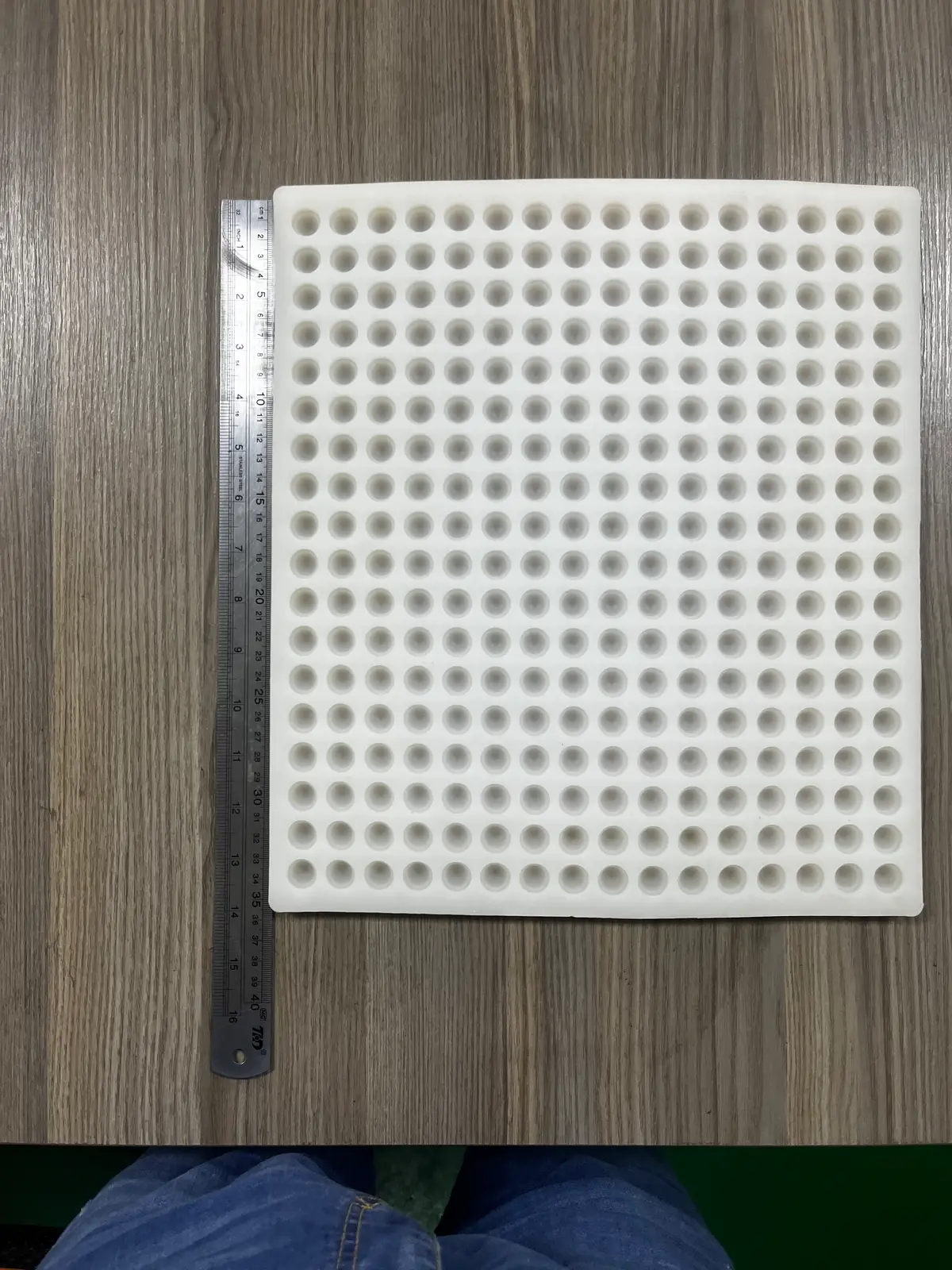
A bad split often reveals itself later as flash across a face, repeated tearing at one notch, trapped air near a high point, or two halves that are difficult to reassemble.
Start with demolding direction
Imagine removing each mold half from the master and later from the finished casting. A parting line should avoid creating a rigid "hook" in either half.
Review:
- deepest undercuts;
- overhanging features;
- arms, ears, handles and loops;
- texture direction;
- base/opening geometry;
- whether the casting can flex;
- whether the silicone can peel locally without tearing.
If one feature locks the entire mold, consider a local plug rather than forcing the whole split around it.
Protect cosmetic surfaces
For a full-3D figurine, a seam down the center of the face may be easy to machine but expensive to finish on every casting. Better locations may include:
- behind a hairline;
- along a clothing seam;
- behind the ears;
- down a side edge;
- along a natural product ridge;
- underneath a base or less-visible surface.
The parting line should use the product design where possible so cleanup disappears visually.
Parting line and flash are linked
Flash can come from:
- imperfect closure;
- damaged parting surfaces;
- poor registration;
- contamination at the seam;
- insufficient external support;
- pressure from the casting material;
- parting geometry that wants to slide rather than seat.
Changing to harder silicone does not automatically solve seam flash. First check whether the two halves are being located and supported correctly.
Avoid knife-edge silicone at the split
A split that creates thin feathers or sharp re-entrant corners in the silicone is a tear starter. Provide enough local silicone section around the seam and avoid unnecessary notches.
If the finished geometry itself creates an unavoidable sharp feature, the mold structure may need a local insert, plug or changed split path.
Think about filling and venting at the same time
In a closed two-part mold, the parting line affects where vents can exit and where a pour gate can be placed. High points that trap air should have a practical vent route. If the only possible vent exits through the main cosmetic face, reconsider orientation or split.
Parting, gating and venting are a system.
Example: figurine with crossed arms
A vertical split directly through the face may release the body but leaves a visible seam. Moving the split behind the head and along the clothing edge improves appearance, but the crossed arms may then lock one half.
Possible solutions:
- local removable plug between the arms/body;
- a three-piece mold;
- a controlled slit in one silicone section;
- small master geometry change if the design allows.
The right decision balances casting cleanup against mold complexity.
Registration keys cannot rescue a bad split
More keys improve location only if the halves naturally seat together. If the split surface is unstable or the silicone is being stretched sideways during closure, adding ten more keys can make assembly harder without eliminating flash.
First make the split geometry stable, then design registration.
How to review a proposed split before tooling
Ask the engineer to show:
- parting line on the 3D model;
- pull/demold direction for each section;
- locked undercuts;
- proposed plugs/cores;
- pour gate and vents;
- cosmetic no-seam zones;
- mother-mold split if an outer shell is required.
A simple annotated screenshot can prevent a costly master remake.
What should happen to the existing RUUIPON article
The current parting-line blog should be rewritten in place rather than duplicated. It contains older SEO-style sections, fixed numerical claims and repeated keyword phrases. Preserve the indexed URL if it has value, but replace the body with a genuine DFM guide centered on split choice, cosmetic tradeoffs and failure prevention.
Update old MOQ/commercial statements separately so they match current policy.
Start your custom silicone mold project
Send your design, target material, and quantity. We confirm silicone grade, hardness, and certification needs - usually within 24 hours.