
When an RTV Mold Needs a Mother-Mold Jacket | RUUIPON
Soft platinum skins sag 0.5–1.5 mm on a wet dump without a mother mold. Jacket vs thick block, plaster vs printed shell. MOQ 20, $50 CAD when it applies.
 Kyler Yang · Founder7 min read
A mother mold is the rigid jacket behind a soft RTV skin. It is not a resin master. The resin master (master pattern) is the positive you approve after CAD; the mother mold / jacket is the rigid shell that stops a 10A-20A skin from ballooning. You need one when the dump is a large wet mass, the span is wide, or the cavity is 10A–20A and would balloon or sag if it stood alone. A thicker pour of rubber is not a jacket. Extra gum sags too; it just costs more. Walk the RUUIPON Mold Structure Decision: after you pick open-back, split, plug, or core, ask whether a loaded sheet or a tall liquid column will move the cavity. If it will, spec the jacket as its own line.

RUUIPON pours skin and jacket as separate lines in Bao'an / Shajing since 2018. Prototype 3–7 business days after CAD lock. Production MOQ 20 pieces per design. Simple 3D is USD $50 when that CAD scope applies. DFM review is free; CAD modification is the paid line when we revise your 3D. Platinum mix 1:1 or 10:1 by weight; shrink after a full cure typically about 0.1–0.3%. Steel/LSR *parts* are a different RFQ - ask us.
Does not apply when the dump is a few grams in a small pocket (a 20 mm resin charm, a single wax melt) and the skin is already short-span. It also does not apply to heated steel cavities for molded silicone parts.
When a wet dump outruns a soft skin
Platinum RTV at 10A–20A copies undercuts and peels. It does not hold a half-sheet of pectin or a 2 kg plaster pour square. Loaded-tray edge sag without a jacket is typically about 0.5–1.5 mm. On a gummy sheet that reads as outer-row grams 3–6% heavy versus center. On a concrete paver it reads as a dish. On a two-part figurine it reads as a seam that opened.
Jacket families we actually pour:
- Plaster / gypsum shell. Cheap, fast, heavy, hates wet storage. Fine for a shop that will not ship the jacket overseas as the production fixture. Detail on plaster jackets.
- Resin or fiberglass shell. Lighter, more abuse, more cost. Better when the operator clamps every dump.
- Printed or CNC shell. Repeatable pockets for keys. Useful when the jacket *is* the register.
The skin still does the copy. The jacket does the stiffness. If you skip the jacket and raise Shore, you trade peel for a cavity that grabs and still sags on a wide span.
- Loaded sheet or tall wet column? - yes -> Skin plus mother mold
- Loaded sheet or tall wet column? - no small peelable dump -> Thin islands or logos?
- Thin islands or logos? - yes -> Thicken islands; jacket optional
- Thin islands or logos? - no -> Uniform skin, jacket optional
- Skin plus mother mold -> Do not thicken skin to fake a jacket
- Thicken islands; jacket optional -> CAD lock
- Uniform skin, jacket optional -> CAD lock
- Do not thicken skin to fake a jacket -> CAD lock
- CAD lock -> 3-7 day prototype — check sag and seam
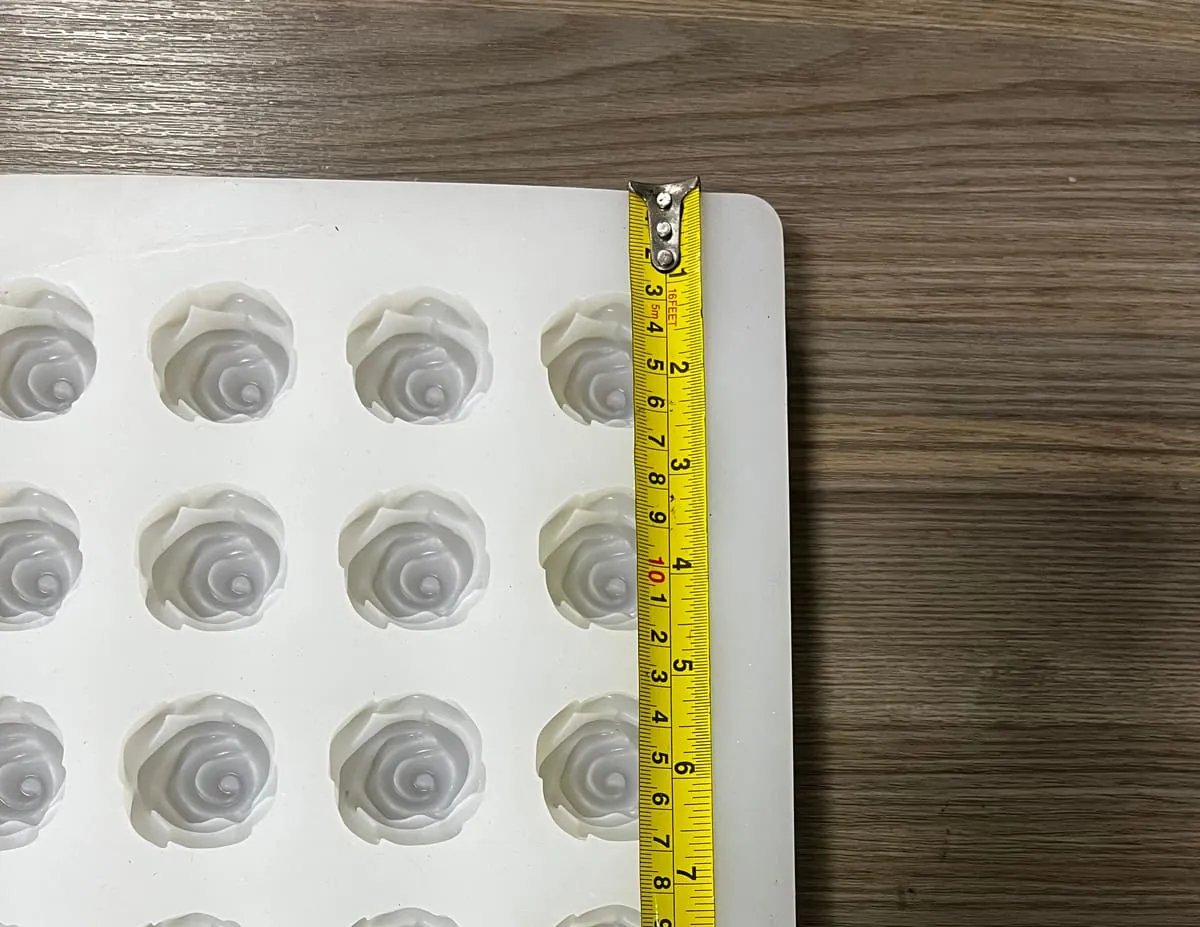
The photo that would prove sag: a straightedge across a loaded sheet, a gap at the outer row, grams labeled on two cavities. A cut-section of a 10 mm block does not prove the tray was specified.
Jacket vs a thick RTV block
A block mold is a cube of rubber. It peels, it uses a lot of gum, and it still wants keys if you split. Buyers order a block when what they needed was a 2 mm skin plus a mother mold. Rubber cost and cure mass both go the wrong way. Thin-versus-thick as a *family* sits on thin vs thick RTV tools — this page is only the jacket trigger.
ISO 3302-1 M2 is a drawing class, not a sag spec. Platinum shrink of 0.1–0.3% does not hold a wet edge.
Shop numbers for jacketed skins
Reference values only. Confirm material-specific limits against the supplier’s technical data and agree project acceptance criteria before production.
| Item | Typical shop value |
|---|---|
| Cavity Shore | 10A–20A peel skin; 20A–30A thin jacketed walls |
| Mix / shrink (platinum) | 1:1 or 10:1; about 0.1–0.3% |
| Loaded-tray edge sag if jacket missing | about 0.5–1.5 mm |
| Outer-row gummy scatter from sag | 3–6% heavy vs center |
| Prototype | 3–7 business days after CAD lock |
| Production MOQ | 20 pieces per design |
| Simple 3D | USD $50 when that CAD scope applies |
Jackets we would not spec
We would not recommend pouring a 10 mm RTV skin to "make it stronger" on a half-sheet tray. Put that budget in a jacket.
We would not recommend a three-piece mother mold on a shallow open-back bar because a catalog listed "jacket" as an upgrade.
We would not recommend a plaster jacket as the shippable fixture for a food-contact line that lives in a wet wash room. Name 21 CFR 177.2600 on the article; pick a jacket that survives the wash SOP.
We would not recommend skipping the jacket on a tall PU figurine split and hoping keys in 10A rubber will hold the shut.
A tooling charge is not unrestricted ownership of the jacket. Shops often keep the shell for recast. Write custody on the PO.
Worked example: 12-up pectin sheet without a jacket
A 12-up pectin sheet, 4.0 g target, platinum 15A, no jacket, "3 mm wall" on the RFQ. First dump: center cavities ~4.0 g, outer row ~4.2–4.3 g (that 3–6% band), straightedge showed about 1 mm edge sag. Recast: same 15A, similar skin, rigid jacket. Grams evened. We did not thicken the rubber. CAD already locked; 3–7 day clock was a recast pour. $50 3D did not apply. MOQ 20 per design on the jacketed tool.
A second RFQ: 180 mm concrete tile, tin was requested "because concrete is dirty." We still jacketed a platinum skin after sealing the master; the wet mass was the trigger, not the chemistry. Related: concrete molds.
Mix-up: a mother mold is not a resin master
Purchasing sees two line items and cuts the jacket to hit a number. The remaining skin then sags, and the next email is "your mold is out of spec." The jacket is structure. The other mix-up is calling a plaster shell the food-contact surface. The cavity is platinum rubber; plaster is the back.
Questions that decide jacket yes/no
- What is the dump mass, the span, and the peak °C?
- Is this a loaded sheet (gummy/chocolate) or a tall liquid column (resin/plaster/concrete)?
- Cavity Shore target, and will keys live in the jacket?
- Who ships and stores the jacket — wet wash room or dry shelf?
- Who keeps the jacket after the tooling charge?
Related: wall thickness, contact, plaster / gypsum molds.
RFQ copy-pack — mother mold trigger
Paste into [email protected]:
Object: RTV mold I pour into, not an LSR/HCR part Dump material, mass or grams, span, peak °C Structure: open-back / split / plug / core Jacket: plaster / resin / printed / you tell us Cavity Shore if you have one File: STEP / STL / photos with a millimetre scale CAD: mold-ready STEP OR USD $50 3D if that scope applies Prototype 3–7 business days after CAD lock, then MOQ 20 per design Who keeps the unsanded master and the jacket
Send mass and span, not "make it thicker." We mark jacket yes/no on the 2D — not a blank "free quote." Phone +86 135 3006 2969. Licheng Technology Industry Park, Xinhe Blvd, Shajing, Bao'an. Shop since 2018.
FAQ
Can I skip the jacket if I use 40A rubber? Harder rubber still sags on a wide loaded sheet and grabs undercuts. Jacket for stiffness; Shore for peel.
Is a mother mold the same as a two-part split? No. A split opens the cavity. A jacket supports the skin. You can need both on a tall wet figurine.
Will a plaster jacket ship as my production fixture? Plaster hates wet rooms and freight. Ask for resin or a printed shell if the jacket has to travel.
Does platinum shrink replace a jacket? 0.1–0.3% linear change is a size band after cure. It does not hold a wet edge.
If I pay for the jacket, do I own it? A tooling charge is not unrestricted ownership. Write who keeps the shell, and whether we may recast from it.
Custom silicone development · DFM & prototype support
CAD, drawing, photos or sample details