
Sprues and Vents on an RTV Casting Block | RUUIPON
A block-mold sprue is the resin or wax gate, not a gummy-tray vent. Last-air vents, flash land, cores. Typical shop. MOQ 20, $50 CAD when it applies.
 Kyler Yang · Founder8 min read
A sprue on an RTV block is the gate you pour or inject the *dump* through - resin, wax, plaster - not an air slot milled into a gummy depositor tray. Vents on that same block sit at the last place air will hide: a ring shank, a blind letter counter, a horn on a figurine. If you skip the sprue, the dump enters across a show face and you grind a nub off a logo. If you skip the vent, you pack a bubble into the farthest thin. Gummy-tray "vents" are a different geometry on a different site; this page is a two-part or cut-block tool you fill as a casting.
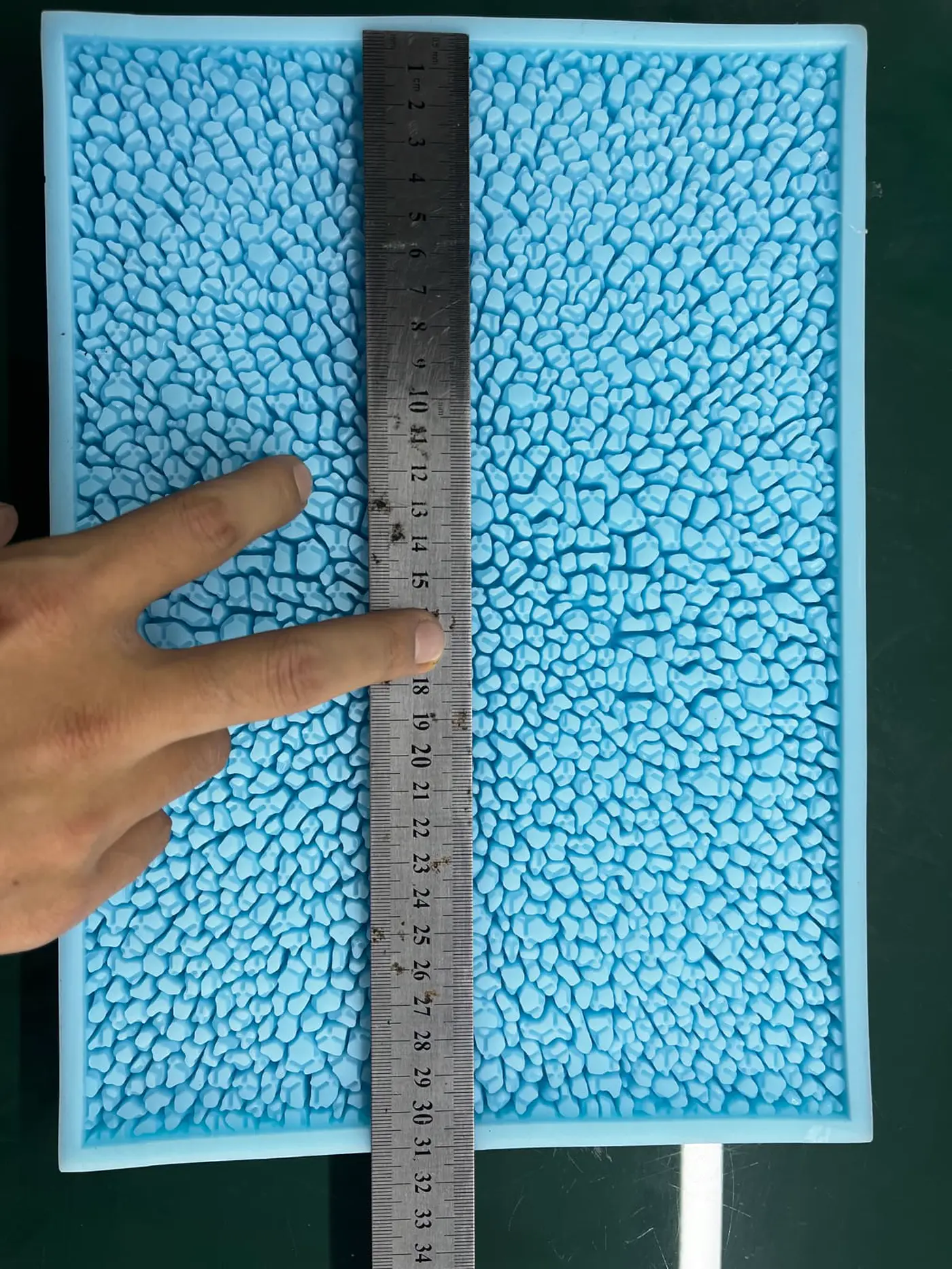
On this site the path is photos, sketch, or CAD, then a 3D-printed pattern, often a temporary silicone flip, a resin production mother, then batch RTV. The mother is not the pattern. Free DFM. HTV/HCR compression mold tooling is also quoted on RUUIPON.
Does not apply when you meant cavity vents on a starchless gummy tray (an HTV product or mold RFQ here, or ask us if you need a high-volume LSR cold-runner tool depositing, not this shop's block), when the tool is an open-back chocolate bar you flood and scrape, or when you wanted a steel vent pin in an LSR cold-runner tool. We would not copy a gummy outer-row sag note onto a resin sprue.
Gate the dump, then give air a way out
Sprue (gate). Place it on a hidden land: the foot of a figurine, the back of a pendant, the inside of a shank. Size it to the viscosity - a watery UV resin needs less diameter than a thick PU. A sprue that is too small jet-washes the cavity and traps air; too large wastes dump and leaves a fat gate to cut.
Vents. Start from the last-fill point in your head. If you pour with the sprue down, air walks up. If you inject wax, air packs the far thin. Through-holes may want a core pin that is pulled after the dump, or a drill after demold - pick one on the RFQ so we do not guess.
Flash land at the split. A two-part block needs a land the dump can slightly overflow into so you do not pack the show face. That is not "zero flash like a plastic shut-off." Rubber shuts with a land. ISO 3302-1 M2 is the dump's rubber class if you spec it; it is not a flash-free promise.
The photo that would prove a sprue spec: both halves open, sprue and vent paths marked in millimetres, keys visible, a witness dump still on the gate. A beauty shot of a painted figurine hides the gate you will actually cut.
- Pick hidden gate land -> Find last-air pocket
- Find last-air pocket -> Through-hole?
- Through-hole? - yes -> Core pin or drill-after - pick one
- Through-hole? - no -> Vent to the split or to a well
- Core pin or drill-after - pick one -> Keys + flash land
- Vent to the split or to a well -> Keys + flash land
- Keys + flash land -> Weigh platinum 1:1 or 10:1, vacuum, pour the rubber
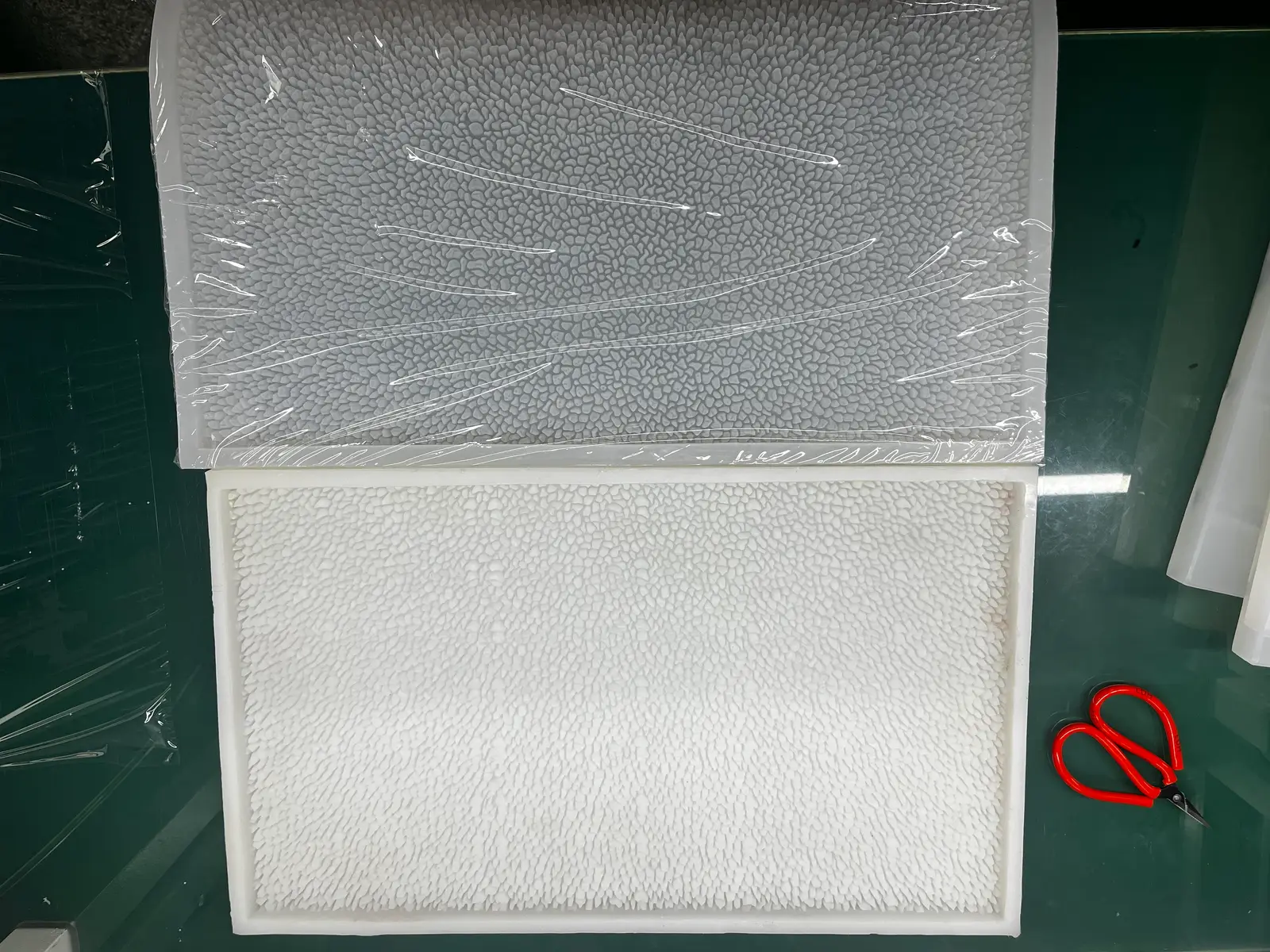
Where last air lives in a block
Blind counters in a signet, a hollow horn, a clenched fist, a deep socket on a robot head - those are vent problems. A glove peel does not need a sprue in the same way; an open-back tray does not either. Structure Decision still runs first: flat back → open-back (no sprue). Deep undercuts that will not peel → two-part block with a designed gate. Large wet casting → mother mold, and the sprue is in the rubber, not in the jacket.
Cut-after-cure sprues (you bury the master, then slice a gate with a knife) are how hobby blocks start. Production SKUs get the gate in CAD or in a designed cut path you lock. We would rather design the split than surprise-cut a cube across a face.
CAD lock includes sprue OD, vent path, and which half owns the gate. The $50 3D, when that scope applies, is the master and shut - not an unlimited sprue redesign after T1.
Failure: bubble in the far thin, sprue on the show face
Symptom: short fill at a horn; or a gate nub sitting on a cheek you now have to sand on every dump.
Cause: no vent at last air; sprue placed on the easy-to-reach face; dump viscosity higher than the gate you copied from a YouTube wax ring.
Confirm: a slow-motion pour or a short-shot wax. The unfilled zone is your missing vent. The nub location is your sprue mistake.
Fix: recast the block with gate and vent moved, or recut a production path if the rubber still has life. Do not drill a random hole through a food-adjacent cavity - and this block should not be food if you are gating resin.
Typical shop values
Reference values only. Confirm material-specific limits against the supplier’s technical data and agree project acceptance criteria before production.
| Item | Typical shop value |
|---|---|
| Mix / shrink | 1:1 or 10:1 by weight; platinum about 0.1-0.3% |
| Cavity Shore | 20A-40A blocks common; 10A-20A if you must peel |
| Prototype | 3-7 business days after CAD lock |
| Production MOQ | 20 pieces per design |
| Simple 3D | USD $50 when that CAD scope applies |
| Drawing class | ISO 3302-1 M2 as a common default |
| Flash | designed land, not zero like a steel shut-off |
Stay on this page / skip this page
Stay when you are gating a resin, wax, or plaster dump through an RTV block and need a sprue plus a last-air vent - not a gummy-tray air slot.
Skip if the SKU is a depositor gummy sheet. Skip finished jewelry wax parts from a vulcanizer house. Skip ISO 3302-1 as a "precision sprue" nickname.
We will not quote a sprue on the show face because it was the only flat spot. We will not copy a gummy-tray vent pattern onto a resin block. We will not quote a one-piece glove "so we do not need a sprue" on a posed figurine that will not peel. We will not cut a hairline vent that clogs with the first thick PU. We will not call ISO 3302-1 M2 a precision sprue.
Related: lost-wax RTV, vulcanized vs RTV, contact.
Worked example: robot head, gate on the visor
PU figurine head, 80 mm, two-part block. Buyer gated on the visor because the split was already there. Every dump needed sanding. Far antenna was a bubble. We moved the sprue to the neck socket, added a vent at the antenna tip, kept keys. Prototype 3-7 business days after CAD lock of the new gate. $50 CAD applied because the antenna ID was not on the scan. Production MOQ 20 of that design.
Mix-up: vent = vacuum
Vacuum degasses the *rubber* when we make the mold. Vents let air out of the *dump*. You still vacuum the A/B. You still vent the cavity. Related: how long to vacuum degas, split mold, contact.
What to ask when you're buying a gated block
- Dump chemistry and viscosity band - UV resin, PU, wax, plaster?
- Hidden land you will accept as the gate?
- Last-air feature (horn, shank, counter)?
- Core pin vs drill-after on through-holes?
- After lock, 3-7 business days, then MOQ 20 / design?
RFQ copy-pack - sprue and vents
Paste into [email protected]:
Object: RTV block mold I cast into, not an LSR/HCR part Dump: resin / wax / plaster, peak °C Preferred gate land (hidden) Features that trap air Through-holes: core or drill-after File: STEP / STL / photos with a millimetre scale CAD: mold-ready STEP OR USD $50 3D if that scope applies Prototype 3-7 business days after CAD lock, then MOQ 20 per design Who keeps the master
Send the dump and the hidden land, not "add some vents." We gate the block - not a blank quote request. Phone +86 135 3006 2969. Xinhe Blvd, Shajing, Bao'an. Shop since 2018.
FAQ
Where should the sprue go on a silicone block mold? On a hidden land, sized to the dump viscosity. The show face is the last place we would gate.
Do I still need vents if I vacuum the silicone? Yes. Vacuum is for making the rubber. Vents are for filling the cavity with resin or wax.
Can you copy my gummy tray vents onto this figurine mold? No. Gummy-tray air slots are a depositor geometry. This is a casting gate. Different shop problem.
What if I forget the sprue and pour over the split? You will cut a nub off the face on every dump, or you will trap a knit. Recast with a designed gate.
Is the sprue included in the $50 CAD? USD $50 when we must model the master/shut. Gate and vent paths belong in CAD lock. Clock is 3-7 business days after that lock; MOQ 20 per design.
Custom silicone development · DFM & prototype support
CAD, drawing, photos or sample details