
How to Store RTV Silicone Molds Long-Term | RUUIPON
Store RTV tools dark, dry, unstacked, away from ozone and sulfur. Keys print into faces. Split food and craft totes; archive the master, not a crushed
 Kyler Yang · Founder8 min read
Long-term storage of a custom RTV mold is a library problem, not a closet problem. Keep the tool dark, dry, cavity-up or nested in a way that does not print keys into the face, and away from ozone, sulfur rubber, and latex. Food skins and craft skins do not share a tote. The master you can recast from is the archive that actually matters; a crushed 20A tray in a hot warehouse is not a spare. RUUIPON has poured RTV tools in Bao'an since 2018. Prototype is 3–7 business days after CAD lock. Production is MOQ 20 pieces per design. USD $50 when CAD scope still applies.
If you meant storage of a molded silicone *part* (HCR sheet, LSR article from a cold-runner steel tool), that is wydsilicone.com.
Does not apply when the skin is still tacky from inhibition (that is scrap, not a storage spec), when you are warehousing tin-cure tools you already accepted will keep shrinking, or when the "mold" is a $10 consumer tray with unknown chemistry. This note is how we want *our* platinum (and named tin craft) tools to sit between seasons.
Two clocks: shelf hours vs dump count
A tray can die on the shelf without a single extra dump. Platinum RTV holds size in the ballpark of 0.1–0.3% shrink if you do not cook it in a window. Tin-cure keeps moving in storage — keys that fitted in March may not in November. Dump count is a different clock (wear, nick, sag). Do not use "we only ran it twice" as proof the library is healthy.
Symptom: unused spare from last year dumps a bar that is tight in the well, or the skin no longer keys to the jacket. Cause: heat, UV, tin after-shrink, or a stacked key printed into the cavity. Confirm: compare the drawer spare to a photo at T1 (same lighting, a scale in frame). Measure a logo land and a tray OD. Fix: recast from the living master if the rubber moved. Do not heat-gun the skin "to relax it." Write archive temperature on the traveler.
Paying a tooling charge does not, by itself, mean we store your master forever. Put duration and who owns the pattern on the PO.
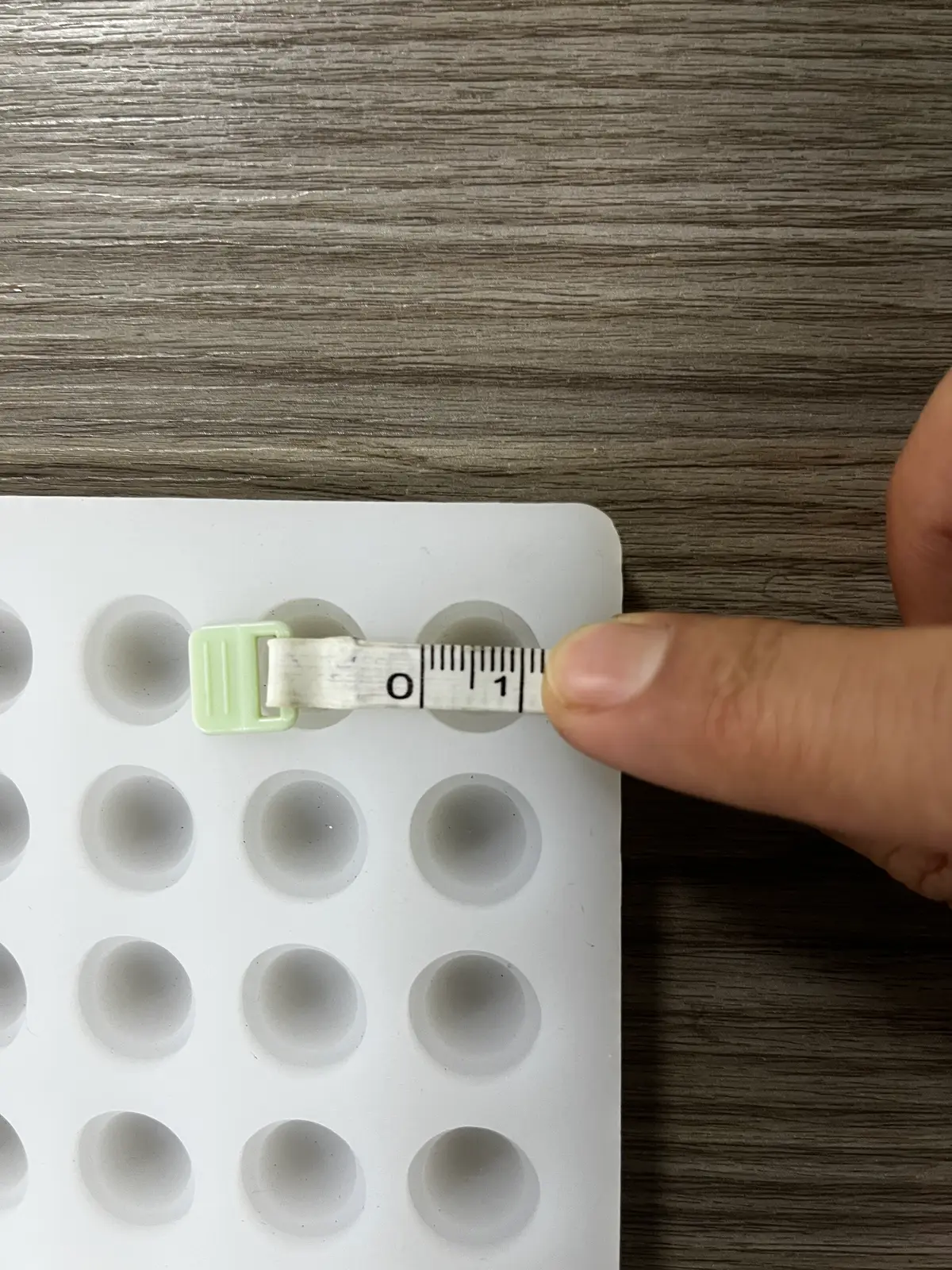
Stacking that prints keys into the face
Registration keys, sprue buttons, and jacket pips are harder than a 10A–20A glove. A tote of nested splits with keys against the next cavity will telegraph a dimple into the working face. That dimple dumps as a bump on every resin or chocolate piece until you recast.
Store splits:
- Cavity to cavity only if the faces are flat and you put a clean sheet between them.
- Keys in a dedicated pocket or on the jacket, not mashed into the neighbor's logo.
- Thin open-back sheets cavity-up on a rack, not folded.
The photo that would prove a stacking bruise: raking light across a well, a circular pip mark that matches the key on the tray below, T1 photo without that mark. No lifestyle shelfie.
Ozone, sulfur, latex, and the window
Ozone from motors, corona treaters, and some "air purifiers" crazes silicone. Sulfur-cured rubber (cheap packing bands, some tire-shop gloves, some clay) and latex gloves sitting on the face are inhibition and stain risks when you recast, and they can surface-attack a stored skin.
Keep the library:
- Dark (UV yellows a clear tool — different diagnostic, same shelf).
- Cool, dry, not against a compressor or UV nail lamp.
- Away from sulfur rubber, latex, and open solvent cans.
- Food cabinet vs craft cabinet still split — fragrance in a sealed bag will still migrate into a chocolate skin in the same bin.
We would not hang RTV trays on a zinc-plated rack above a sparking motor "to keep them aired."
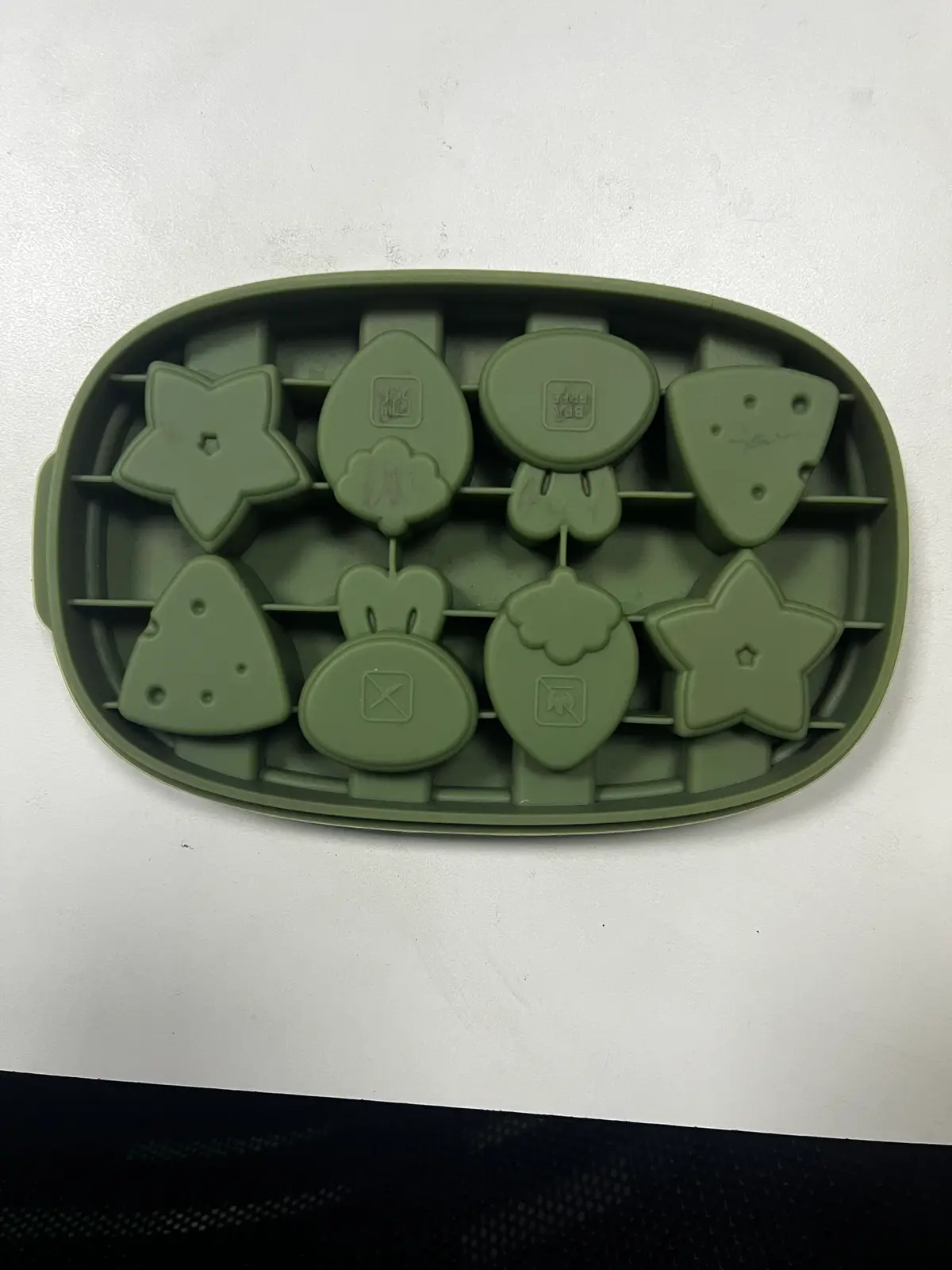
Food skins vs craft skins in the library
A soap or resin tool that sat in the same bag as a gummy sheet has already crossed cabinets. Storage is how mixed-use happens quietly over winter. Label the tote with the pour, the Shore, the jacket ID, and the revision letter. Cavity-up dry until matte *before* the bag. A wet tray in polyethylene grows biofilm in texture that you will later call "the silicone went moldy."
If the jacket is plaster, do not bag a damp jacket against the skin — the plaster dust and moisture print. A rigid resin or printed mother mold still needs the skin seated without a twist that sets as a new warp.
Typical shop values
Caption: Typical shop values.
| Item | Typical shop value | Storage relevance |
|---|---|---|
| Platinum shrink | about 0.1–0.3% | Holds better in a cool dark library than tin |
| Tin-cure | keeps shrinking in storage | Measure keys before next season |
| Cavity Shore | 10A–20A gloves; 20A–40A trays | Soft skins print keys if stacked |
| Loaded sag | about 0.5–1.5 mm without jacket | Store the jacket with the skin |
| Mix | 1:1 or 10:1 by weight | Unrelated to shelf; off-ratio tack is not "aged" |
| Prototype | 3–7 business days after CAD lock | T1 photo is the storage baseline |
| Production | MOQ 20 pieces per design | Don't multiply a crushed sample |
| Simple 3D | USD $50 when that CAD scope applies | Geometry fee is not an archive fee |
Worked example (anonymized)
A keyed two-part resin figurine, platinum ~15A skin, printed jacket. Off-season, twenty skins nested in one crate, keys into faces, crate against a south window. Spring dumps showed pip bumps on every chest logo. Drawer spare that had been stored cavity-up, bagged dark, dumped clean. We recast the crushed lot against the archived master. Jacket reused. No $50 CAD — lock was unchanged. Next traveler: rack, sheet between flats, keys outboard, dark shelf. MOQ 20 of the recast design. Tooling charge on year-one did not include a free recast for stacking damage.
One procurement mix-up
"Silicone doesn't expire" is a consumer-spatula line. RTV tools expire as *tools* when the face is bruised, the tin has walked off the jacket, or the food skin sat in a fragrance bag. Library life and cycle life are two numbers. ISO 3302-1 on the drawing does not freeze the rubber in a hot warehouse.
We would not recommend
We would not recommend stacking keyed splits cavity-to-key.
We would not recommend a window-sill "dry rack" for clear platinum.
We would not recommend one tote for chocolate trays and soap loafs.
We would not recommend skipping the master archive because "we have twenty trays in the shed."
flowchart TD
  A[End of season: skins dry matte?] --> B{Yes}
  A -->|No| C[Dry cavity-up first — do not bag wet]
  B --> D{Food or craft?}
  D -->|Food| E[Food tote, no fragrance neighbors]
  D -->|Craft| F[Craft tote, own rags]
  E --> G[Dark, cool, keys not in faces]
  F --> G
  G --> H[Jacket + master tagged with rev]
  H --> I[T1 photo stays the baseline]
What to ask when you're buying
- Where will these sit for six months — temperature, light, ozone sources?
- Who owns the master, and for how many months is archive written?
- Keyed splits: rack or nested, and with what sheet?
- Food vs craft totes, even in the same building?
- Tin vs platinum named, because tin will not sit still?
- Rotation quantity vs recast-from-archive if a crate is crushed?
RFQ copy-pack
[email protected] · +86 135 3006 2969 · Xinhe Blvd, Shajing, Bao'an
RUUIPON long-term storage RFQ Chemistry: platinum food / platinum craft / tin craft named Structure: open-back / split / glove + jacket Storage site: temp band, dark? ozone nearby? Archive: master keep? months? who owns? Qty: prototype / MOQ 20 per design CAD: STEP / $50 3D if scope applies T1 photo required as library baseline: yes
Matched next step: send how you will warehouse the tools with the drawing. We will spec jacket, Shore, and a recast path that matches that shelf — not a generic "store cool and dry" footnote. Prototype 3–7 business days after CAD lock. MOQ 20 per design.
Related: spare molds and rotation quantity, why transparent RTV yellows, how custom molds are made, contact.
FAQ
Can I leave RTV molds in the original shipping carton for a year? Only if they are dry, unstacked against keys, dark, and not against a heat source. Carton cardboard next to a damp plaster jacket is a moisture trap.
Do I oil the cavity before storage so it doesn't dry out? No. Oil is a film problem, especially on food skins. Matte-dry, then bag. We would not grease a food mold for the library.
What about a vacuum-seal bag? A clean dry bag is fine. Vacuum that prints the bag texture into a 10A face is not. Soft skins need a former or jacket so the vacuum doesn't set a new warp.
Is ozone from an industrial air cleaner a real issue? Yes. Keep RTV off the rack above motors and ozone gadgets. Crazing looks like age; it is the room.
If storage crushed the skins, do I pay CAD again? Not if millimetres are still locked and the master lives. You pay a recast lot — still MOQ 20 per design. $50 CAD only if geometry has to move.
Ready to order custom silicone molds?
Free quote for OEM/ODM projects. MOQ 20 · Prototype 3-7 days · FDA/LFGB available.