
Gummy Tray Food-Contact Papers: What to Ask For
"FDA silicone" on a gummy RFQ is not a document pack. If you are buying a commercial gummy RTV, this page is the paper list: intended use, the exact compound, what a TDS is not, and how 21 CFR 177.2600 / LFGB sections 30/31 / BfR XV actually show up. Docs follow the article and the market, not a factory stamp.
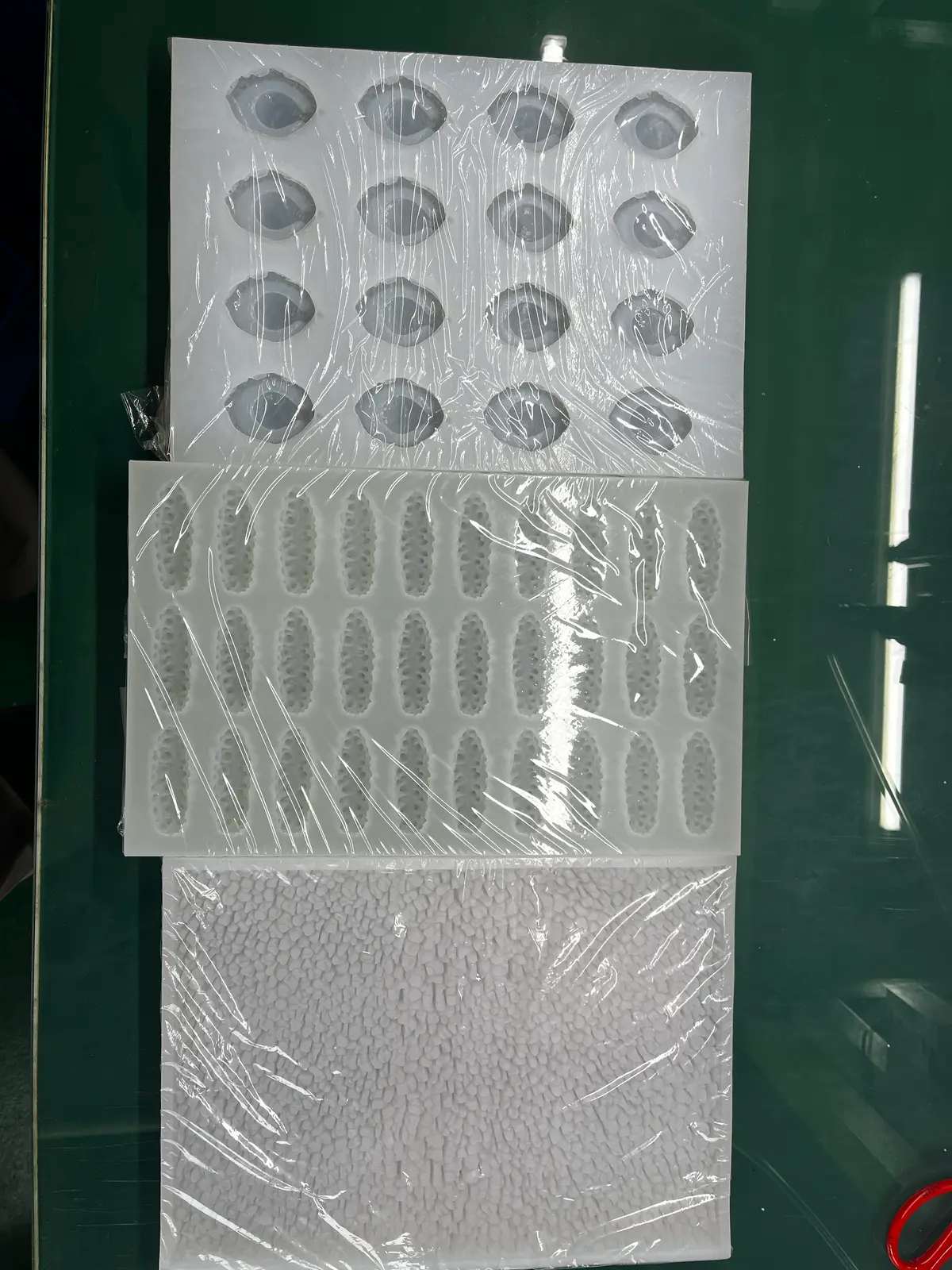
RUUIPON pours platinum RTV tools in Bao'an, Shenzhen (Licheng Technology Industry Park, Xinhe Blvd, Shajing; USCC 91440300MA5FAXCN9W) since 2018. Simple 3D is USD 50 when that CAD scope applies. Prototype is 3-7 business days after CAD lock. Production is MOQ 20 pieces per design.
Where this page sits
What "food-grade" means on an RTV tool lives on what food-grade silicone mold means. Comparing two supplier PDFs side by side lives on compare food-contact documents. Raw-compound vs finished-article papers live on raw report vs finished mold. The SKU lives on custom silicone gummy molds. This page covers the gummy-tray document checklist.
Start with intended use
Write food type (pectin / gelatin gummy), peak contact temperature, contact time, repeated use, destination market, and pigment. A cold chocolate tray and a hot pectin dump are not the same condition even if the rubber looks similar.
Typical shop values
Reference values only. Confirm material-specific limits against the supplier’s technical data and agree project acceptance criteria before production.
| Item | Typical shop value |
|---|---|
| TDS | Process note - not a food-contact test report |
| US retail ask | 21 CFR 177.2600 extraction on the finished article / compound as agreed |
| EU / DE ask | LFGB sections 30/31 and BfR Recommendation XV wording as named |
| Pigment | Must sit inside the same review as the base |
| Traceability | Lot / compound ID on the papers you will file |
| 3D / CAD | USD 50 when that modeling scope applies |
| Prototype after CAD lock | 3-7 business days |
| Production after written pass | MOQ 20 pieces per design |
| Contact | [email protected] · +86 135 3006 2969 |
What each paper is
Identify the compound. A TDS is not an extraction report. 21 CFR 177.2600 is a US rubber-article reference - ask what the PDF actually tested. LFGB / BfR wording must match the request; it is not an "LFGB factory" badge. EU framework and GMP papers are not a substitute for material-specific evidence. Finished-mold testing may still be required after pigment or post-process. We will not call this an FDA-approved factory.
Checklist before PO
- Intended use and peak C
- Market (US / EU / other)
- Exact compound and color
- Whether the sample on the PDF is that compound
- Whether pigment is covered
- Raw vs finished-article scope
- Lot traceability at shipment
Worked example: importer list
Typical job, not a named PO. Buyer asked for "FDA + LFGB + EU certificate." The importer only needed 21 CFR 177.2600 extraction on the pigmented article. We mapped that list and refused an FDA-approved-factory line on the PI.
When this page does not apply
This checklist does not replace the food-grade meaning page or the PDF comparison. It does not apply to soap, resin, or candle tools. HCR food products and molds stay on a RUUIPON HTV RFQ. High-volume LSR food parts are a different RFQ - ask us.
RFQs we will not accept as-is
"FDA-approved factory." Asking us to invent an HS / HTS code as the food paper. Sending an HCR / LSR part through this RTV gummy-docs page.
Matched next step
Send destination market, peak dump C, pigment yes/no, and the exact report names your importer used. We will map compound to papers. "Need FDA" is not enough.
Send market and document names · What food-grade means · Compare supplier PDFs · Gummy product
[email protected] · +86 135 3006 2969 · Licheng Technology Industry Park, Xinhe Blvd, Shajing, Bao'an, Shenzhen. USCC 91440300MA5FAXCN9W.
FAQ
Is this the food-grade hub? No. Meaning lives there. This is the gummy paper list.
Is a TDS enough? No.
Do you stamp FDA-approved factory? No.
Is this the PDF-comparison page? No. Side-by-side supplier review lives there.
What is MOQ after a pass? 20 pieces per design.